Game of Thrones Alcázar Filming Locations: What Was Shot Here and What It Looks Like Now
In the Patio de las Doncellas at the Real Alcázar, the pool that runs the length of the courtyard was not there for most of the 20th century. It had been covered over at some point and the floor levelled flat. The restoration that brought it back — completed in 2004 using evidence from medieval sources and from a 16th century painting — also caught the attention of a production designer looking for locations for a show called Game of Thrones. The Water Gardens of Dorne, as they appeared on screen, are these same courtyards. But the building the production found was already extraordinary before any camera crew arrived, and it is still that building when the last tour group leaves at closing time. The Game of Thrones Alcázar filming locations are an entry point worth using — what matters is what they lead visitors to understand about the place itself.
The Alcázar in Game of Thrones: What Was Filmed Here
The Real Alcázar served as the Water Gardens of Dorne — the palace complex of House Martell — across multiple seasons of Game of Thrones, most prominently in Seasons 5 and 6 (2015–2016). Seville was one of several Spanish filming locations used for the series; the Plaza de España in Seville’s María Luisa Park appeared as the city of Braavos in the same seasons.
The Alcázar scenes used multiple sections of the palace complex, both interior and exterior. The production valued the site precisely because the layered architecture — Islamic-period arches, 16th century Renaissance additions, formal garden pathways — provided visual variety within a single location. What looks on screen like different zones of a fantasy palace are in reality different historical periods of the same building.
The Key Filming Locations Inside the Alcázar
The Patio de las Doncellas
The Patio de las Doncellas — the central courtyard of the Pedro I palace — appears extensively as the interior of the Water Gardens. The restored pool running along the courtyard’s central axis is the most recognisable element: its reflection of the carved stucco arcade above it is one of the defining visual compositions of the Dorne sequences. The courtyard was built in 1364 for Pedro I of Castile; the pool restoration that made it camera-ready was completed in 2004 using medieval documentation. On screen it reads as ancient; in reality it is a 21st century conservation achievement built on 14th century evidence.
The lower tile dado at knee height — geometric Mudéjar work in cobalt blue, white and ochre — does not appear prominently in the filmed sequences, which tend to favour eye-level and upward angles. This is worth noting: the filming emphasised the decorative upper levels and the water reflection, while the most historically significant elements of the courtyard are at floor level. Visiting with this knowledge means looking in the opposite direction from the cameras.
✦ LUCÍA’S INSIGHT
The Patio de las Doncellas appears most photogenic from the far end looking back toward the main entrance arch — the same angle used most frequently in the Game of Thrones sequences. But the courtyard is also worth sitting in from the arcade level on the long sides, where the proportions of the space become apparent in a way that the standard entrance viewpoint does not reveal. The production team understood the primary axis; the secondary experience of the space is less documented and more interesting.
The Patio del Crucero and Garden Pathways
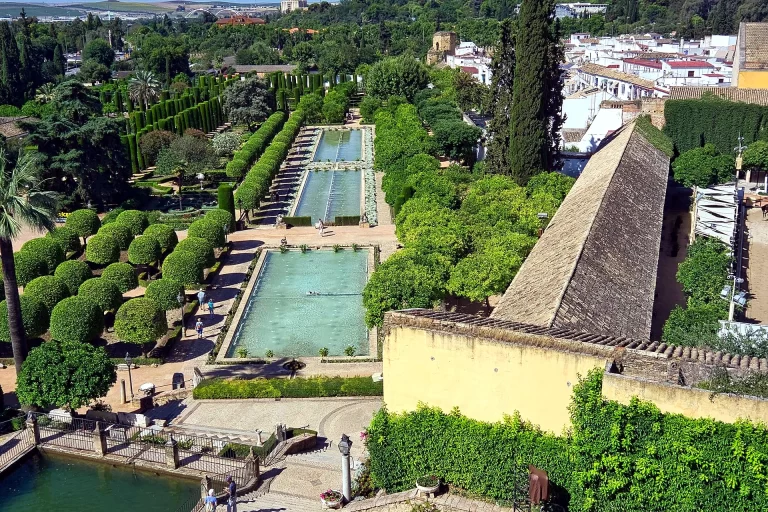
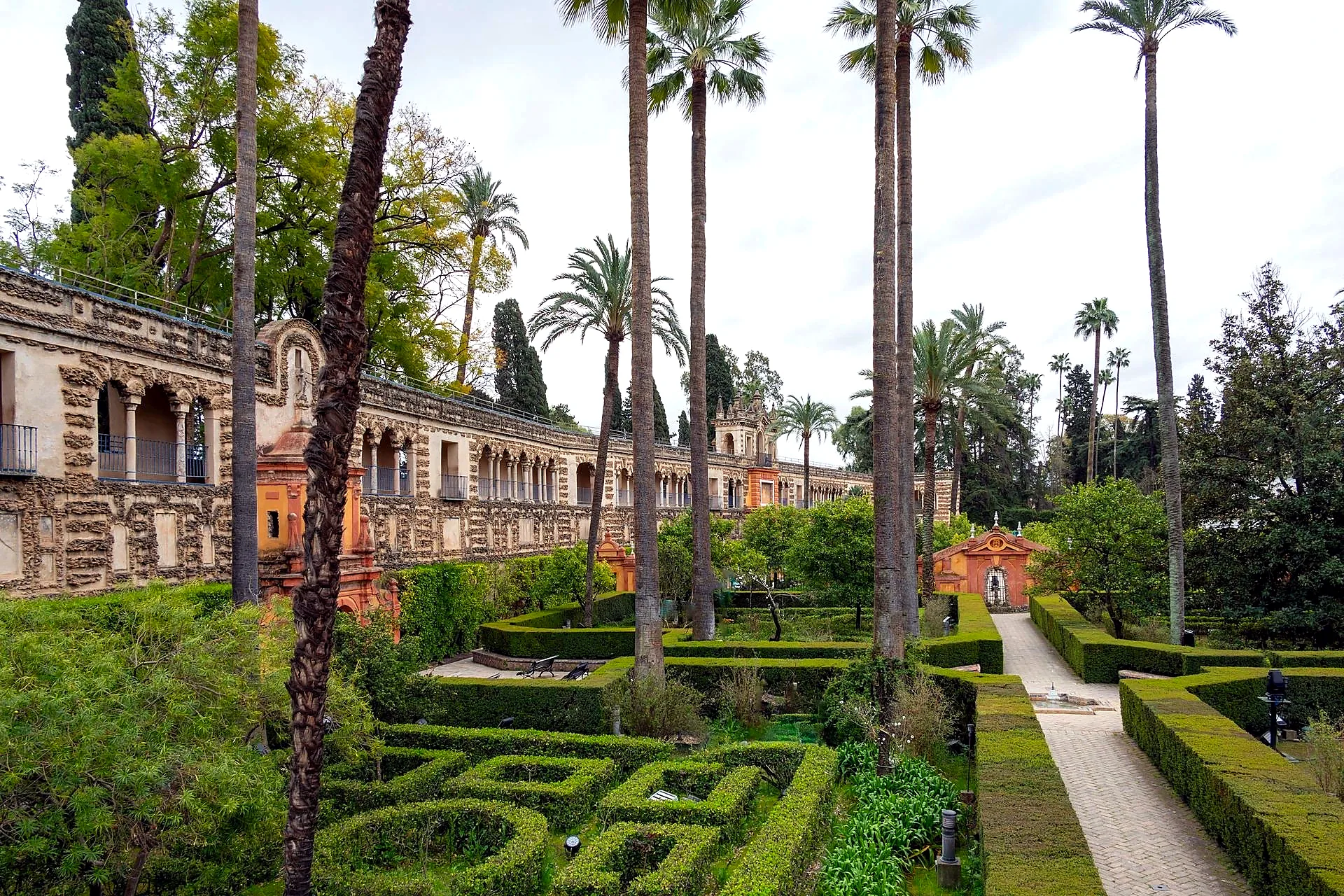
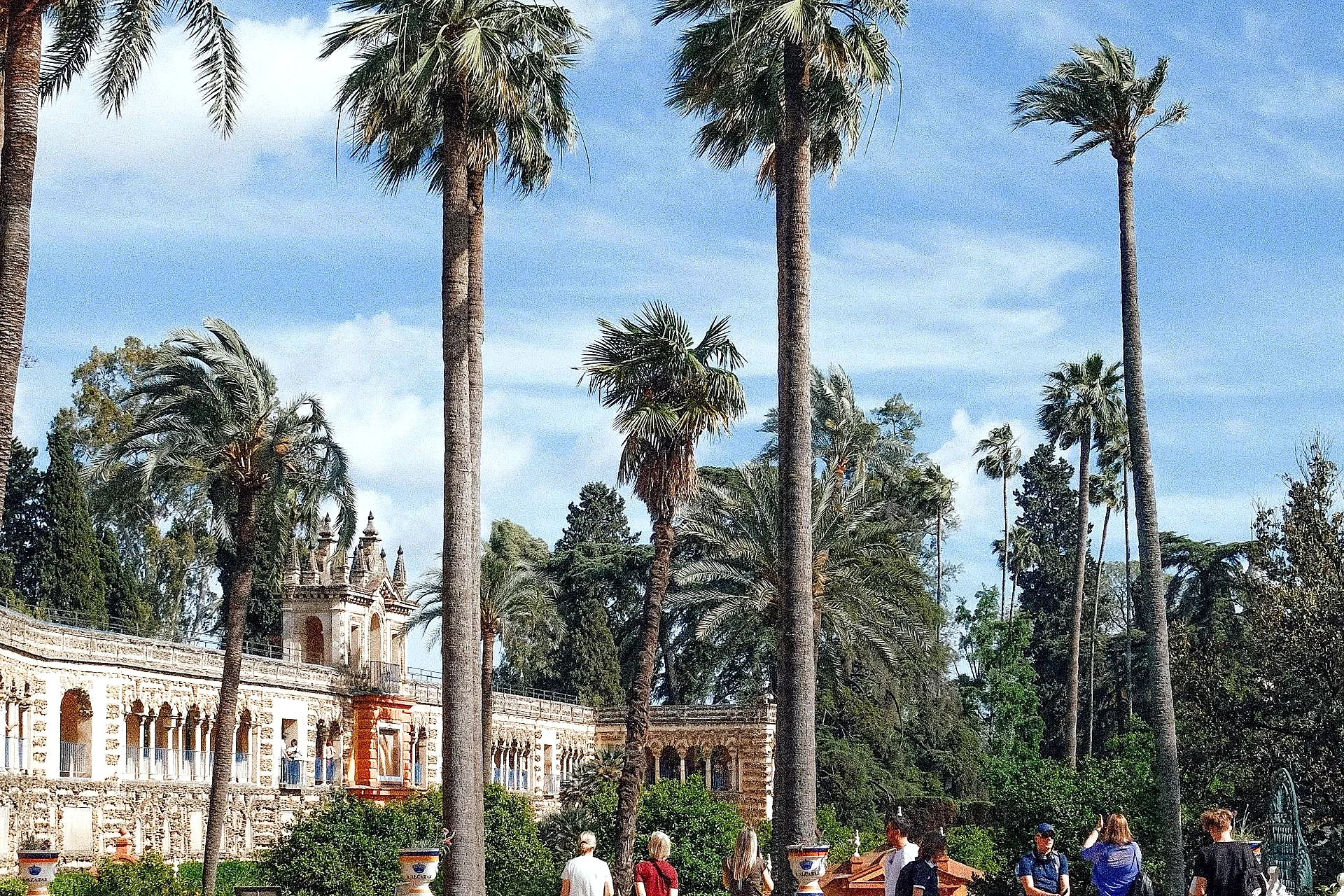
The garden sequences in the Dorne storyline — the exterior pathways between orange trees, the formal hedged sections, the fountain areas — were filmed in multiple sections of the Alcázar gardens. The gardens extend across approximately seven hectares behind the Pedro I palace and include formal Renaissance parterres, a pond garden, sections of medieval Islamic garden layout, and the elevated Galería de Grutescos walkway that runs along the south wall.
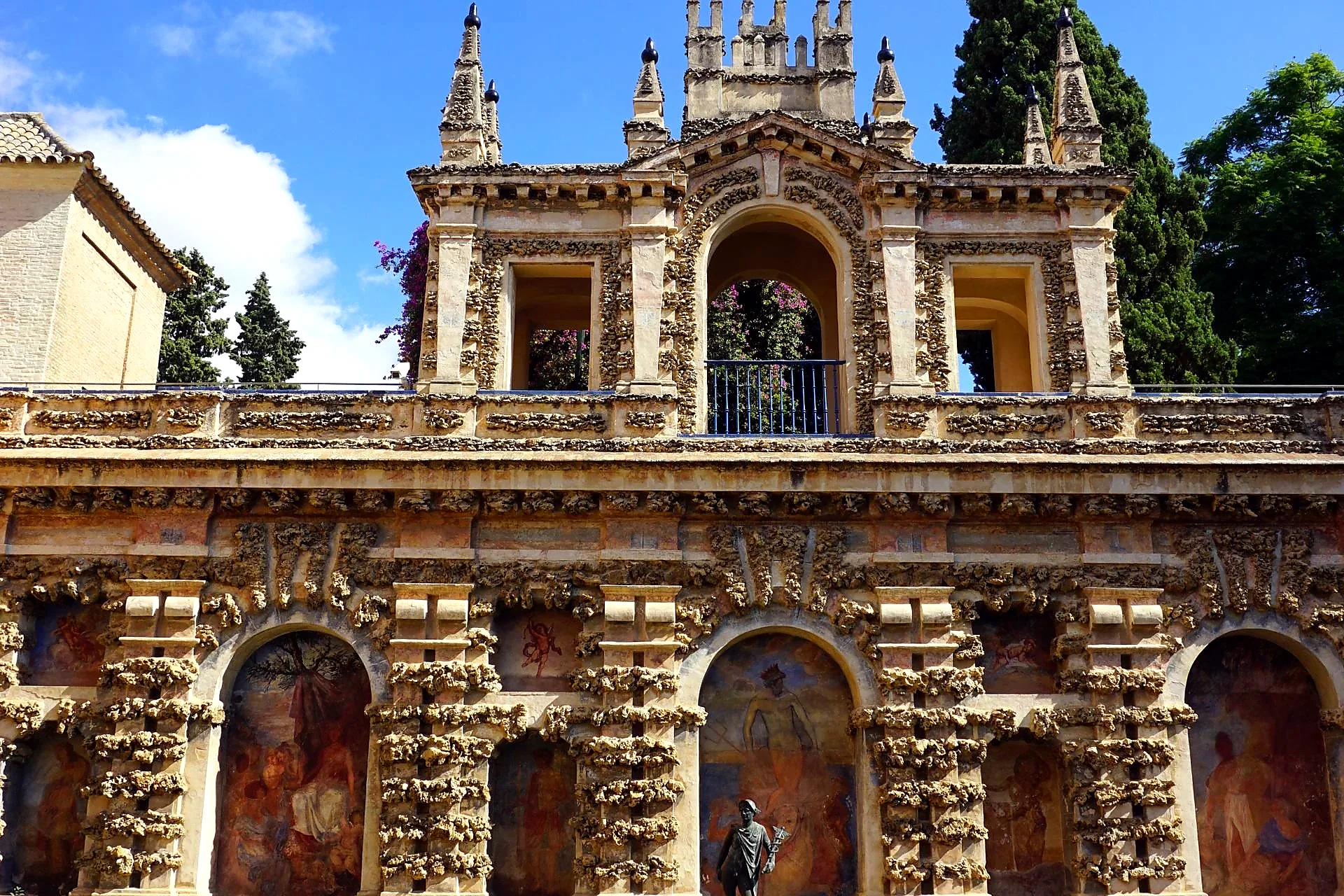
The Galería de Grutescos — a Renaissance-period elevated walkway decorated with grotesque stucco work — appears in several of the outdoor Dorne scenes. Its elevated position above the formal garden below creates the architectural layering that the production used as visual grammar for Dorne’s wealth and sophistication. The actual structure dates to the early 17th century.
The Salón de Embajadores
The throne room sequences within Dorne’s palace used the Salón de Embajadores — the Ambassadors’ Hall — as their primary interior. The room is the most architecturally significant space in the Pedro I palace: its muqarnas dome, completed in 1366, uses 360 individually carved wooden facets arranged in concentric rings. The double-arched windows opening to the north courtyard admit a quality of light that changes significantly across the day. On screen the room appears as generic fantasy palace interior; in context it is 14th century Mudéjar architecture operating at its technical peak.
✦ LUCÍA’S INSIGHT
The Salón de Embajadores is best seen between 10am and noon, when the light through the northern windows reaches the floor at an angle that illuminates the tile dado from below. The muqarnas dome is most visible from the centre of the room looking straight up — a position that most tour groups pass through without stopping. Stand there for two minutes. The scale and precision of the carved work becomes apparent in a way that peripheral viewing does not allow.
What the Filming Changed — and What It Did Not
The Game of Thrones production used the Alcázar largely as found. The primary physical alteration was the temporary installation of props and set dressing — furniture, fabric hangings, custom-made signage in the Valyrian language — none of which remains. The pool in the Patio de las Doncellas was already restored before filming; the gardens were already maintained in their current form. The production left no permanent mark on the building.
What changed is visitor expectation. Since the Dorne sequences aired, the Alcázar has received a measurable increase in visitors citing Game of Thrones as a reason for the visit — a pattern that other filming locations (the Plaza de España, the Alhambra-adjacent sites used for other productions) have also experienced. The experience of visiting with this framing tends to prioritise photography of the recognisable angles over sustained engagement with the building. Both modes of visiting are legitimate; understanding both is useful.
Visiting the Alcázar Filming Locations
The standard Alcázar ticket (€16.50 online) covers all of the filming locations. No separate access is required. The Patio de las Doncellas, the Salón de Embajadores, and the gardens are all included in the general admission route.
The morning slot (9:30am, first available entry) gives the clearest experience of the courtyards before guided tour groups consolidate in them. The Patio de las Doncellas is most legible — and most photogenic — in the first hour after opening. By 11am the space is significantly more crowded.
For visitors specifically interested in the filming location context alongside the architectural history, small-group tours covering both the Game of Thrones background and the actual historical significance of each space are available through GetYourGuide.
→ Game of Thrones Alcázar tours here — filming locations with architectural context
FAQ
What Game of Thrones scenes were filmed at the Alcázar?
The Real Alcázar appeared as the Water Gardens of Dorne — House Martell’s palace — across Seasons 5 and 6 of Game of Thrones. The Patio de las Doncellas served as the primary courtyard interior, the Salón de Embajadores as the throne room, and various sections of the gardens as exterior Dorne sequences. The Plaza de España in Seville’s María Luisa Park appeared separately as the city of Braavos in the same seasons.
Do I need a special ticket to see the Game of Thrones filming locations?
No separate ticket is required. The standard Alcázar admission (€16.50 online) covers all of the filming locations. The Patio de las Doncellas, Salón de Embajadores and gardens are all on the standard visitor route.
Which courtyard in the Alcázar is most recognisable from Game of Thrones?
The Patio de las Doncellas is the most immediately recognisable location — the long reflecting pool and the carved stucco arcade above it appeared frequently in the Dorne sequences. The view from the far end of the courtyard looking back toward the main arch is the angle most familiar from the series.
When is the best time to visit the Alcázar filming locations?
The earliest entry slot (9:30am) gives the clearest view of the Patio de las Doncellas and the best natural light in the Salón de Embajadores. By mid-morning tour groups consolidate in both spaces. Book online in advance — morning slots in April and May sell out weeks ahead.
Were any other locations in Seville used for Game of Thrones?
The Plaza de España in the María Luisa Park appeared as the fictional city of Braavos, where Arya Stark’s storyline in Seasons 5 and 6 was largely set. The Plaza de España’s colonnaded gallery, the central bridge and the canal surrounding the semicircular building all feature in those sequences. Both locations are walkable from the old town.
Related Posts
- Real Alcázar Seville: Tickets, Skip-the-Line Tours and Complete Visitor Guide
- Real Alcázar Tickets 2026: How to Book, What It Costs and Why They Sell Out Fast
- Mudéjar Architecture in the Alcázar: The Tile Detail Most Visitors Walk Past
- Star Wars at the Alcázar: The Naboo Scenes Explained On Location
- Best Tours in Seville 2026: Walking Tours, Bike Tours, Night Tours and Local Workshops