Ronda Day Trip from Seville: Does the Drive Live Up to the Puente Nuevo?
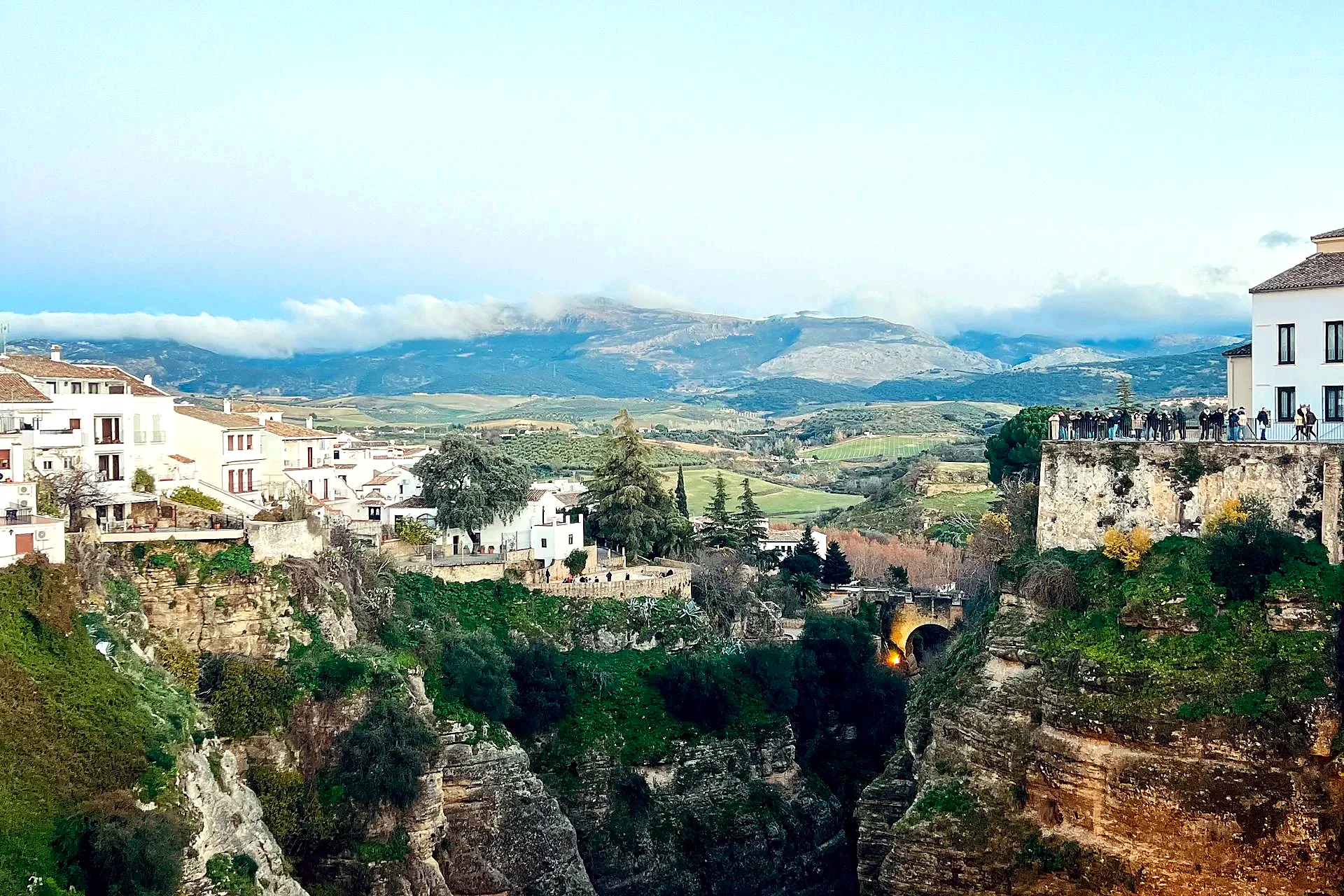
The Puente Nuevo in Ronda appears in photographs as a bridge spanning a gorge. In person, it is something else: the gorge appears first — a crack in the plateau 120 metres deep, with a river at the bottom that sounds like nothing from the top — and the bridge emerges as the structure that makes sense of it. The first time I drove up to Ronda from Seville, I had seen enough photographs to think I knew what to expect. I did not. The question of whether the Ronda day trip from Seville lives up to the Puente Nuevo is the wrong question. Ronda lives up to itself. The bridge is the reason most people come. The town keeps them longer than they planned.
Why Ronda Rewards the Journey from Seville
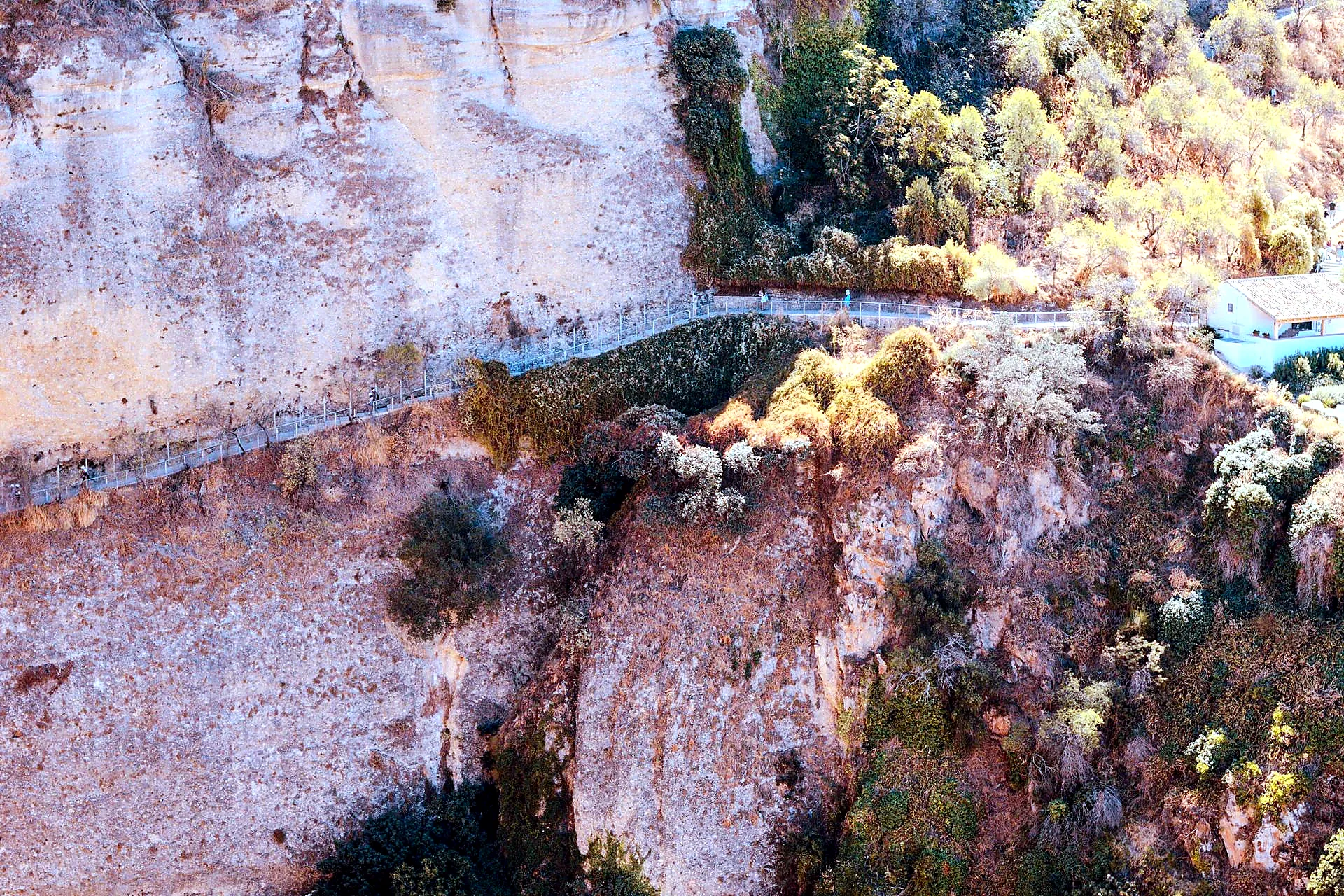
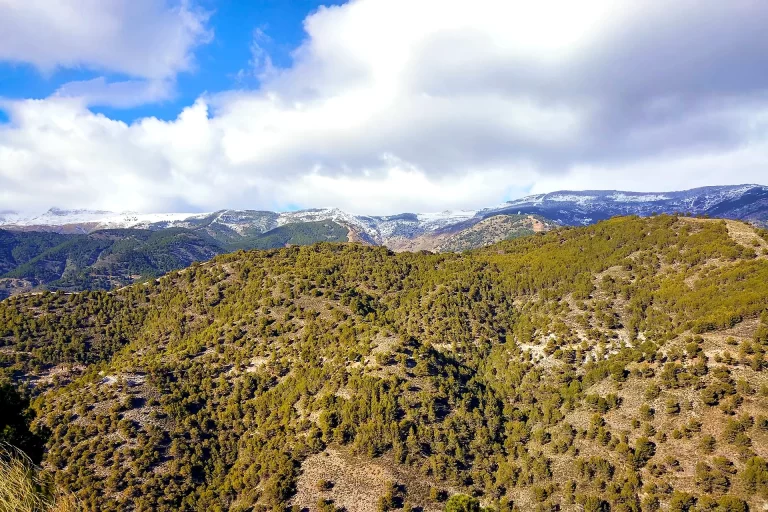
Ronda sits on a plateau in the Serranía de Ronda, approximately 150 kilometres from Seville by road — about two hours by car or a little over two hours by bus. There is no direct train from Seville to Ronda; the bus from Plaza de Armas station (ALSA or Comes operators) is the most practical public transport option and runs several services daily. The journey by road passes through olive groves and the low hills of the Guadalquivir valley before the road begins to climb into the sierra proper, the landscape shifting from flat agricultural Andalusia to something dramatically different. The approach to Ronda from the west gives a first view of the town sitting on the edge of the plateau that is worth noting before the town itself takes over. See the full Day Trips from Seville pillar guide for all day trip comparisons.
What to Do in Ronda on a Day Trip
The Puente Nuevo and the Tajo Gorge
The Puente Nuevo — “new bridge,” completed in 1793 after 42 years of construction — connects the older Moorish section of the town (La Ciudad) with the newer 15th century expansion (El Mercadillo) across a gorge 120 metres deep. The bridge is best experienced from three angles: from the road level, where the scale is immediately apparent; from the Camino de los Molinos below, a path that descends into the gorge and gives the upward view of the bridge’s three arches; and from the viewpoint on the far side of the gorge off Calle Los Remedios, which gives the classic elevated view most photographs show. I always go to the viewpoint last — it is the image everyone has already seen, and seeing it in context, after the gorge itself, changes what it means.
✦ LUCÍA’S LOCAL TIP
The descent into the Tajo gorge via the Camino de los Molinos is not prominently signposted and most day-trip visitors miss it entirely. The path begins near the old Arabic bridge (Puente Viejo) at the southern end of La Ciudad and takes about 20 minutes to descend. At the bottom, the gorge walls rise on both sides and the Puente Nuevo appears overhead as a structure of genuinely alarming ambition. The path is steep and uneven — comfortable shoes matter — but the view from below is the one that makes the scale comprehensible.
La Ciudad — The Old Town
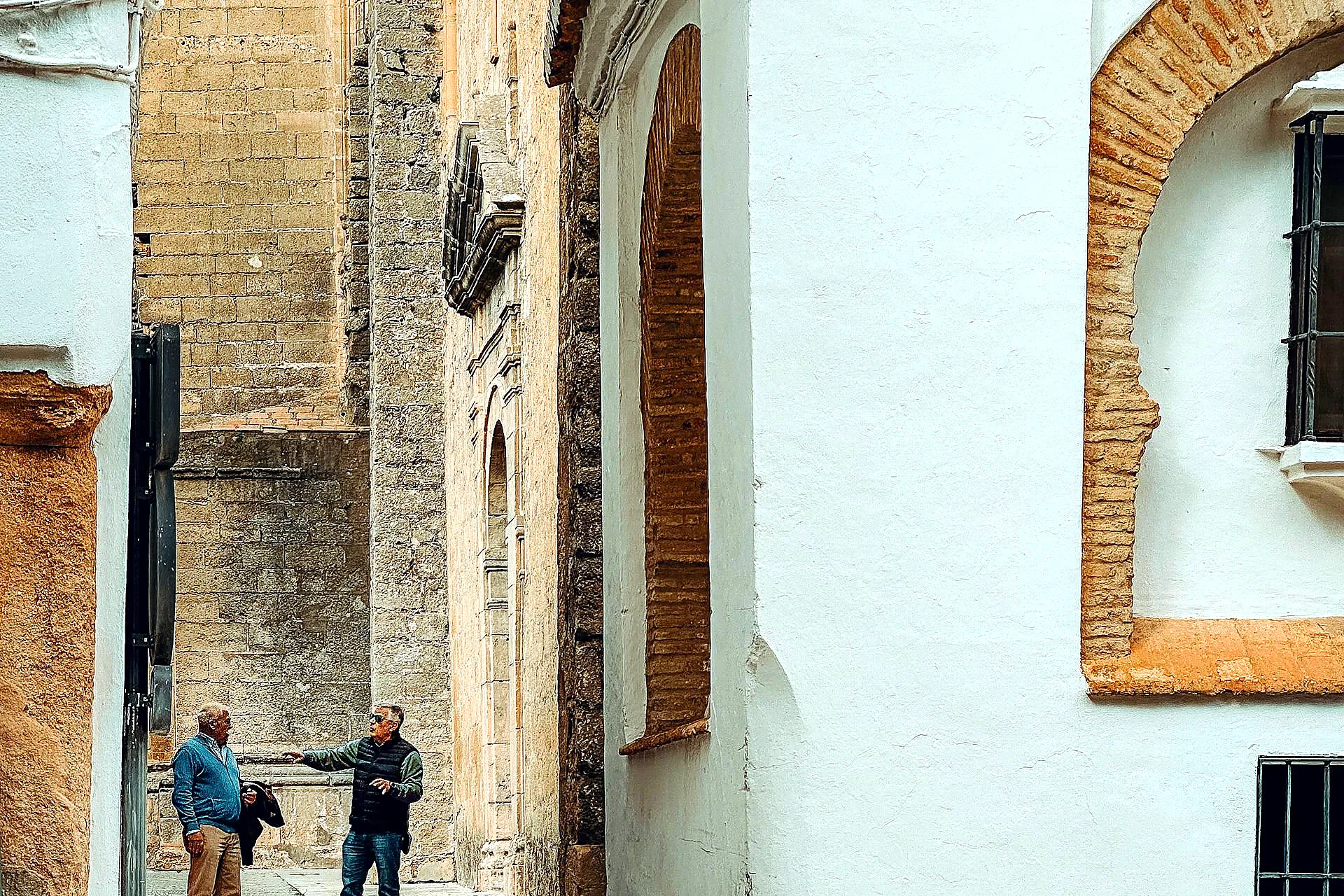
The Moorish quarter of Ronda occupies the southern section of the plateau and contains the most intact historic urban fabric: the Collegial church of Santa María la Mayor (built on the foundations of a mosque, its minaret still visible as the base of the bell tower), the Mondragón palace, the narrow streets of the former medina, and the Arab baths at the base of the eastern cliff. The baths date to the 13th–14th century and are among the best-preserved Moorish public baths outside Granada. Entry costs approximately €4; the vaulted brick rooms and star-shaped skylights are in good condition and the site is rarely crowded.
The Plaza de Toros
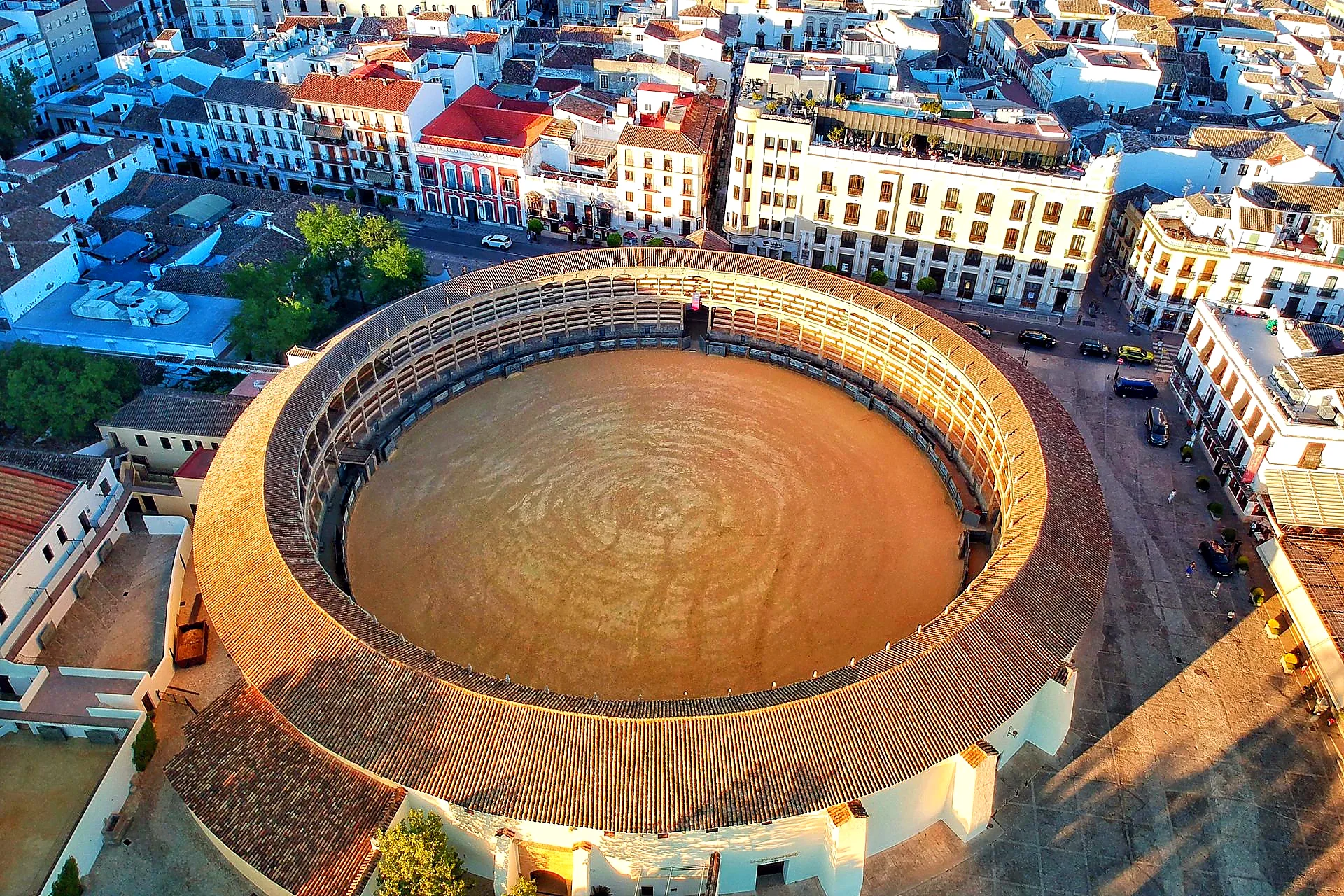
Ronda’s bullring — the Real Maestranza de Caballería — is one of the oldest in Spain, opened in 1785, and the one most associated with the development of modern bullfighting as a formal discipline. Pedro Romero, who fought in Ronda in the late 18th century, is credited with codifying the rules of the art on foot. The ring itself is beautifully proportioned in a way that a visit rewards even for visitors with no particular interest in bullfighting: the sand, the two tiers of stone seats, the carved wooden barriers. The adjacent museum covers the history of the corrida in Ronda specifically, which is more interesting than a general bullfighting museum would be.
✦ LUCÍA’S LOCAL TIP
The viewpoint at the end of Calle Tenorio, just south of the Plaza de Toros, looks directly down the gorge from a spot most visitors walk past without stopping. It is unmarked, takes thirty seconds to reach from the bullring entrance, and gives one of the cleanest views of the cliff face and the valley below. I stop here every time before moving back into the old town.
What to Know Before You Go
- Getting there: By car — approximately 2 hours from Seville via A-92 and A-374. By bus — ALSA or Comes from Plaza de Armas, roughly 2 hours 15 minutes to 2 hours 30 minutes. No direct train from Seville to Ronda (the train route from Seville requires a change at Bobadilla, journey time 3+ hours — bus is faster).
- What to wear: Comfortable walking shoes — the descent into the gorge and the old town’s cobbled streets both require grip. In summer, a hat and water; the plateau offers little shade.
- Best time to go: Spring (March–May) and autumn (September–November) give the most comfortable temperatures. July and August are manageable — the altitude makes Ronda cooler than Seville — but the midday heat on exposed sections of the gorge walk is real.
- How long to allow: A full day from Seville gives six to seven hours in Ronda — enough for the gorge, the old town, the baths and lunch without feeling rushed. A half-day is possible but tight.
- Lunch: The restaurants immediately adjacent to the Puente Nuevo are priced for tourists. Walking two streets into La Ciudad — toward the Mondragón palace area — finds better quality at lower prices. The local speciality is rabo de toro (oxtail stew), which appears on most menus in the old town.
What Else Is Near Ronda
The White Villages — the Pueblos Blancos of the Serranía — surround Ronda and are accessible by car from the town. Zahara de la Sierra, Grazalema and Setenil de las Bodegas (the village built into a rock overhang) are all within 30–45 minutes of Ronda by road. A day trip from Seville that combines Ronda with one of the White Villages requires a car and an early start; it is a full day rather than a comfortable one. The White Villages tour from Seville guide covers these in detail.
“Ronda is the day trip from Seville I recommend most consistently to visitors who want something completely different from the Islamic architectural tradition of Granada and Córdoba. The gorge is a geological fact before it is a tourist attraction, and the town that grew on its edge earned its character independently of whatever photographs have made it famous.”
FAQ
Is the Ronda day trip from Seville worth it?
The Ronda day trip from Seville is worth it for visitors who want a day outside the Islamic architectural tradition of Granada and Córdoba. The Tajo gorge and Puente Nuevo are genuinely dramatic in person in a way photographs do not fully communicate. The old town, the Arab baths and the bullring add substance to what would otherwise be a single-monument visit. A full day is needed to see Ronda properly.
How do I get from Seville to Ronda?
By car via the A-92 and A-374 in approximately 2 hours. By bus from Plaza de Armas station (ALSA or Comes) in approximately 2 hours 15 minutes to 2 hours 30 minutes — the bus is faster than the train for this route. Guided day tours from Seville are also available and handle all transport. There is no convenient direct train from Seville to Ronda.
How long should I spend in Ronda on a day trip from Seville?
Six to seven hours in Ronda gives a full visit covering the gorge descent, the Puente Nuevo viewpoints, the old town, the Arab baths and lunch without feeling rushed. A full-day departure from Seville and evening return is the practical format. A half-day visit sees the main views but misses the depth that makes Ronda more than a single photograph.
What is there to do in Ronda besides the Puente Nuevo?
The descent into the Tajo gorge via the Camino de los Molinos, the 13th century Arab baths, the Collegial church of Santa María la Mayor (built on a mosque), the Mondragón palace, and the Real Maestranza bullring with its museum. The old town (La Ciudad) rewards unhurried walking more than a checklist approach.
Is Ronda or Granada a better day trip from Seville?
They offer completely different experiences. Granada is primarily the Alhambra — the peak of Nasrid Islamic palace architecture, requiring advance booking and significant planning. Ronda is a geological and historic town that requires no advance booking and rewards spontaneous exploration. For visitors who have already seen the Alhambra or are not prioritising Islamic architecture, Ronda is the more distinctive choice from Seville.
Related Posts
- Best Day Trips from Seville 2026: Granada, Alhambra, Córdoba, Ronda and Beyond
- White Villages Tour from Seville: The Route and Which Villages Are Worth Prioritising
- Córdoba Day Trip from Seville 2026: The Mezquita and What to See in 8 Hours
- Granada Day Trip from Seville 2026: What to Book, When to Go and Why It Sells Out
- Cádiz Day Trip from Seville: Is the Two-Hour Journey Worth Making?