Italica Roman Ruins from Seville: What Makes the Half-Day Trip Worth It
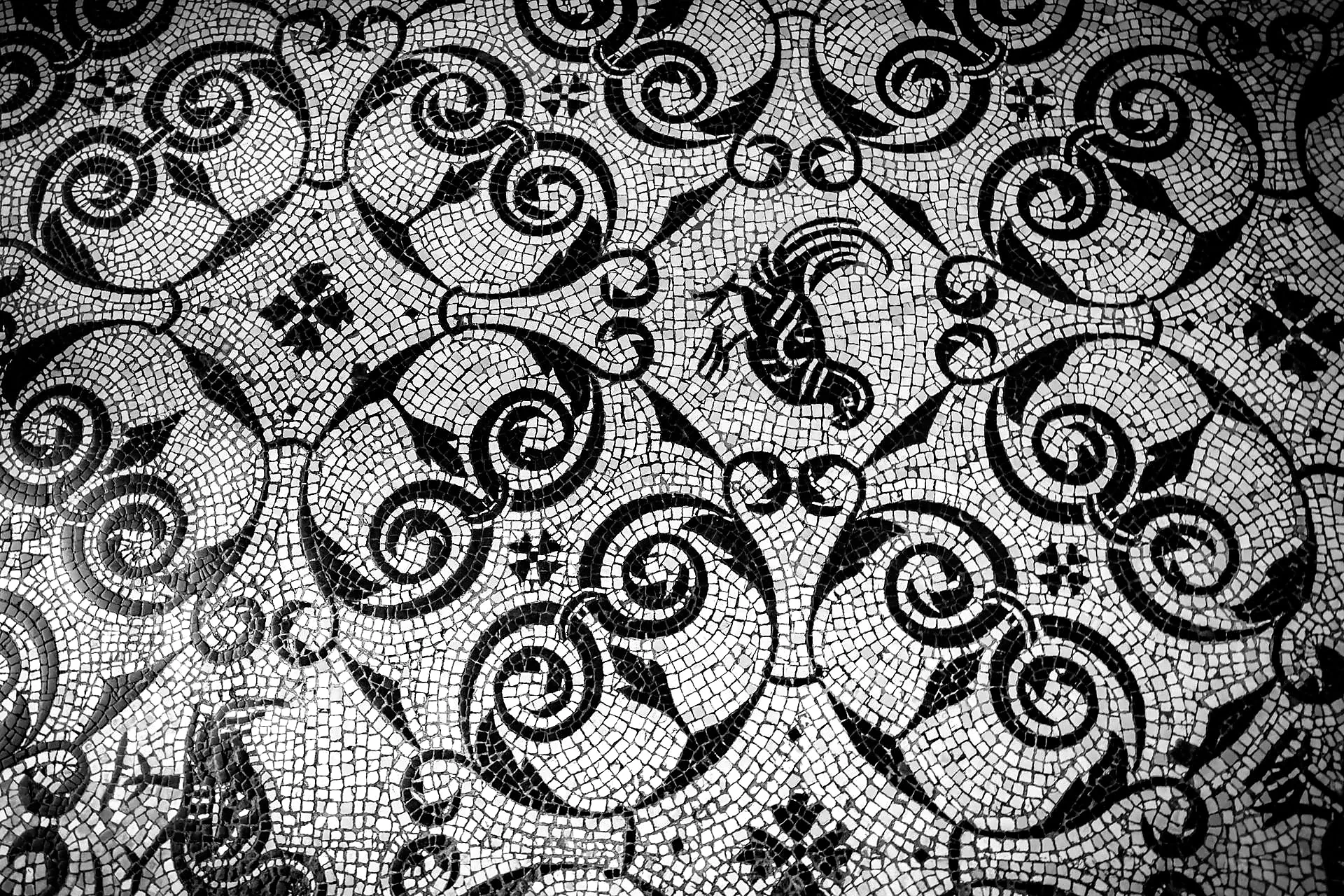
Nine kilometres north of Seville, in what is now the town of Santiponce, the Roman city of Italica preserves a mosaic floor in the House of the Birds that uses 33 species of identifiable birds — each rendered in tesserae small enough that individual feathers are distinguishable. The mosaic is 1,800 years old and sits under a modern protective roof open to the sky, undisturbed except by the occasional cat from the adjacent village. Italica Roman ruins from Seville require less than thirty minutes’ travel in each direction and the site itself takes two to three hours to cover properly. It is the closest significant Roman site to Seville and consistently under-visited by international tourists who do not know it is there.
What Italica Is — and Why It Matters
Italica was founded in 206 BCE by the Roman general Scipio Africanus as a settlement for his veterans after the Second Punic War — making it one of the earliest Roman cities founded outside the Italian peninsula and the first Roman city in the Iberian territories. The city grew in importance under the Julio-Claudian emperors and reached its peak expansion in the 2nd century CE, when the Emperors Trajan (born 53 CE) and Hadrian (born 76 CE) — both from the Italica region — invested significantly in expanding the city as a gesture toward their birthplace. The large amphitheatre, the street grid of the Nova Urbs (New City) expansion, and the elaborate private houses with their mosaic floors all date to this Trajanic and Hadrianic period.
The city was gradually abandoned from the 3rd century CE as the Guadalquivir river shifted course and the agricultural land that supported the settlement changed character. Much of the ancient city lies beneath the modern town of Santiponce; the excavated archaeological zone covers approximately 52 hectares and represents only a portion of the original urban area. Full day trip context at the Day Trips from Seville pillar guide.
What to See at Italica
The Amphitheatre
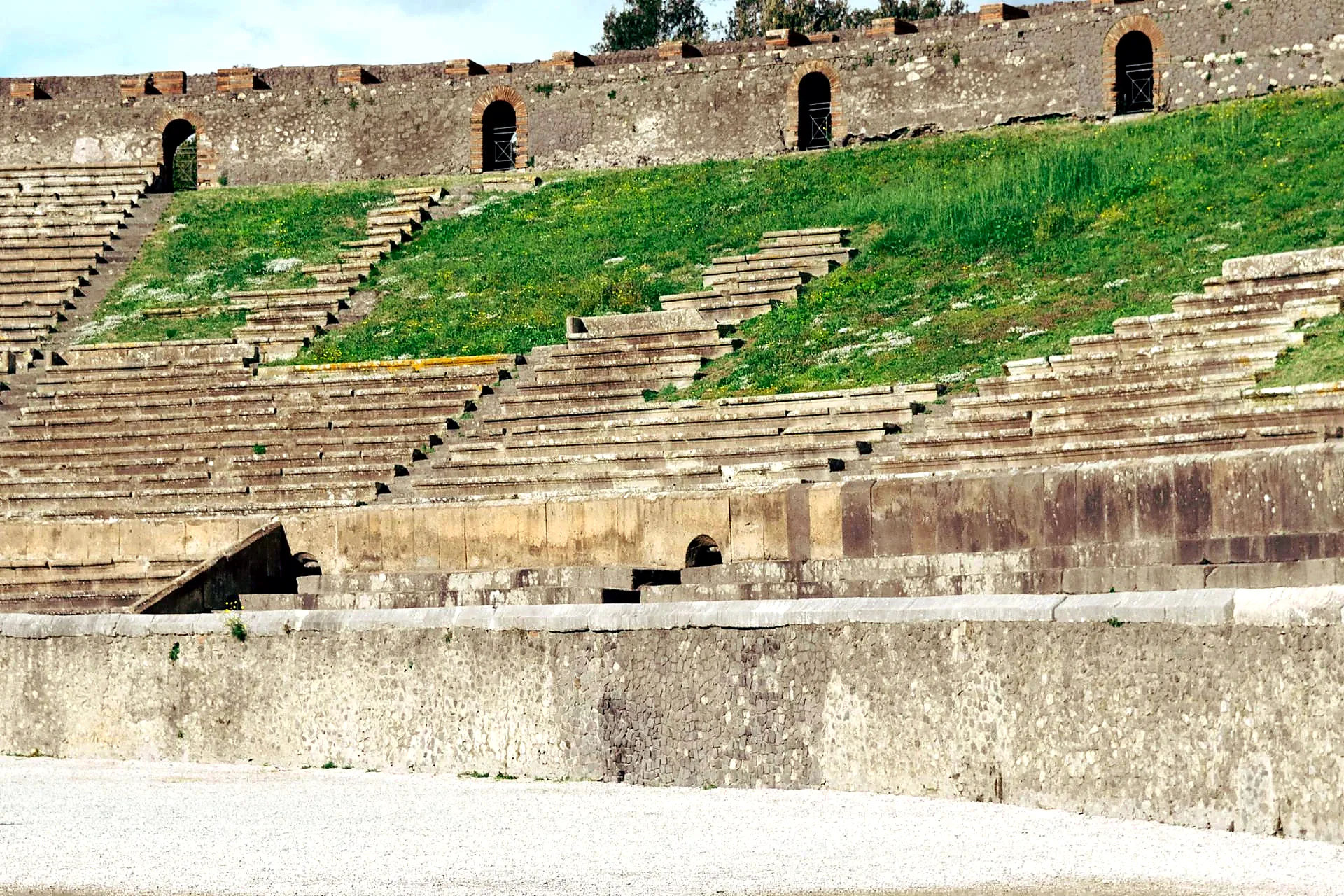
The Italica amphitheatre is the third largest in the Roman Empire, with a capacity estimated at 25,000 spectators — larger than the Colosseum’s seating capacity, though the structure is considerably less complete. The elliptical arena, the underground service corridors (where animals and gladiators waited before entering the arena floor), and the remains of the seating banks are all visible and walkable. The scale of the structure in relation to the size of the surrounding settlement is striking: Italica at its peak held approximately 8,000–10,000 residents, suggesting the amphitheatre served a wider regional audience from across the southern Iberian territories.
✦ LUCÍA’S LOCAL TIP
The underground corridors of the amphitheatre — the service passages beneath the arena floor — are accessible and worth exploring slowly. The system of trapdoors and lifting mechanisms that allowed animals and fighters to appear apparently from the arena floor is still legible from the corridor level. Most visitors spend five minutes in the underground section; fifteen gives a much clearer sense of how the arena functioned operationally. Bring a torch or use a phone light — the corridors are not well lit.
The Mosaic Houses of the Nova Urbs
The excavated residential zone of the Nova Urbs contains several large private houses with in-situ mosaic floors that are among the best-preserved Roman domestic mosaics in the Iberian peninsula. The House of the Birds, the House of the Planetarium, the House of Neptune, and the House of Hylas each preserve distinct mosaic programmes that give a clear picture of 2nd century CE decorative taste and mythological iconography. The House of the Birds mosaic is the most naturalistic and the most detailed; the House of the Planetarium uses an astronomical scheme that has been studied by classical astronomers for its representation of the solar system as understood in the 2nd century CE.
The mosaics are protected by modern roofing structures that allow natural light while preventing rain damage. The result is a viewing experience closer to the original domestic setting than most museum presentations of Roman mosaics achieve — the floors are at ground level, in the rooms they were made for, without the alienating effect of a display case.
✦ LUCÍA’S LOCAL TIP
The street grid of the Nova Urbs is partially reconstructed at ground level — the original cardo and decumanus (the main north-south and east-west streets) can be walked in their original alignment. Standing on the main crossroads of the Nova Urbs and looking along the street axis gives a sense of the city’s spatial organisation that no amount of signboard information replicates. Take fifteen minutes to walk the main street grid before concentrating on individual houses — the urban logic becomes apparent before the individual details.
Practical Information
- Getting there: Bus M-172A from Seville’s Plaza de Armas bus station, approximately 25–30 minutes, runs frequently. By car, approximately 20 minutes north via the A-66 motorway. Parking is available near the site entrance in Santiponce.
- Entry: EU citizens free; non-EU visitors approximately €1.50 (as of early 2026 — verify before travel). The site is managed by the Junta de Andalucía and hours vary seasonally — check the official Conjunto Arqueológico de Italica website before visiting.
- Opening hours: Closed Mondays. Hours vary by season — generally 09:00–18:00 in winter, 09:00–15:00 in summer to avoid the worst heat. Confirm current hours before travel.
- How long to allow: Two to three hours covers the amphitheatre, the mosaic houses, and the street grid comfortably. The site involves significant walking on uneven ground — comfortable shoes are appropriate.
- Combined visit: The monastery of San Isidoro del Campo in Santiponce (a 14th century Gothic-Mudéjar building that later became a Protestant refuge during the Spanish Reformation) is five minutes’ walk from the Italica entrance and worth an hour in addition to the Roman site.
“Italica is the half-day trip from Seville that most visitors do not know exists. The House of the Birds mosaic alone justifies the thirty-minute bus journey. For anyone with an interest in Roman history or architecture, it is a more surprising visit than many of the headline day trips from the city.”
FAQ
Is Italica worth visiting from Seville?
Italica is worth visiting from Seville for anyone with an interest in Roman history, archaeology or ancient mosaics. The in-situ mosaic floors — particularly the House of the Birds — are among the finest Roman domestic mosaics accessible in Spain, and the amphitheatre is one of the three largest in the Roman Empire. The site is thirty minutes from central Seville and consistently under-visited, making the experience significantly quieter than comparable Roman sites.
How do I get to Italica from Seville?
Bus M-172A from Plaza de Armas bus station in Seville runs to Santiponce in approximately 25–30 minutes and departs frequently. By car the journey takes approximately 20 minutes north via the A-66. The site entrance is in the town of Santiponce, signposted from the main road.
How long does it take to visit Italica?
Two to three hours covers the main archaeological zone including the amphitheatre, the mosaic houses of the Nova Urbs, and the street grid. Adding the monastery of San Isidoro del Campo nearby extends the visit to three to four hours total. Italica works as a half-day trip rather than a full day from Seville.
What is the entry fee for Italica?
EU citizens enter free; non-EU visitors pay approximately €1.50 as of early 2026 — verify current pricing at the Junta de Andalucía’s official Italica website before visiting. The site is closed on Mondays. Hours vary seasonally; confirm before travel.
Is Italica the birthplace of the Emperor Hadrian?
Hadrian (76–138 CE) is recorded as being from the Italica area — the exact location of his birth within the settlement is disputed, but Italica was unambiguously the origin city of his family. His predecessor Trajan (53–117 CE) was also from Italica, making this the only Roman site outside Italy associated with the birthplace of two emperors. The Hadrianic expansion of the Nova Urbs was likely a deliberate investment in the city of his family’s origin.
Related Posts
- Best Day Trips from Seville 2026: Granada, Alhambra, Córdoba, Ronda and Beyond
- Carmona Day Trip from Seville: The Walled Town Most Visitors Skip
- Best Day Trips from Seville by Train: What Works Without Renting a Car
- Seville Local Life and Culture 2026: Neighbourhoods, Photography and City Comparisons
- Córdoba Day Trip from Seville 2026: The Mezquita and What to See in 8 Hours