Bike Tours in Seville: The Flat Riverside Route That Makes Sense in the Heat
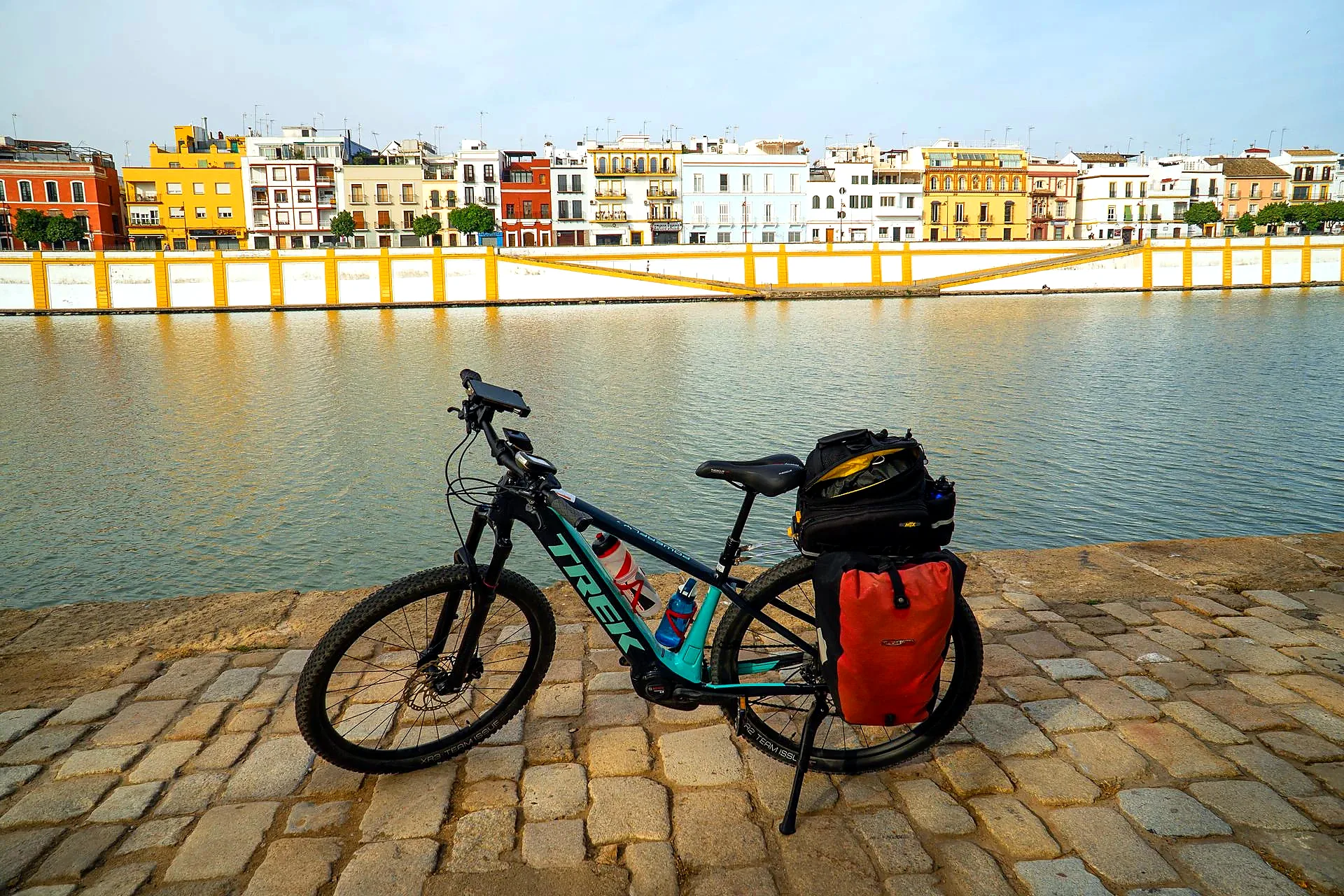
Seville is one of the most cycle-friendly cities in Spain — the result of a sustained investment in segregated cycle infrastructure from the mid-2000s onward that produced a network of approximately 180 kilometres of dedicated cycle lanes. The flat topography of the city and the Guadalquivir riverside route make cycling the fastest practical way to cover the distance between the main sights in high summer, when walking the same circuit in midday heat is uncomfortable and taxis are slow in the congested old town streets. Bike tours in Seville cover the riverside route specifically because it is the urban cycling experience the city was designed to support — flat, shaded in sections, passing the Torre del Oro and the Triana bridge at a pace that allows the river’s scale to register.
Why Seville Works on a Bike
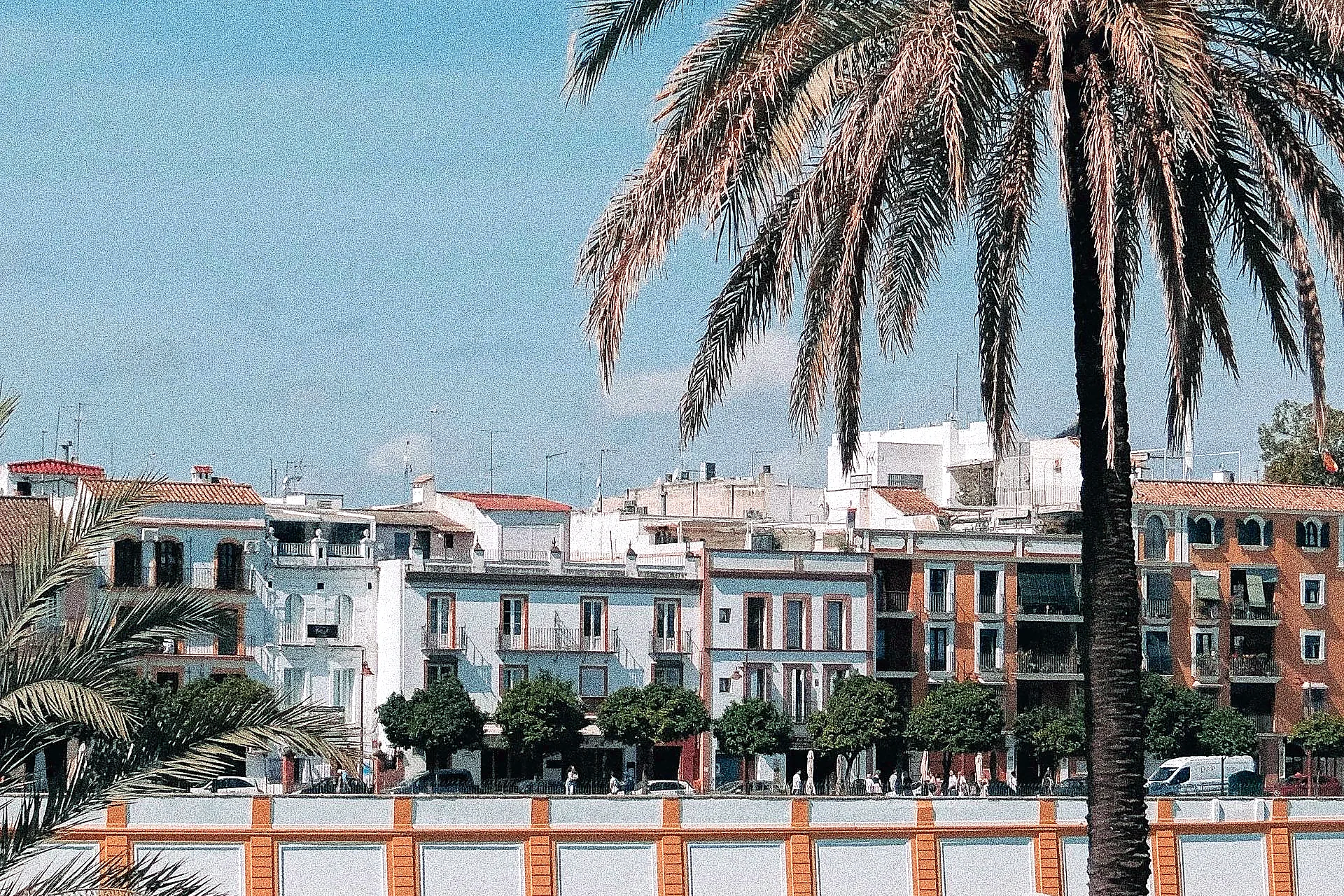
The key characteristic of Seville’s topography for cycling is the absence of significant gradient. The city occupies the Guadalquivir flood plain and the elevation change across the historic centre is negligible — the route from the Cathedral to the Triana bridge, the length of the Arenal waterfront, and the circuit through the María Luisa Park are all essentially flat. In July and August, when walking Seville’s streets at midday requires shade-seeking and a slow pace, covering the same distance on a bike in the morning takes thirty to forty minutes and generates enough airflow to make the heat manageable.
The cycle lane infrastructure keeps bike tours away from the heaviest pedestrian traffic in the old town centre — the Santa Cruz district lanes are not accessible by bike and the Avenida de la Constitución has pedestrian priority — which means bike tours in Seville cover a different circuit from walking tours rather than the same circuit on wheels. The riverside route, the María Luisa Park, the Alameda de Hércules promenade, and the Triana neighbourhood are the specific zones that bike tours access effectively, while the Cathedral and Alcázar exterior are typically pass-through rather than stop-and-explain points. Full tours context at the Best Tours in Seville pillar guide.
✦ LUCÍA’S LOCAL TIP
Bike tours in Seville are restricted from entering the narrow lanes of the Barrio Santa Cruz — the most photographed section of the old town — by a combination of physical narrowness (some lanes are under 2 metres wide) and traffic regulation. Guides who describe their bike tour as covering “the old town” are covering the perimeter of the old town on the wider streets, not the interior lanes. This is not a limitation — the riverside route and the María Luisa Park are genuinely the best cycling in the city — but it means a bike tour and a walking tour are complementary rather than interchangeable for first-time visitors wanting to see Seville’s historic interior.
What Bike Tours in Seville Cover
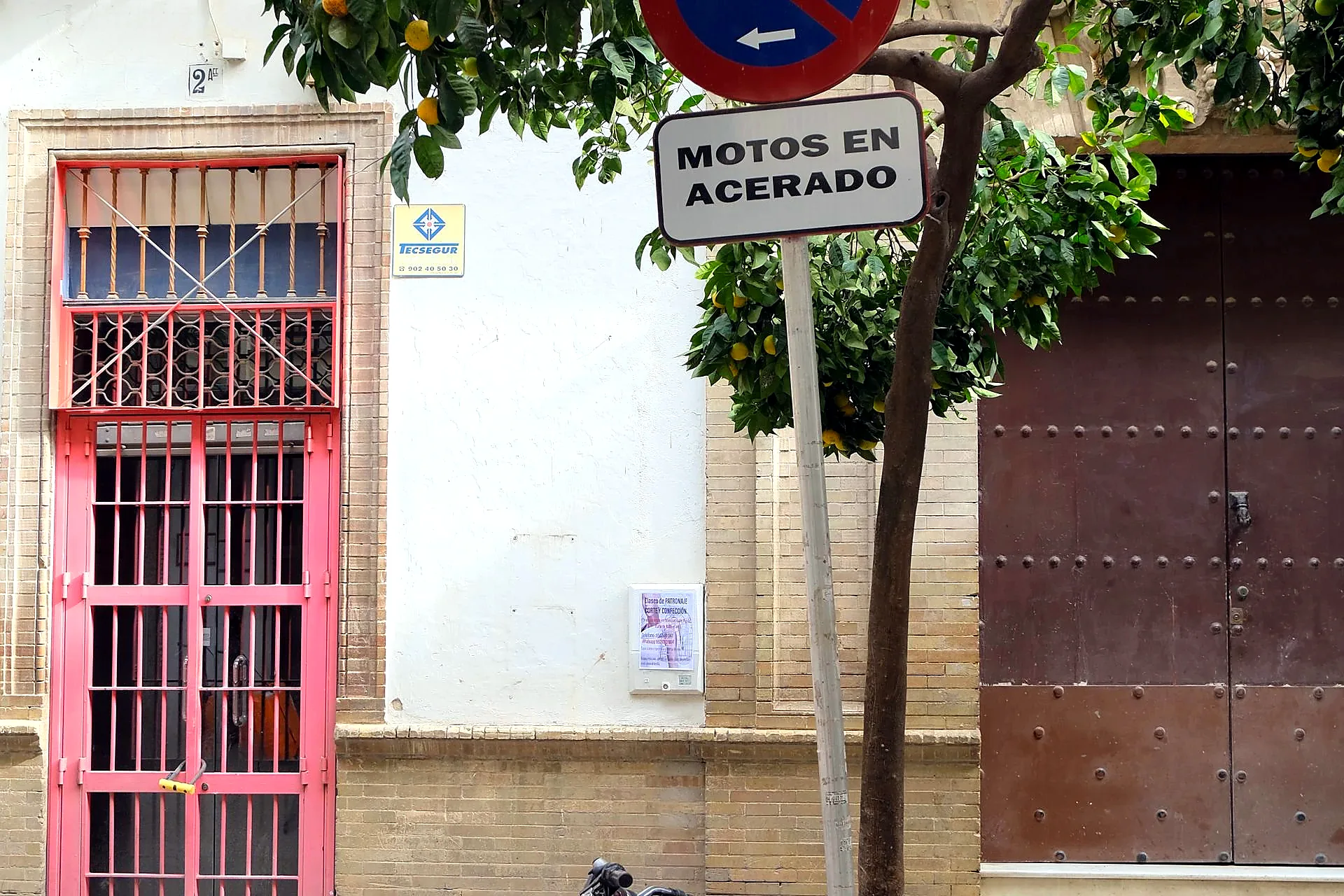
Standard bike tours run two to three hours and cover approximately 10–15 kilometres at a relaxed pace with stops. The typical circuit includes the Guadalquivir riverside route (Torre del Oro to the Triana bridge and return, or crossing into Triana for the ceramics district), the María Luisa Park (the large formal park south of the old town containing the Plaza de España), and sections of the Alameda de Hércules and the newer riverside development north of the Triana bridge. Some tours cross into Triana and stop at the market or the ceramics tile shops; others stay on the old-town-side bank of the river.
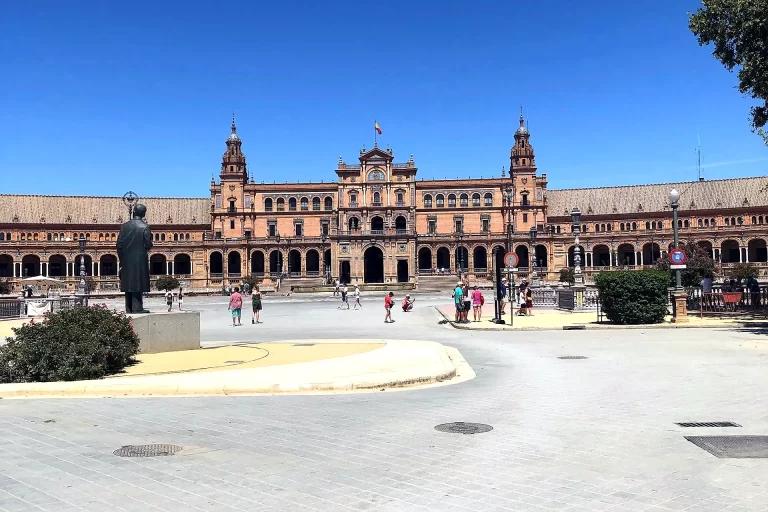
The Plaza de España is consistently included in Seville bike tours and is one of the experiences that genuinely benefits from the bike — the semicircular colonnade, the canal, the tiled alcove bridges are all more pleasurably navigated on two wheels than on foot, and the park’s scale (approximately 1 kilometre end to end) makes the bike the natural format for covering it without rushing.
✦ LUCÍA’S LOCAL TIP
The best time for a bike tour in Seville is 09:00–10:00am in summer (May through September) — the riverside route is in morning shade for the first hour, the María Luisa Park is cool before the sun reaches the open sections, and the Plaza de España has not yet filled with the midday visitor volume. Afternoon bike tours in summer (16:00 onward) work when the city begins to cool, but the riverside route faces west and the direct afternoon sun on the Arenal waterfront is intense until approximately 18:00. In October through April, the timing is less critical and midday tours are comfortable.
Electric vs Standard Bikes
Seville’s flat topography means electric bikes provide minimal advantage over standard bikes for most touring purposes — there are no significant gradients to assist with, and the e-bike’s weight is a liability in the start-stop rhythm of a guided city tour with frequent pauses. Some operators offer e-bikes as a premium option (typically €5–10 more than standard) for visitors who prefer the reduced physical effort. For the specific context of a guided Seville bike tour on the riverside route, a standard bike handles the terrain comfortably for most fitness levels.
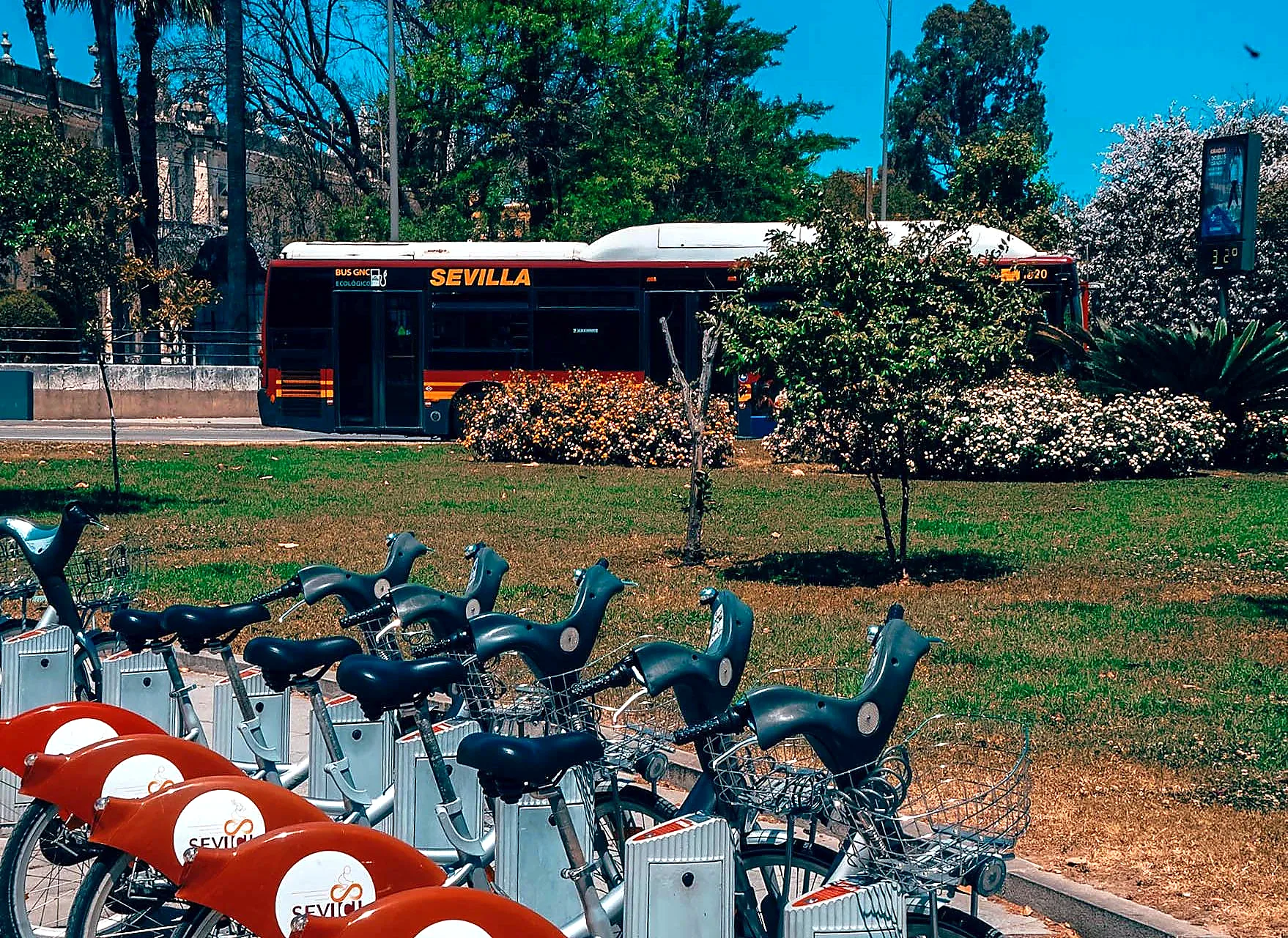
The Sevici public bike share system (€1.94/day registration, first 30 minutes free per ride) is the city’s own infrastructure — not available for guided tours but usable for independent cycling exploration after the guided tour has established the route logic. The Sevici station network covers the cycle lane circuit comprehensively.
Practical Information
- Cost: Guided bike tours in Seville cost approximately €30–42 per person for two to three hours, bike included. E-bike upgrade typically €5–10 additional.
- Group size: Bike tours in Seville work best at 8–12 people — larger groups create spacing issues on the cycle lanes and the guide’s communication becomes difficult at speed. Check the stated maximum.
- Age and fitness: The flat route makes bike tours accessible to most fitness levels. Minimum age is typically 14 for joining a tour independently; younger children may ride in cargo bikes or follow-along bikes with some operators — confirm when booking.
- What to wear: Comfortable clothing for cycling — no specialist gear required. In summer, bring water and apply sunscreen before departure; the riverside route has limited shade in the open sections. Helmets are provided by tour operators.
- Restrictions: The Santa Cruz old town lanes are not accessible by bike. The Cathedral and Alcázar interiors require a separate walking visit. Bike tours cover Seville’s navigable cycling circuit, which is genuinely extensive but does not include the pedestrian interior of the historic quarter.
“Bike tours in Seville are the format I recommend for visitors who have already done a walking tour of the old town and want to understand the city’s geography beyond the Santa Cruz-Cathedral-Alcázar triangle. The riverside route and the María Luisa Park show a completely different scale of the city — and in summer, the morning breeze on the Guadalquivir bank at 09:30 makes cycling the right format in a way that walking simply cannot match.”
FAQ
Are bike tours in Seville worth it?
Bike tours in Seville are worth it for visitors who want to cover the riverside route, the María Luisa Park and the Plaza de España at a pace and in a format that allows the city’s scale to register. The flat topography and dedicated cycle lanes make Seville genuinely one of the best European cities for cycling, and the guided format adds context about the city’s districts and history during the route. In summer, the morning airflow on the bike makes the heat manageable in a way that walking cannot replicate.
Can beginners do a bike tour in Seville?
Yes — the bike tour route in Seville is entirely flat, uses segregated cycle lanes, and is paced at a slow touring speed with frequent stops. No specialist cycling experience is required. The route does not involve significant traffic or challenging terrain. Most tour operators accommodate riders who have not cycled recently, and the guided format manages the pace for the group’s ability level.
What is the Seville bike tour route?
The standard Seville bike tour route covers the Guadalquivir riverside (Torre del Oro to Triana bridge), the María Luisa Park, the Plaza de España, and sections of the Alameda de Hércules and northern riverside promenade. Some tours cross into Triana. The Santa Cruz old town lanes are not accessible by bike and are covered by walking tours rather than bike tours.
How much do bike tours in Seville cost?
Guided bike tours in Seville cost approximately €30–42 per person for two to three hours including bike hire. Electric bike upgrade costs approximately €5–10 additional. Prices vary by operator and tour length. The Sevici public bike share (€1.94/day) is available for independent exploration after a guided tour but is not a guided tour format.
When is the best time of year for a bike tour in Seville?
October through April gives the most comfortable touring conditions — mild temperatures, no intense sun exposure, and the María Luisa Park and riverside route in their best seasonal light. In summer (May through September), morning departures (09:00–10:00am) are essential — the route has limited shade and afternoon heat on the open riverside sections is significant. Evening bike tours (19:30–20:30 in summer) are also effective once the direct sun has passed.
Related Posts
- Best Tours in Seville 2026: Walking Tours, Bike Tours, Night Tours and Local Workshops
- Walking Tours in Seville for First-Time Visitors: What to Book and Why
- Night Tours in Seville 2026: The Old Town After the Day Trippers Leave
- Getting to and Around Seville 2026: Transport, Airport Transfers and Travel Tips
- Seville River Cruises and Boat Tours 2026: Best Guadalquivir Cruises and What to Book