Cádiz Day Trip from Seville: Is the Two-Hour Journey Worth Making?
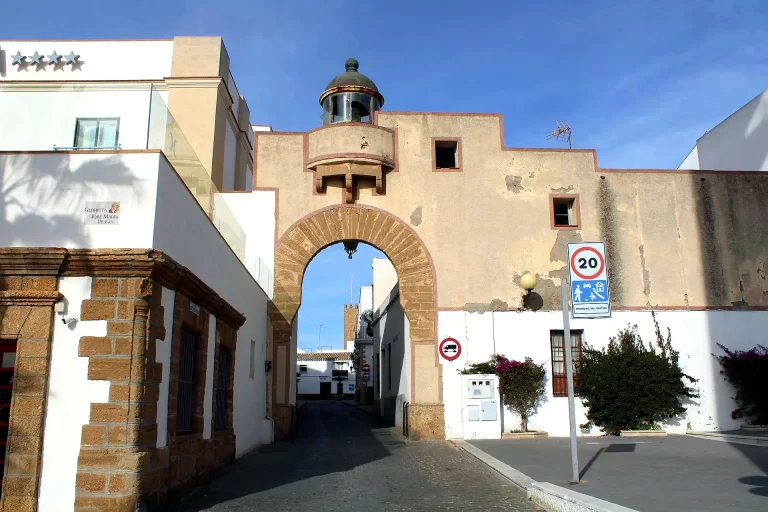
Cádiz sits at the end of a narrow strip of land projecting into the Atlantic, almost entirely surrounded by water, with an old town that has been occupied continuously for more than three thousand years. The approach by train from Seville — two hours on the RENFE service through the sherry towns of the Marco de Jerez — ends at a station fifty metres from the city walls, and stepping through the gate into the old town is the kind of arrival that immediately explains why a journey of two hours is worth making. The question of whether the Cádiz day trip from Seville is worth it is answered by the city itself once you are there. The real question is what to do with the hours available.
What Makes Cádiz Different from Seville’s Other Day Trips
Cádiz is an Atlantic city, not an Andalusian inland one. Its light is different — the ocean reflects off both sides of the peninsula and creates a quality of luminosity that the cities of the interior do not have. Its architecture is different — the 18th century baroque townhouses with their enclosed miradores (glass-enclosed upper galleries built to observe the harbour traffic) are a building type specific to this coastline. Its food culture is different — the fried fish tradition of the gaditano kitchen is arguably the finest in Spain, and the markets in Cádiz operate on a different logic from the tapas culture of Seville. A Cádiz day trip from Seville is not a version of what Seville already offers — it is something genuinely different. Full day trip comparisons in the Day Trips from Seville pillar guide.
What to Do in Cádiz on a Day Trip

The Old Town and the Sea Walls
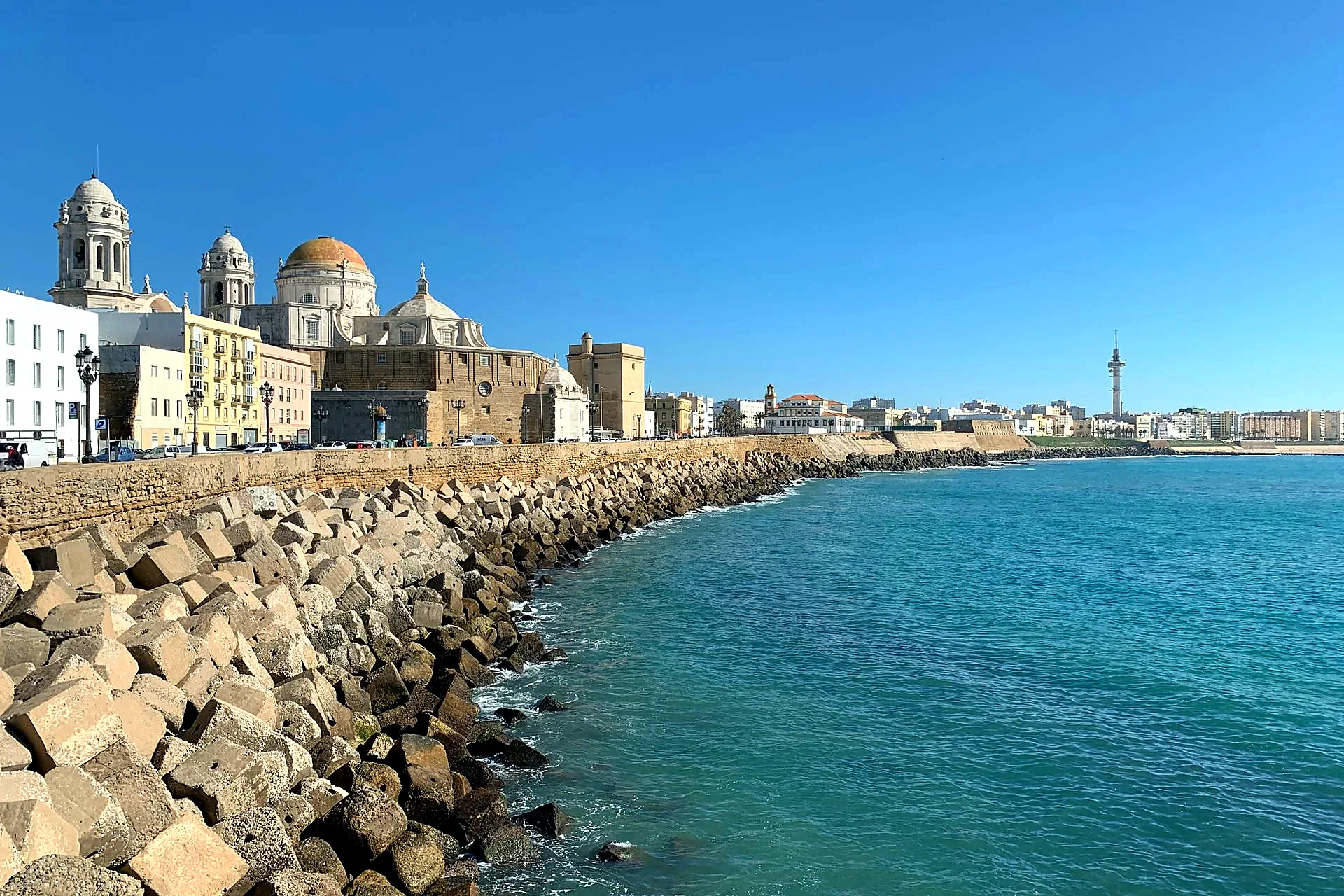
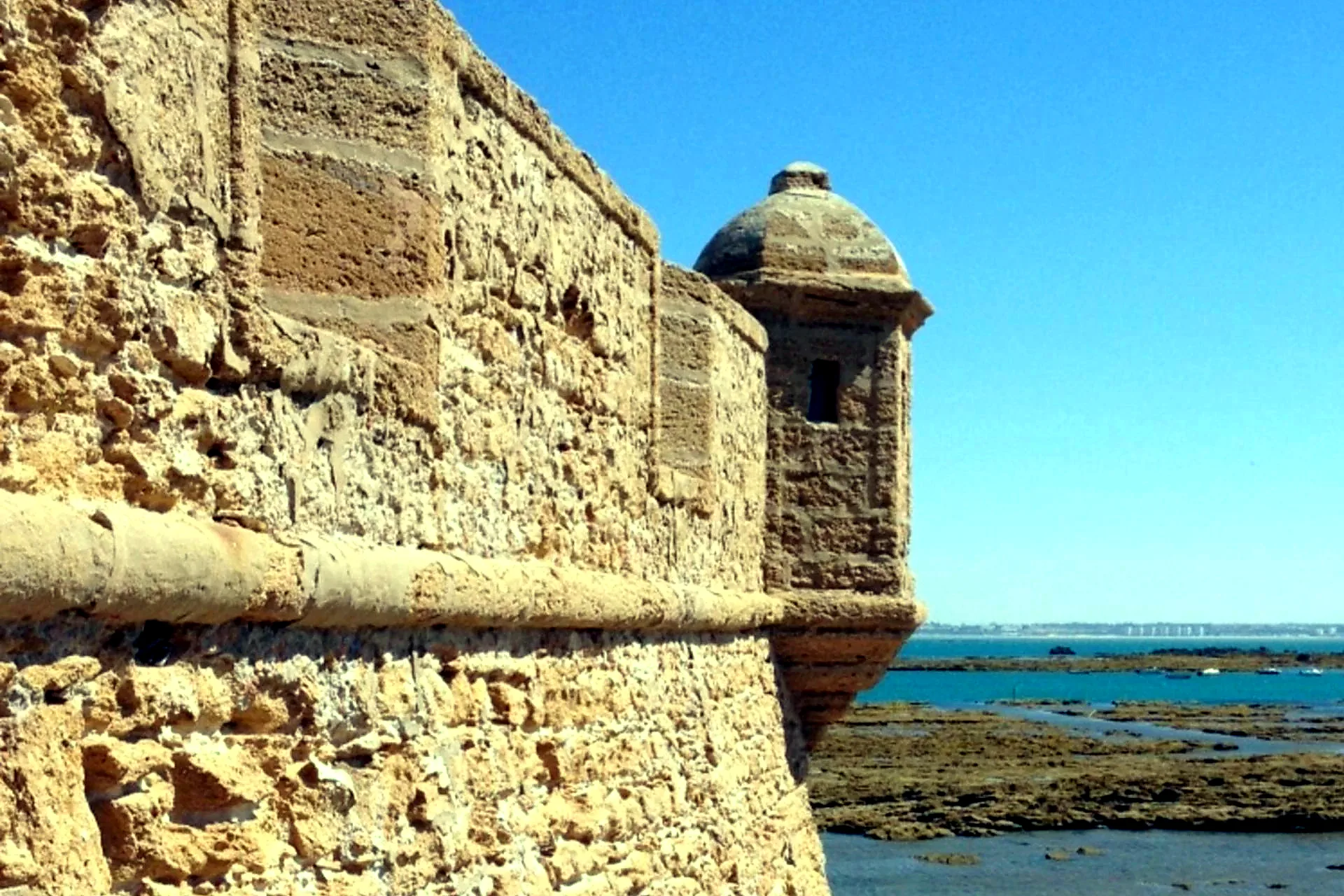
The old town of Cádiz occupies the western tip of the peninsula. The sea walls run along the Atlantic side — the Paseo Fernando Argüelles and the Alameda de Apodaca give an unobstructed view over the ocean — and the pace of the city is set by this relationship to water. Walking the full perimeter of the old town sea walls takes approximately ninety minutes at a comfortable pace and covers the most distinctive urban experience Cádiz offers. The Baluarte de los Mártires at the western point, and the Castillo de Santa Catalina at the southern end, are the most dramatic sections. The early morning, before the Atlantic wind picks up, is the best time.
The Mercado Central
The Mercado Central de Abastos on the Plaza de las Flores is the best single stop in Cádiz — a covered market with a separate seafood section that operates as both a market and a bar-restaurant complex. The tuna (atún rojo) and the langostinos from Sanlúcar are the items to look for; the market stalls prepare fried fish to order and the bar counters around the perimeter are occupied by locals from mid-morning onward. Arriving between 10:00 and 11:30 — before the lunch crowd — gives the clearest view of the market in operation.
✦ LUCÍA’S LOCAL TIP
The fish fryers at the Mercado Central use fresh oil and the batter technique specific to Cádiz — lighter than Seville, less batter, higher heat, shorter fry. The cubo de pescado (a portion of mixed fried fish in a paper cone) is the thing to order at any of the market-adjacent bars. Eating standing at the bar counter at around 11:00, before the lunch sitting starts, is how most gaditanos use the market on a workday morning. That is the best version of this experience.
The Cathedral and the Torre Tavira
The Cádiz Cathedral — begun in 1722 and completed in 1838 — is a baroque-neoclassical building whose yellow dome, visible from the sea walls and from the streets approaching the old town, is the defining architectural image of the city. The interior is large and relatively restrained for a cathedral of its period; the treasury museum adjacent to it contains a number of significant processional pieces. Entry costs approximately €6–8. The Torre Tavira — one of the old watchtowers built by merchant families to observe incoming ships — now houses the best camera obscura in Spain: a real-time 360° image of the city projected onto a table in a darkened room at the top of the tower. Entry approximately €8; the fifteen-minute session is the most efficient single way to understand the city’s geography.
The Beaches
La Caleta — the small urban beach between two 18th century fortresses (Castillo de Santa Catalina and Castillo de San Sebastián, the latter on its own rocky islet connected by a causeway) — is the beach most associated with Cádiz’s identity and the one that appears in the city’s flamenco and popular culture. It is narrow, faces southwest, and is at its best in the late afternoon. Playa de la Victoria, on the Atlantic-facing side of the isthmus extending south from the old town, is the city’s main summer beach — wider, longer, and accessible by bus from the old town in ten minutes.
✦ LUCÍA’S LOCAL TIP
Cádiz in July and August is a city in a different mode — the beaches and the old town fill with a mix of Spanish families from the interior (who come for the Atlantic heat) and international visitors. The city works well in summer, but the old town is at its most atmospheric in May, October or early November — cooler, the light lower and warmer, fewer people on the sea walls in the early morning. If visiting in summer, arrive on the first train and reach the Mercado Central before 11:00.
Getting There and Practical Information
- By train: RENFE from Seville Santa Justa to Cádiz — approximately 1 hour 45 minutes to 2 hours, trains run frequently. Approximately €14–22 return. Most practical option — the station is inside the old town perimeter.
- By car: Approximately 1 hour 40 minutes via the A-4 motorway. Parking in the old town is limited; using the parking near the city entrance and walking is strongly recommended.
- Best time to go: May, October, November for the most atmospheric old town experience. July and August for beaches.
- What to eat: Fried fish at the Mercado Central, langostinos from Sanlúcar, chicharrones (fried pork skin — gaditano style, not Seville style). The old town has numerous small bars; avoid anything on the Cathedral square that has an English menu displayed outside.
- How long to allow: Five to six hours minimum in Cádiz for a meaningful visit. Seven to eight gives time for the sea walls, the market, the Cathedral, the Torre Tavira and a slow lunch.
“Cádiz is the day trip from Seville that changes tone most completely — from inland Andalusia to an Atlantic port city with a different relationship to light, food and space. The two hours on the train is the right amount of distance for a city that feels this different.”
FAQ
Is the Cádiz day trip from Seville worth it?
The Cádiz day trip from Seville is worth making for visitors who want a day that feels genuinely different from Seville — an Atlantic port city with a distinct architectural character, a serious food culture built around fresh fish, and sea walls that give a quality of space unavailable in inland Andalusia. The two-hour journey on the RENFE train is comfortable and the arrival into the old town is immediate.
How do I get from Seville to Cádiz?
The RENFE train from Seville Santa Justa to Cádiz takes approximately 1 hour 45 minutes to 2 hours and runs frequently — approximately €14–22 return. The train station in Cádiz is inside the old town perimeter, making it the most practical option. By car via the A-4 takes approximately 1 hour 40 minutes; parking in the old town is limited.
What is Cádiz known for?
Cádiz is one of the oldest continuously occupied cities in Western Europe, known for its Atlantic seafront, its baroque old town with enclosed mirador balconies, its fried fish tradition (considered the finest in Spain by many gastronomes), and its Carnaval — one of the most celebrated in Spain, held in February. It is also the birthplace of the Spanish Constitution of 1812 and has a significant place in Spanish naval and colonial history.
How long should I spend in Cádiz on a day trip from Seville?
Five to six hours gives a solid visit covering the sea walls, the Mercado Central, the Cathedral and a lunch. Seven to eight hours allows the Torre Tavira, a walk along La Caleta beach and a slower afternoon. The last RENFE trains back to Seville run in the early evening — check the specific timetable when booking to confirm the latest viable return.
What is the best thing to do in Cádiz on a short visit?
Walk the sea walls of the old town from the Baluarte de los Mártires to the Castillo de Santa Catalina — approximately ninety minutes and the most distinctive urban experience the city offers. Then the Mercado Central for fried fish and a coffee at the bar counter. If time remains, the Torre Tavira camera obscura gives the best overview of the city’s geography in fifteen minutes.
Related Posts
- Best Day Trips from Seville 2026: Granada, Alhambra, Córdoba, Ronda and Beyond
- Jerez de la Frontera Day Trip from Seville: Sherry, Horses and How to Plan It
- Ronda Day Trip from Seville: Does the Drive Live Up to the Puente Nuevo?
- Córdoba Day Trip from Seville 2026: The Mezquita and What to See in 8 Hours
- Granada Day Trip from Seville 2026: What to Book, When to Go and Why It Sells Out