Photography Inside the Alcazar: What You Can Shoot and What the Rules Are
Photography is permitted throughout the Real Alcazar — palace interior, courtyards, and gardens. Flash is not. Selfie sticks and tripods are not permitted. These are the three rules that cover most visitor photography situations. The more useful question is not what is allowed but where and when the photography is actually worth the effort — the Alcazar has specific positions and specific hours that produce substantially better images than the general circuit at midday.
The Photography Rules
- Photography: Permitted throughout the palace interior, courtyards, and gardens without restriction on subject matter.
- Flash: Prohibited throughout. No external flash units, ring lights, or built-in flash. Natural light photography is unrestricted.
- Selfie sticks: Not permitted. Any extending device falls under this prohibition.
- Tripods: Not permitted inside the palace or in the main courtyards during standard visiting hours. Some operators obtain special photography permits for tripod use — these are commercial arrangements and do not apply to standard visitor photography.
- Video: Personal video is permitted under the same conditions as photography. Commercial filming requires a separate permit.
- Drones: Not permitted.
The Best Photography Positions
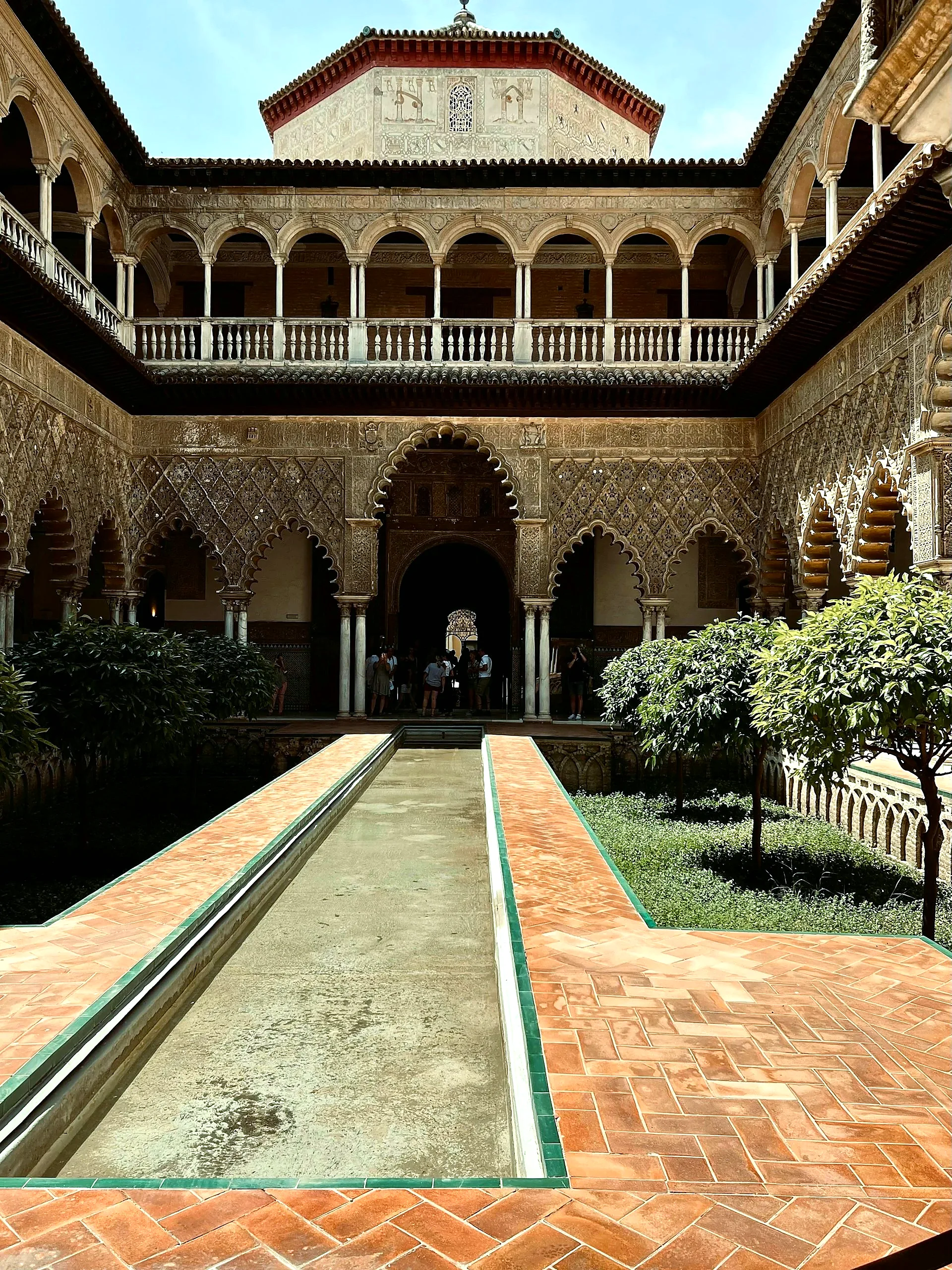
Patio de las Doncellas — The Primary Position
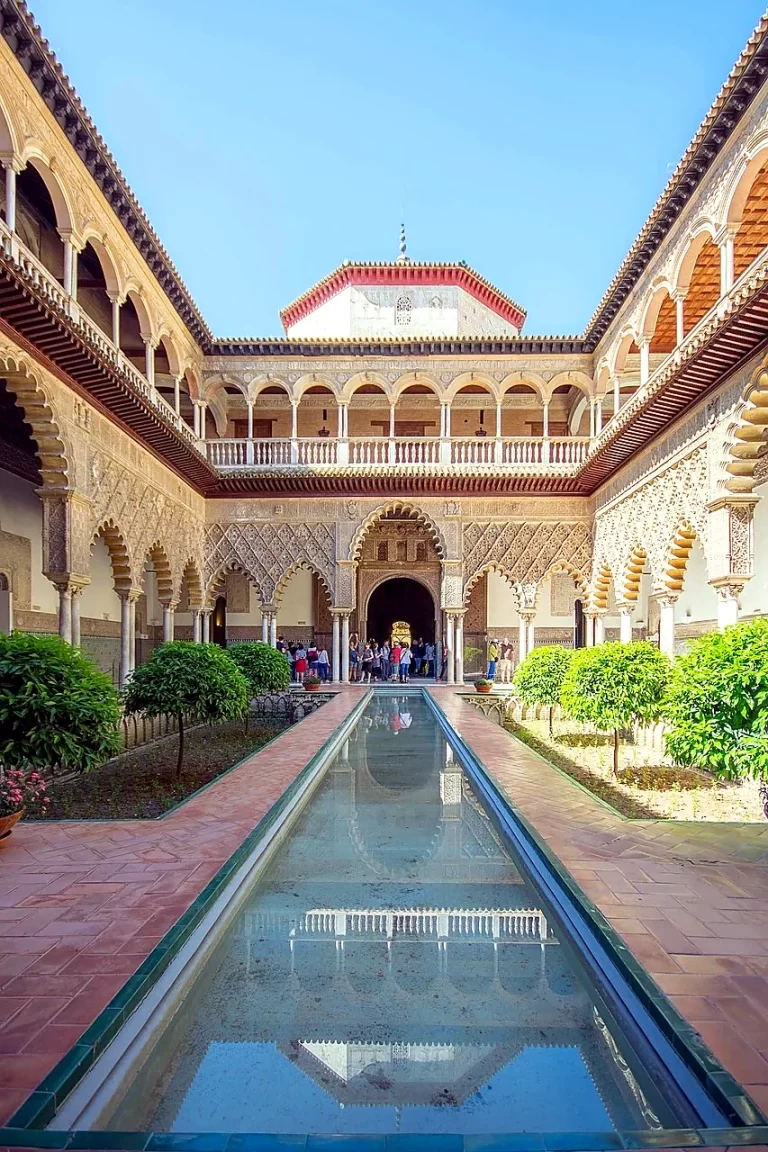
The Patio de las Doncellas pool reflection is the defining photograph of the Real Alcazar. The position: at the far end of the pool, facing back toward the main arched entrance of the courtyard. The reflection of the carved double arches in the central pool, when the water is still, produces the geometric symmetry that appears in most Alcazar photography.
The conditions that make this shot work: still water (early morning before visitors disturb it), low directional light (the first thirty minutes after opening in spring and autumn), and the absence of other visitors at the same end of the pool. All three of these conditions exist simultaneously only at opening time on quiet days. By 10:30am, the pool is typically disturbed by foot traffic, the light is overhead rather than directional, and other visitors are at both ends of the pool simultaneously.
The alternative position: from the upper gallery, looking down at the pool from above. This removes the visitor problem (fewer people reach the gallery) but changes the composition fundamentally — the reflection from above is different from the reflection at eye level. Both are worth taking if time allows.
Salón de Embajadores — The Ceiling Shot
The cedar Mudéjar dome in the throne room is the most architecturally significant interior in the palace and one of the most photographed ceilings in Spain. The position: directly below the centre of the dome, pointing the camera straight up. The intricate interlocking pattern of carved cedar panels — 8,017 individual pieces — fills the frame from this position.
The practical problem: this position in the centre of the room is occupied by other visitors at busy hours. The solution is the opening time window — at 9:30am–10:00am the room is significantly less occupied and the centre-floor position is achievable without waiting.
The palace’s standard electric lighting illuminates the dome adequately for photography without flash — exposure compensation may be needed on smartphone cameras, which tend to underexpose the ceiling in favour of the brighter walls. A slight positive exposure compensation (typically +0.5 to +1.0 EV) corrects this.
Patio de las Muñecas — The Intimate Courtyard
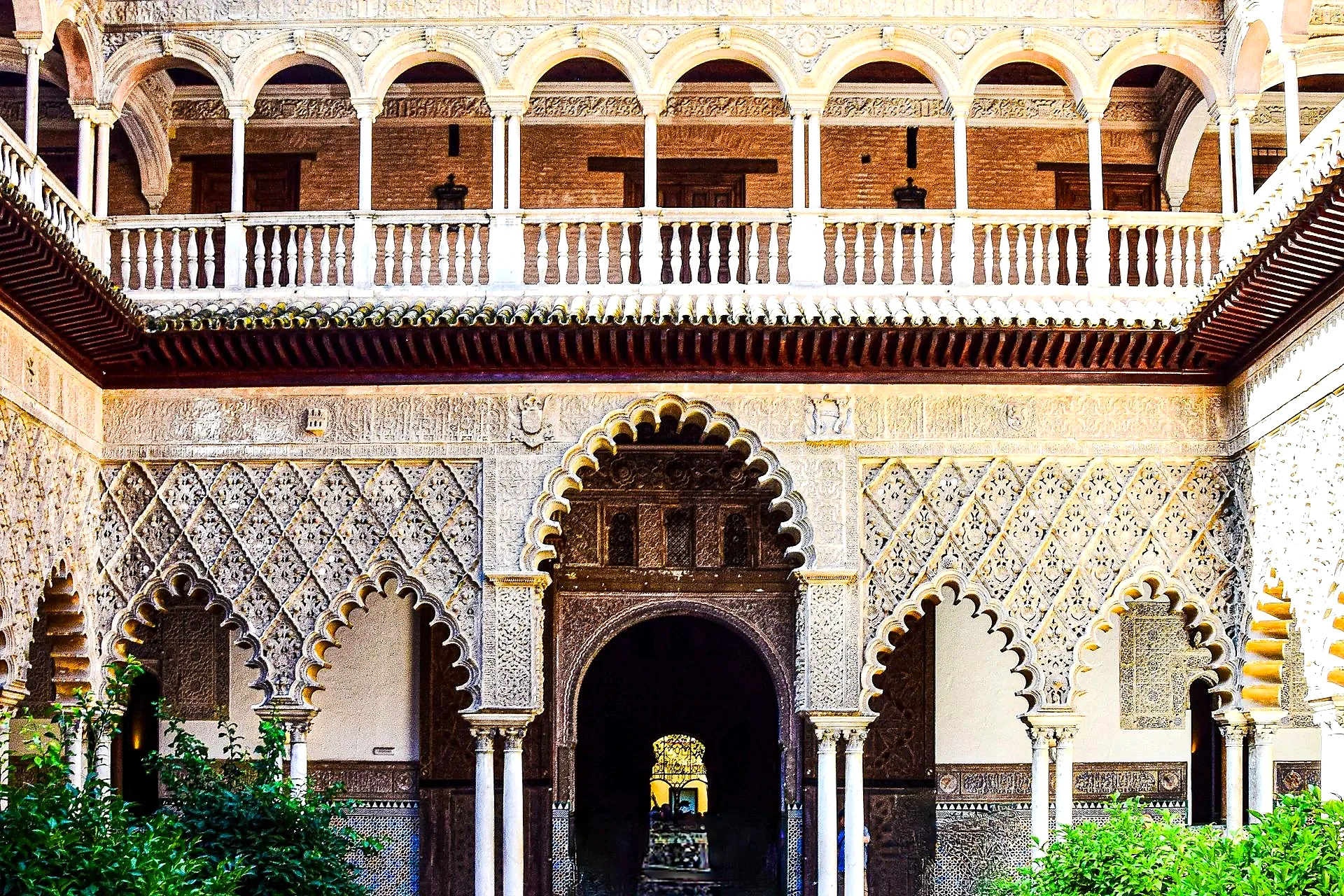
The smaller, more intimate Patio de las Muñecas photographs differently from the Doncellas courtyard — the scale is more compressed and the carved archways can be filled at close range with a standard smartphone focal length. The best photographs from this courtyard are close architectural details rather than wide establishing shots: the individual archway bases, the intricate plasterwork of a single arch, the carved faces in the base of one specific arch (a guard can point to the right arch immediately).
The Galería de Grutescos — The Garden Corridor
The long covered walkway along the palace’s outer garden wall photographs best from one end, looking along the full length of the corridor with the grotesque mask ornamentation visible on both sides. At opening time, this sightline is clear of other visitors and the perspective is uninterrupted. By 11:00am other visitors appear within the shot at most positions along the walkway.
The Gardens — General Positions
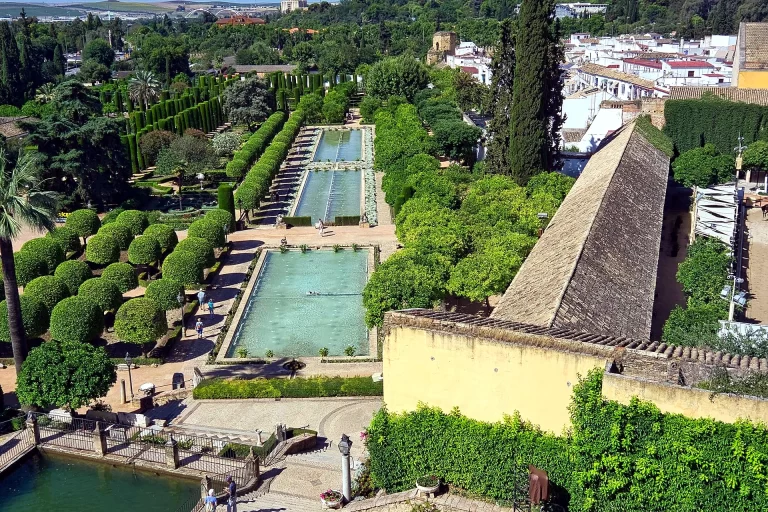
The formal parterre gardens photograph best in morning shadow (before direct overhead sun flattens the hedge geometry) or in late afternoon light (after 4:00pm when the long western light comes through the cypress rows). The fountain courts photograph best when the water is active — most fountains run throughout visiting hours. The Mercury Pool at the far end of the gardens reflects the surrounding wall on still days — early morning gives the stillest water.
✦ LUCÍA’S LOCAL TIP
The most consistently overlooked photography position in the Alcazar is the upper gallery above the Patio de las Doncellas. The staircase in the corner of the courtyard is easy to miss, and most visitors who reach the upper gallery do so as an afterthought. From the gallery, the geometric pattern of the courtyard below — the pool, the hedges, the reflecting arches — reads as a plan rather than a facade. The composition is entirely different from anything available at ground level. Worth spending fifteen minutes on the gallery separately from the ground-level courtyard photography.
Timing for Photography
Best for palace interior: 9:30am–10:00am (opening time, before other visitors disturb the pool, directional light on the plasterwork).
Best for garden photography: Late afternoon 4:00pm–6:00pm in summer (long westward light through the cypress rows, warm quality unavailable at other hours).
Worst time for palace photography: 10:30am–12:30pm on weekends and holiday periods in peak season (pool disturbed, other visitors in every position, overhead light).
Seasonal note: The light quality in October and November — lower sun angle, longer directional shadows — is the best available for the formal garden sections at almost any hour of the day.
FAQ
Can I take photos inside the Real Alcazar?
Yes — photography is permitted throughout the palace interior, courtyards, and gardens. Flash photography is prohibited. Selfie sticks and tripods are not permitted. Personal video is permitted under the same conditions. Drones are not permitted.
Can I use flash in the Real Alcazar?
No — flash photography is prohibited throughout the palace and gardens. The natural and architectural lighting inside the palace is sufficient for smartphone and standard camera photography without flash. Positive exposure compensation may be needed for ceiling shots in the Salón de Embajadores.
What is the best time to photograph the Alcazar?
9:30am at opening for the palace interior (still pool reflection, directional light on plasterwork, minimal other visitors). Late afternoon (4:00pm–6:00pm in summer) for the gardens (long westward light through the cypress rows). Both windows in a single all-day visit covers the optimal photography conditions for both sections.
Related Posts
- Where the Light Hits the Tiles: Lucía’s Guide to Photographing the Real Alcazar
- Real Alcazar Seville 2026: Tickets, Skip-the-Line Tours and Complete Visitor Guide
- Best Time to Visit the Alcazar Without Crowds: Early Morning or Late Afternoon?
- Alcazar Gardens at Opening Time: The Courtyards Before the Tour Groups Arrive
- Best Photography Spots in Seville: Where the City Looks Like It Should
- Game of Thrones Alcazar Filming Locations: What Was Shot Here and What It Looks Like Now