Alcazar vs Cathedral Seville: Which One Deserves More of Your Day?
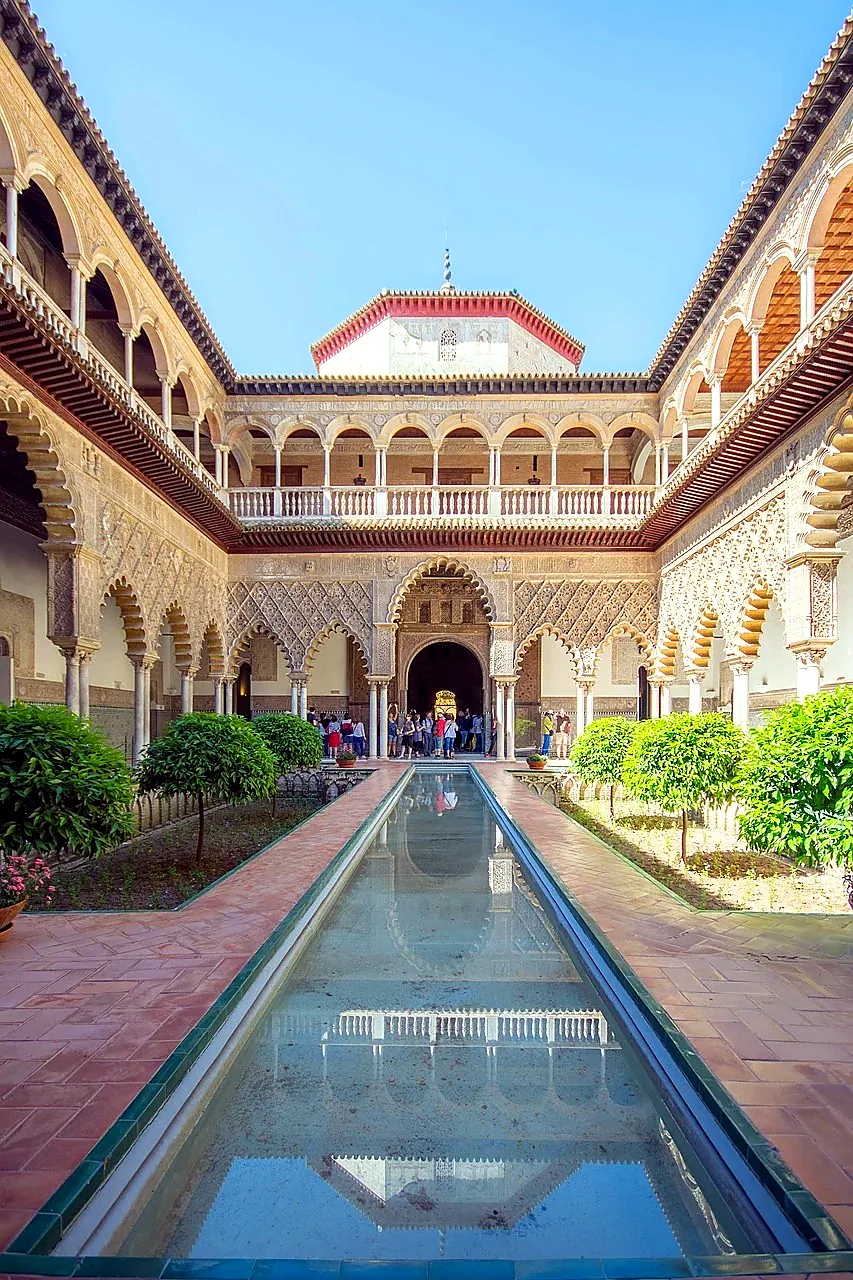
Standing in the Patio de Banderas just after nine in the morning, with the Giralda visible over the roofline to the north and the Alcazar gate to the south, the choice between these two landmarks stops feeling abstract. Both demand serious time. Neither forgives being rushed. The question of which deserves more of a visitor’s day — Alcazar vs Seville Cathedral — is one of the most common decisions travelers face in this city, and the answer depends on what they actually want from the visit. This post compares both honestly, sets out what each does that the other cannot, and ends with a clear recommendation.
What Each Landmark Actually Is
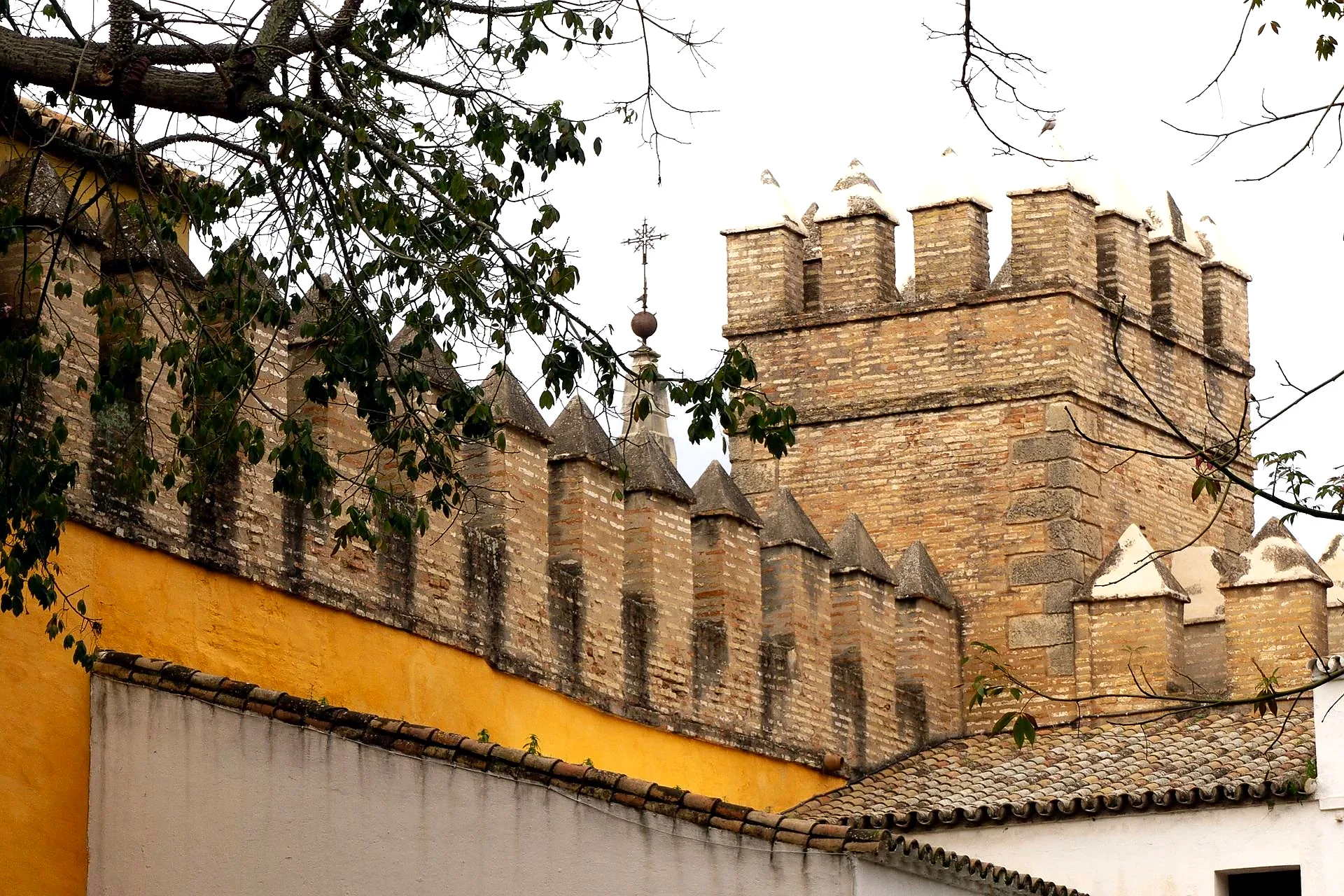
The Real Alcázar is a royal palace complex — still officially used by the Spanish royal family — built in layers across more than a thousand years. Its earliest Islamic structures date to the 10th century; the Mudéjar sections most visitors photograph were commissioned by Pedro I in 1364. The palace is working architecture, layered with history, filled with courtyards and gardens that extend far beyond what the entrance queue suggests.
Seville Cathedral is the largest Gothic cathedral in the world, built between 1401 and 1528 on the site of a former mosque. The Giralda tower — the minaret that became a bell tower — stands 104 metres tall and is included in the standard ticket. The cathedral contains the tomb of Christopher Columbus, one of the most visited single objects in Spain, and a nave of overwhelming scale that takes time simply to absorb. See the full Seville Cathedral pillar guide for a complete breakdown of what to see inside.
The Real Alcázar: What It Offers
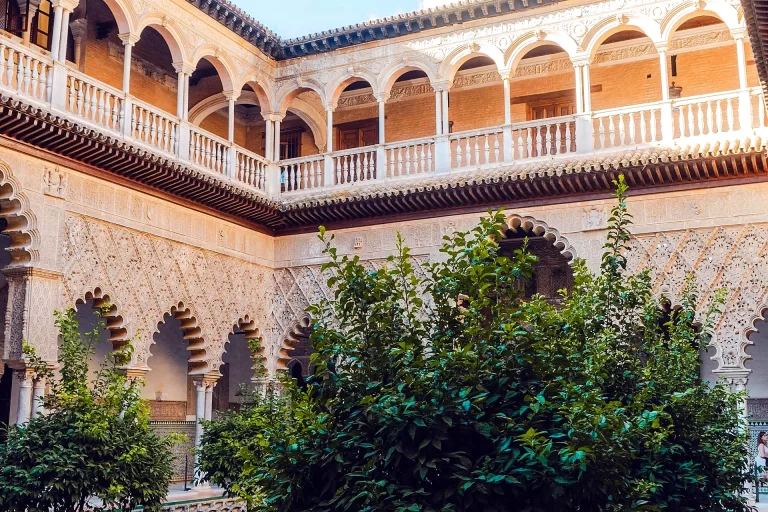
The Alcázar’s defining quality is intimacy at scale. The Patio de las Doncellas — the most photographed courtyard — appears to be small from photographs. In person, it is both larger and more layered than expected: the geometric tile border at knee height is 14th century, the upper arcades are 16th century Renaissance additions, and the restored pool at floor level reflects both in still water. Each section was built by different rulers with different intentions, and moving through the palace is like reading a building written in multiple languages.
The gardens extend the experience significantly. Many visitors spend ninety minutes inside the palace rooms and then discover another forty minutes in the gardens — the Lion Gate fountain, the Mercury pool, the quiet sections near the Galería de Grutescos where the tour groups thin out. In total, a proper visit is two to two and a half hours minimum. With the Cuarto Real Alto add-on (€5.50), which opens the current royal apartments, it extends further still.
✦ LUCÍA’S LOCAL TIP
The Alcázar opens at 9:30am. The first forty-five minutes — before the guided tour groups consolidate in the Patio de las Doncellas — are the quietest the palace gets all day. I book the earliest available slot every time I take a first-time visitor. By 10:30am the difference in crowd density is already noticeable.
One honest limitation: the Alcázar requires active attention to get full value. Visitors who move through quickly without understanding what they are looking at often leave feeling the ticket price was high for what they saw. A guided tour or strong pre-reading changes the experience substantially.
Seville Cathedral: What It Offers
The Cathedral’s defining quality is scale that cannot be prepared for. The nave — 42 metres high at the vault — operates on a different register from the Alcázar’s courtyard architecture. There is no single view from which the building can be taken in; the eye moves constantly and still cannot account for the whole. The five naves, the side chapels, the carved choir stalls, the Sacristía Mayor with its Zurbarán and Murillo paintings — each is individually significant and collectively overwhelming.
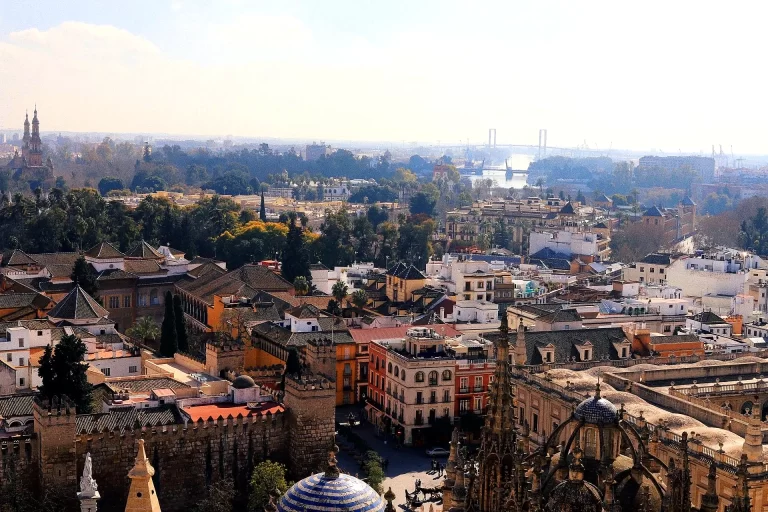
The Giralda climb is included in the standard ticket and should not be skipped. The ascent uses ramps rather than stairs — designed so the muezzin could ride a horse to the top — and takes fifteen minutes at a moderate pace. The view from the top over the Santa Cruz rooflines, the Alcázar gardens below, and the Guadalquivir in the distance is the best elevated view the old town offers. It is worth the climb in any season except the height of August heat.
✦ LUCÍA’S LOCAL TIP
The Cathedral’s free entry slot runs Thursday afternoons from 2:30pm to 6pm — online booking is mandatory even for the free visit. This is when the building is most crowded with people who are there because it is free rather than because they planned to be. If visiting on a Thursday, the paid morning slot is the better experience. The rooftop tour (€20 online) runs separately and is worth adding for the view of the Cathedral’s exterior from above.
One genuine limitation: the Cathedral rewards preparation less than the Alcázar does. Its impact is largely physical and immediate — the scale announces itself. But without knowing what to look for in individual chapels, many visitors see a lot of cathedral and retain relatively little of it. An audio guide (included in some ticket tiers) helps considerably.
The Comparison: What Actually Matters
Cost: Alcázar tickets are €16.50 online (€15.50 + €1 booking fee). Cathedral tickets are €12.00 online (€13.00 at the counter). Both are reasonably priced for what they offer. The Cathedral is cheaper; neither is expensive by European heritage site standards.
Time required: The Alcázar needs two hours minimum; the Cathedral including the Giralda climb needs ninety minutes to two hours for a meaningful visit. Both can be rushed in less — neither should be.
Booking difficulty: Alcázar morning slots in April and May sell out weeks ahead. Cathedral tickets are more available but Thursday free slots go quickly. Both require advance booking in high season.
Crowd levels: The Alcázar concentrates crowds in two or three key courtyards; the Cathedral distributes them across more space. Neither feels empty in high season; both have uncrowded pockets if visitors know where to look.
Architectural experience: The Alcázar is Mudéjar, Islamic-influenced, horizontal in its organisation — rooms, courtyards, gardens unfold laterally. The Cathedral is Gothic, vertical, Christian in its grammar of light and height. They are genuinely different architectural languages. Seeing one does not substitute for the other.
Lucía’s Verdict
For most visitors with limited time who must choose one: the Alcázar. The tile work, the layered history, the gardens, and the intimacy of moving through royal rooms reward time in a way that leaves visitors wanting to return. The Cathedral is overwhelming in a way that is also slightly numbing — the scale impresses immediately and then the mind needs space to absorb it.
The exception is visitors for whom religious architecture or Gothic cathedrals are a primary interest — for them the Cathedral is the correct choice, and the Giralda view alone justifies the ticket. Architecture enthusiasts who care specifically about Christian European building should prioritise the Cathedral; visitors whose interest runs toward Islamic-influenced and Moorish architecture should start with the Alcázar.
The real answer, of course, is both. They are ten minutes apart on foot, the ticket prices are manageable, and they are complementary rather than competing. Plan two half-days rather than one. See the Alcázar at opening; see the Cathedral in the early afternoon when the morning tour groups are clearing.
“The Alcázar is the one I take every friend to first. The tile work in the Patio de las Doncellas rewards slow looking in a way that feels personal rather than monumental — which is exactly what the Cathedral, for all its magnificence, is not.”
“If you are in Seville for more than one day, the Cathedral earns its afternoon. The Giralda climb at 4pm, with the light coming from the west across the rooftops, is one of the better hours this city offers.”
FAQ
Is the Alcázar better than Seville Cathedral?
For most visitors, the Alcázar vs Seville Cathedral comparison comes down to the type of architecture that resonates — but the Alcázar edges ahead for the majority because its layered Mudéjar interiors and gardens reward unhurried exploration in a more personal way. The Cathedral is larger and more immediately overwhelming; the Alcázar rewards visitors who slow down and look closely.
Which should I visit if I only have time for one?
Visit the Alcázar first. Its combination of Islamic-influenced architecture, royal history and gardens provides a richer range of experiences within a single ticket. If architectural or religious history is a primary interest, the Cathedral and its Giralda tower make a strong case — but as a single-visit choice, the Alcázar wins for most travelers.
Which is easier to book?
Cathedral tickets are generally easier to secure on shorter notice than Alcázar tickets. The Alcázar’s morning slots in spring and early summer sell out weeks ahead; the Cathedral has more capacity and more ticket tiers. Both require advance booking in high season to avoid disappointment.
Which is better for families with children?
The Alcázar edges ahead for families — the gardens provide space to move, and the Mudéjar tile patterns are visually engaging for children who find sustained cathedral interiors challenging. The Giralda ramp at the Cathedral is well-suited to older children and teenagers; the ground-floor nave can feel overwhelming and difficult to navigate with young children in crowds.
Can I visit both in one day?
Yes, but allow the full day and do not try to rush either visit. The Alcázar at opening (9:30am), two hours inside including gardens, lunch in Santa Cruz, then the Cathedral from 2pm — this is a realistic plan. Attempting to compress both into a morning leaves insufficient time for either to register properly.
Related Posts
- Real Alcázar Seville: Tickets, Skip-the-Line Tours and Complete Visitor Guide
- Seville Cathedral and Giralda Tower: Tickets, Tours and What to See Inside
- Real Alcázar Tickets 2026: How to Book, What It Costs and Why They Sell Out Fast
- Seville Cathedral Tickets 2026: The Booking Mistake Most Visitors Make
- Real Alcázar vs Alhambra: Which Moorish Palace Is the Better Visit?