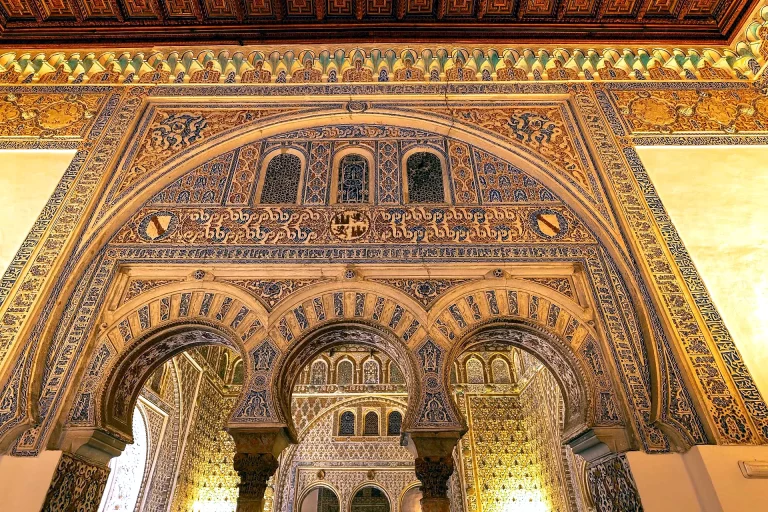
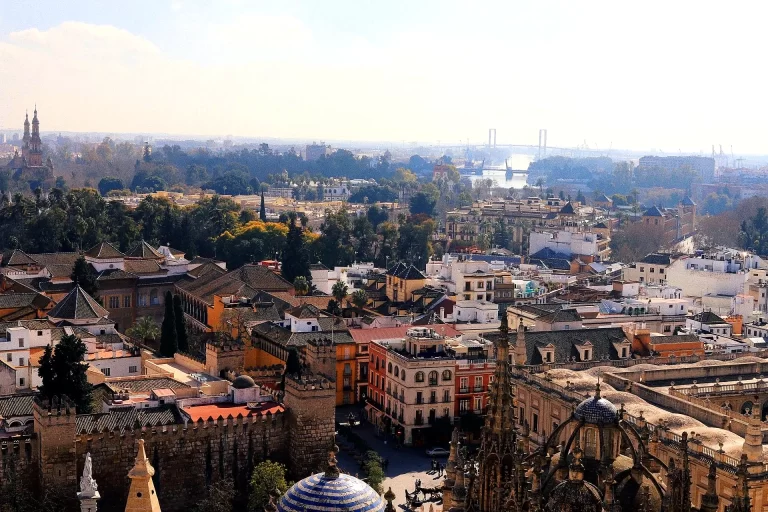
Where the Light Hits the Tiles: Lucía’s Guide to Photographing the Real Alcazar

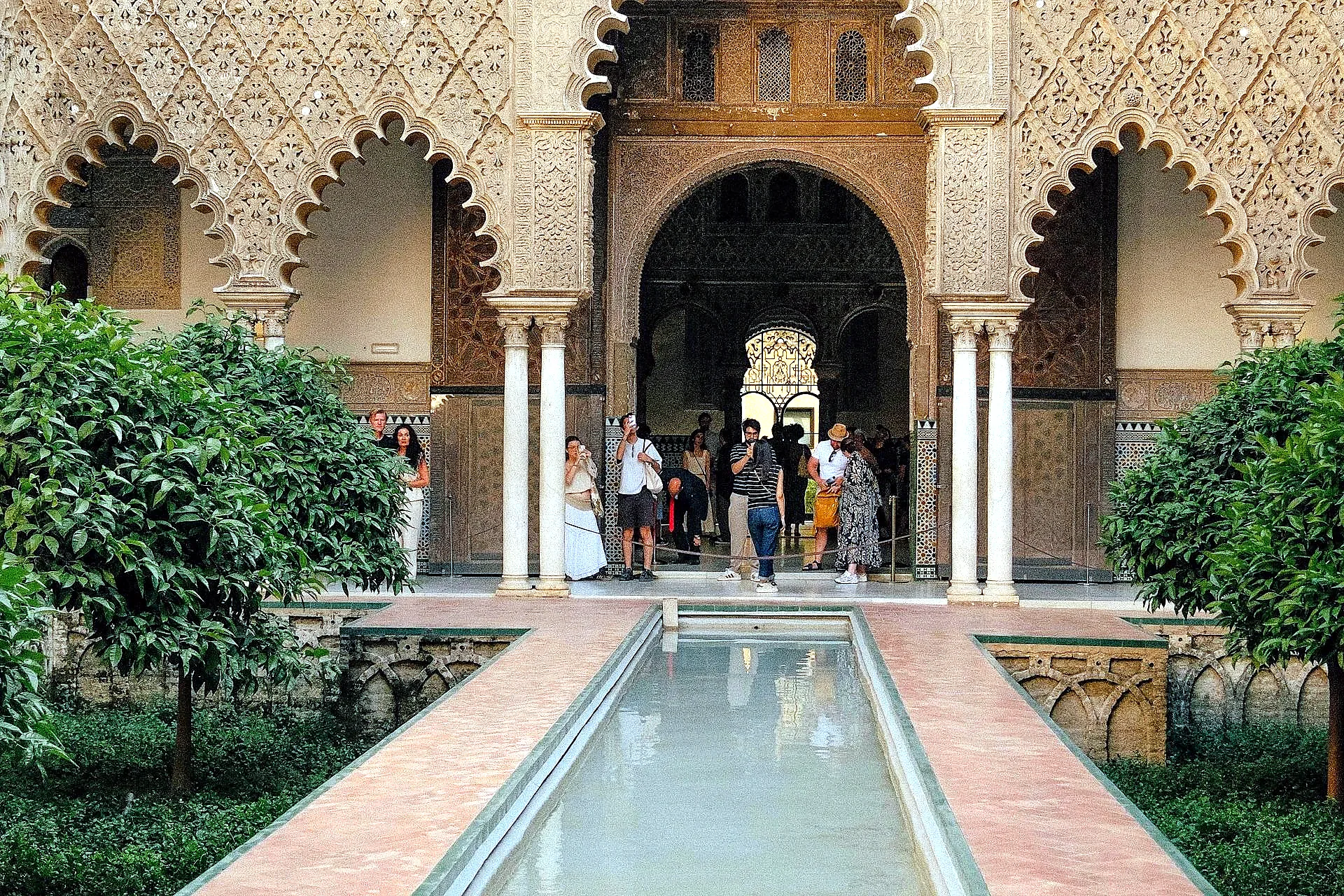
The pool in the Patio de las Doncellas does something specific in the first twenty minutes after the 9:30am opening. The sun is low enough to come in at an angle from the east, catching the carved arches without flattening them, and the water is still enough to hold a clean reflection. By 10:15am other visitors have moved around the pool, the water surface is disturbed, and the light has shifted. The twenty-minute window is real. The photographs from inside it are genuinely different from the photographs taken thirty minutes later.
The Essential Positions — In Order of Priority
1. The Pool Reflection — Far End of the Patio de las Doncellas
Position: at the south end of the pool, facing north toward the main arched entrance of the courtyard. The carved double-arched arcades above the hedged garden sections reflect in the still pool water below. The composition frames the arch at the far end of the pool as the centrepiece, with the reflection extending toward the viewer.
What makes it work: still water and low directional light. Both require early arrival. The 9:30am opening is the only reliably consistent opportunity for both conditions simultaneously in peak season. In low season (November–February), the same conditions exist for a longer window — sometimes until 10:30am if visitor numbers remain low.
What to avoid: shooting from the near end of the pool (the reflection angle is less compelling from the north end), shooting at midday (overhead light kills the arch shadows), and shooting during the 10:30am–2:00pm peak visitor window (pool constantly disturbed).
2. The Cedar Dome — Centre Floor of the Salón de Embajadores
Position: directly below the centre of the dome, camera pointing straight up. The 8,017 interlocking carved cedar pieces fill the frame from this position in a way that no other angle achieves. The dome’s geometric pattern is based on the concept of the seven Islamic heavens — the visual complexity reads as a spiral pulling toward the centre.
Technical note: the palace’s architectural lighting illuminates the dome from the sides, not from below. Most smartphone cameras underexpose the dome automatically, favouring the brighter walls. Apply +0.7 to +1.0 EV exposure compensation before shooting — the result is a correctly exposed dome rather than a silhouetted pattern against an overexposed wall.
The position itself is in the centre of the room — occupied by tour groups at peak hours. At 9:30am–10:00am the room is clear enough to stand in the centre without competing with a group for the floor space.
3. The Upper Gallery — Looking Down Into the Patio
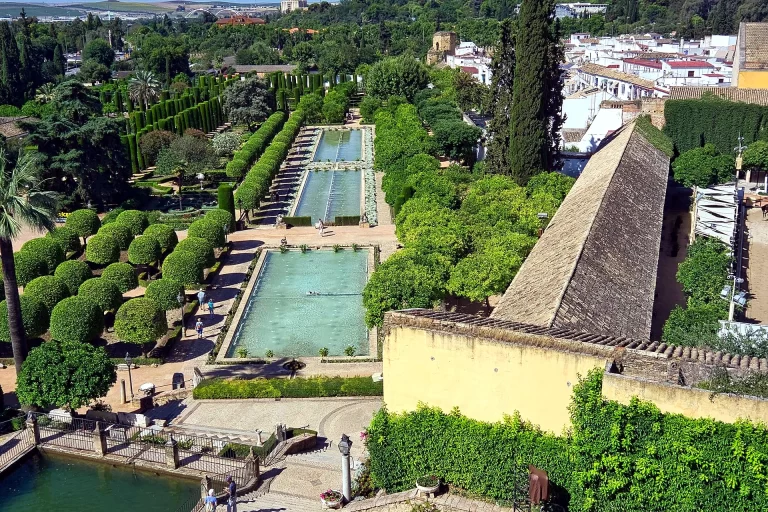
The staircase in the corner of the Patio de las Doncellas leads to the upper gallery running around the courtyard’s perimeter. From the gallery, the geometric plan of the courtyard reads differently from the ground — the pool, the hedged parterre, and the arcade pattern become visible simultaneously. The composition looking down at the pool reflection from above is entirely different from the ground-level shot and worth making separately.
✦ LUCÍA’S LOCAL TIP
The gallery shot that most visitors miss is not looking down into the courtyard — it is looking along the gallery itself. Standing at the corner of the upper gallery and looking along the carved balustrade, with the courtyard visible below and the carved plasterwork of the gallery arch in the foreground, produces a layered composition that ground-level photography cannot replicate. The shot requires the gallery to be empty of other visitors, which means arriving at the staircase by 9:45am at the latest in peak season.
4. The Galería de Grutescos — Full Length
The Galería de Grutescos is the covered walkway along the outer garden wall — approximately 80 metres long, with grotesque mask ornamentation along both sides and the garden visible through the arched openings on the outer wall. The best photograph from this walkway is from one end, looking along the full length, with the arched openings providing repeated light intervals and the masks receding into the perspective. At opening time, this sightline is clear. By 11:00am other visitors appear within the shot at most positions.
5. The Gardens — Cypress Rows at Late Afternoon
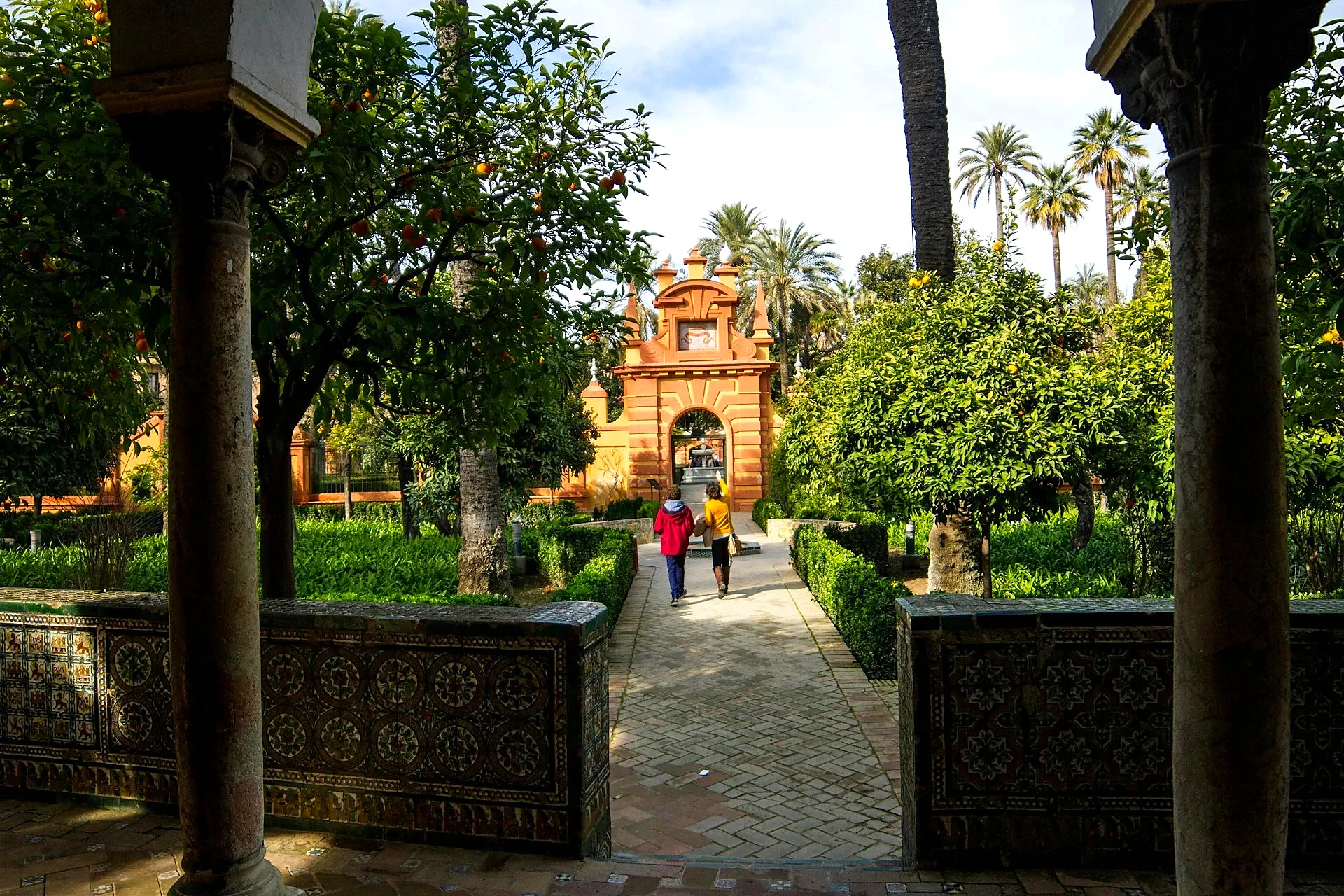
The formal cypress rows in the Alcazar gardens photograph best after 4:00pm in summer, when the long westward light comes through the trees at an angle that creates alternating bands of light and shadow across the garden paths. This is the light most associated with the gardens in quality photography of the Alcazar — warm, directional, specific to the late afternoon hours. No other time of day produces this effect.
The position: standing in the middle of a cypress row, facing into the corridor formed by the trees, with the path extending away from the camera. The alternating light and shadow bands compress into the perspective and the end of the corridor either opens onto another garden section or closes against a wall — both work compositionally.
6. The Carved Faces — Patio de las Muñecas Archway Base
Two small carved faces are hidden in the base of one specific arch in the Patio de las Muñecas. Ask any guard to point to the right arch — they know immediately. The faces are approximately palm-sized and require getting close to the archway base to photograph clearly. A close-up or portrait mode on a smartphone handles the depth well. The shot is not architecturally grand but it is specifically meaningful — the detail that gives the courtyard its name.
The Full Photography Sequence
9:30am: Enter immediately. Walk directly to the far end of the Patio de las Doncellas pool before other visitors reach it. Photograph the pool reflection. This is the most time-sensitive shot of the visit — everything else can be done later.
9:40am: Photograph the pool from the near end (different composition, less optimal but worth having). Look for the staircase to the upper gallery in the courtyard corner. Photograph the gallery looking down and along the balustrade.
10:00am: Move to the Salón de Embajadores. Centre floor, exposure compensation +0.7, dome straight up. Photograph the walls and the ornamental details while the room is still relatively clear.
10:20am: Find the Patio de las Muñecas. Ask a guard for the carved faces arch. Close-up of the faces. Wider shots of the courtyard proportions.
10:30am–noon: Galería de Grutescos full-length shot (still achievable at this hour, though other visitors may be present). Gardens main circuit. Fountain courts. Mercury Pool if calm.
4:00pm–6:00pm (same visit or return): Gardens in late afternoon light. Cypress row photography. Garden details in warm directional light.
“The Alcazar pool reflection at 9:32am on a Tuesday in October is the single most reproducible exceptional photograph in Seville. I have made this shot more times than any other in the city. The conditions align reliably — the opening time, the low autumn light, the still water — and the result is consistently the image that people ask about first when they see the photographs from a Seville trip.”
→ Book your 9:30am Real Alcazar entry here — the opening slot, the pool, before the tour groups arrive
FAQ
What is the best photography position in the Real Alcazar?
The far end of the Patio de las Doncellas pool, facing north toward the main arched entrance, in the first twenty minutes after the 9:30am opening. Still water, low directional light, and minimal other visitors at this position combine to produce the defining photograph of the palace. The upper gallery directly above this courtyard is the second most valuable position.
What time is best for photographing the Alcazar pool reflection?
9:30am–10:00am on a weekday, in any season but particularly in spring and autumn when the morning light angle is most directional. In summer the morning sun is higher at 9:30am and the directional quality is less pronounced than in October or April at the same hour.
Can I photograph the Alcazar gardens at golden hour?
Yes — the gardens in the late afternoon (4:00pm–6:00pm in summer, 3:00pm–5:00pm in spring and autumn) receive the best available light of any visiting hour. The cypress rows in particular produce alternating light-and-shadow bands that are specific to this hour and unavailable at any other time of day. The palace closes at 7:00pm in summer and 5:00pm in winter — plan garden photography before closing time allows.
Related Posts
- Photography Inside the Alcazar: What You Can Shoot and What the Rules Are
- Real Alcazar Seville 2026: Tickets, Skip-the-Line Tours and Complete Visitor Guide
- Best Photography Spots in Seville: Where the City Looks Like It Should
- Best Time to Visit the Alcazar Without Crowds: Early Morning or Late Afternoon?
- Alcazar Gardens at Opening Time: The Courtyards Before the Tour Groups Arrive
- Seville Golden Hour Photography: Where to Wait and What You Are Waiting For