Seville Cathedral Audio Guide vs Guided Tour: What the Difference Actually Feels Like
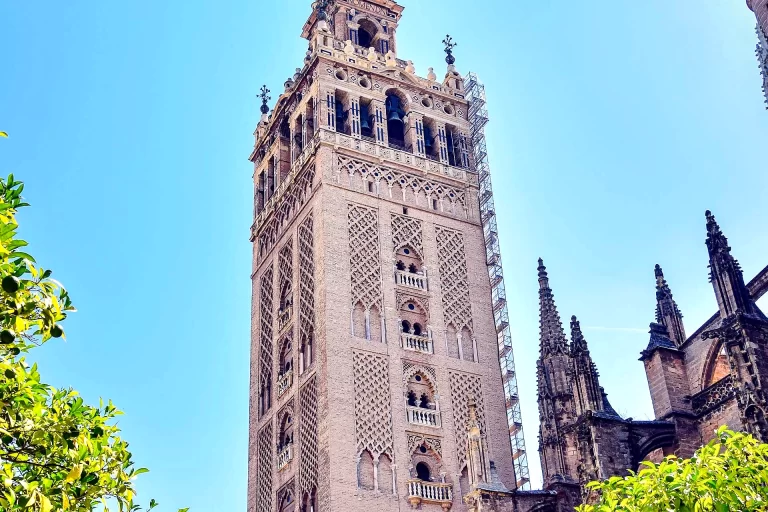
The Seville Cathedral contains more than eighty chapels arranged around five naves, a Sacristía Mayor holding significant works by Zurbarán and Murillo, a 15th century gilded retablo in the Capilla Mayor that is considered the largest altarpiece in the world, and a Giralda tower with a 16th century bell chamber that was a 12th century Islamic minaret before the Catholics converted it. Navigating this without any orientation is possible but slow — the building offers very little explanatory text inside and the scale makes it difficult to prioritise. The choice between a Seville Cathedral audio guide and a guided tour is a choice between two different kinds of orientation, and they produce meaningfully different experiences of the same building.
What Each Option Actually Is
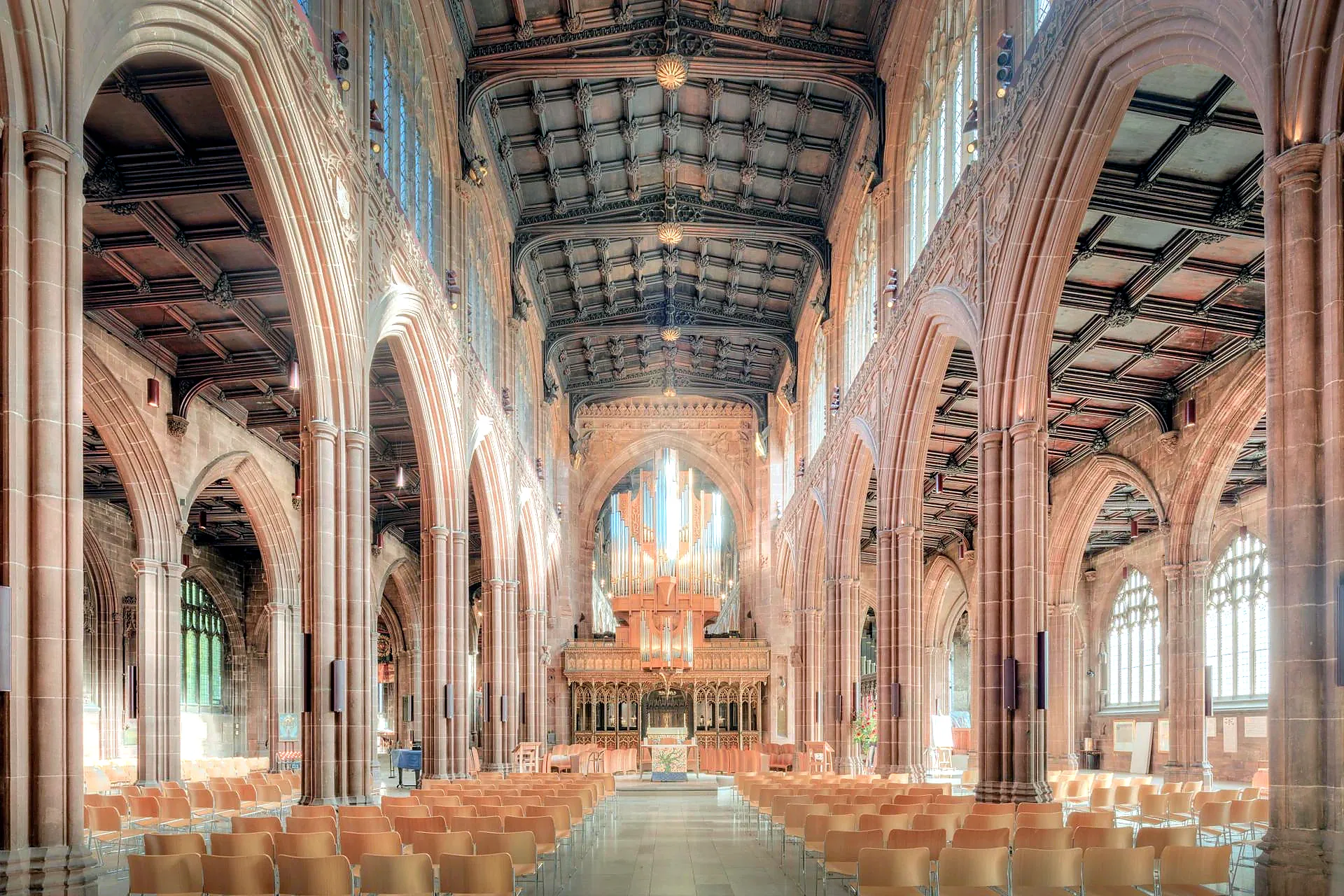
The Cathedral audio guide is a numbered device rented at the entrance (approximately €4–5) that corresponds to numbered stops around the Cathedral. The visitor moves through the building at their own pace, triggering commentary at each numbered point. The guide covers the main nave, the principal chapels, the Columbus tomb, and the Giralda entrance. It does not cover the Sacristía Mayor in detail and the version available varies by season — check availability at the ticket desk on arrival. Full Cathedral context at the Seville Cathedral pillar guide.
A guided tour pairs an English-speaking licensed guide with a small group (typically 8–15 people on quality tours) for a structured walk through the Cathedral. The guide determines the sequence and the depth of coverage at each point, responds to questions, and typically covers the Sacristía Mayor’s painting collection in a way the audio guide does not. Tours last approximately 90 minutes to two hours and are booked through third-party operators — the Cathedral itself does not sell guided tours directly. Entry to the Cathedral is typically included in the guided tour price.
The Audio Guide: What It Offers
The audio guide’s primary advantage is pace control — the visitor decides when to move on and can return to a point without disrupting a group. For travellers who prefer to orient themselves independently and whose interest runs to specific individual elements (the Columbus tomb, the Giralda mechanism, a particular chapel’s altarpiece), the audio guide provides enough context to make those elements legible without the constraint of following a group’s sequence.
The Cathedral’s numbered system covers the main circulation route thoroughly. The commentary at each point is accurate and well-produced; the information on the 15th century retablo and the Cathedral’s construction sequence is particularly useful for understanding what is visible in the nave. Where the audio guide underperforms is in the Sacristía Mayor — the painting collection there requires knowing which works to look for and the comparative context between them, which the device format handles less well than a guide who can point directly to the Zurbarán and explain what distinguishes it from the Murillo adjacent to it.
✦ LUCÍA’S LOCAL TIP
If using the audio guide, download the Cathedral’s official app (Catedral de Sevilla) before arriving and read the Sacristía Mayor section in advance. The app contains more detail on the painting collection than the rental device. Arriving at the Sacristía with the paintings already identified and their significance understood makes the room significantly more productive — the room is darkish, the paintings hang close together, and without orientation it is easy to miss the Zurbarán entirely while looking at the more prominently displayed Murillo.
The Guided Tour: What It Offers
A guided tour’s defining advantage for the Cathedral specifically is the Sacristía Mayor. A specialist guide who covers the painting collection there — explaining the Zurbarán’s characteristic treatment of fabric and light, the difference in devotional register between the Zurbarán and the Murillo adjacent to it, the provenance of the silver monstrance used in Corpus Christi processions — changes the Sacristía from a room of old paintings into a specific and comprehensible moment in the history of Sevillian painting. The Cathedral was one of the most significant art patronage institutions in 17th century Seville; the Sacristía Mayor is the concentrated evidence of that patronage, and a guide who knows both the art and the institutional history makes it legible in a way the audio device cannot match.
The guided tour also manages the Cathedral’s scale problem: the building is large enough that unguided visitors frequently miss significant elements simply by choosing the wrong direction from the entrance. The guided sequence prioritises the right things in the right order and manages the internal Giralda queue timing as part of the itinerary.
✦ LUCÍA’S LOCAL TIP
When choosing a guided Cathedral tour, the specific guide matters more than the operator. Request a tour specifically covering the Sacristía Mayor art collection and the history of the Giralda as an Islamic minaret — not all guided Cathedral tours prioritise these equally. Small group tours (under 12 people) consistently allow more time per stop and more direct conversation with the guide. The price premium over a large group tour is typically €10–15 per person and is worth it for the Sacristía specifically.
The Comparison: What Actually Matters
Cost: Audio guide approximately €4–5 on top of the €12.00 entry ticket = approximately €16–17 total. Guided tour approximately €30–50 total (entry often included). The guided tour costs approximately twice as much.
Pace: Audio guide gives full pace control; guided tour sets the pace according to group needs. Visitors who move slowly and want to spend longer at individual chapels may find the guided tour too fast; visitors who need orientation to know what to slow down for benefit from the guide.
Sacristía Mayor: Audio guide covers it adequately; a good guided tour covers it substantially better. This is the single most significant practical difference between the two options for most visitors.
Giralda timing: With the audio guide, the Giralda internal queue must be managed by arriving early on entry. A guided tour typically sequences the Giralda to avoid the worst of the internal queue.
Who it suits: Audio guide — independent travellers, those already familiar with Gothic cathedral architecture, visitors with a specific interest in one or two elements. Guided tour — first-time visitors to the Cathedral, visitors with particular interest in Spanish Golden Age painting, anyone who finds large buildings disorienting without structure.
Lucía’s Verdict
For a first visit to the Seville Cathedral: book a small-group guided tour. The Cathedral is dense enough that the audio guide’s pace control advantage is outweighed by the guided tour’s ability to identify what matters and why — particularly in the Sacristía Mayor, where the painting collection rewards specific knowledge that the audio device delivers less effectively.
For a return visit, or for visitors already familiar with Gothic cathedral architecture and Spanish Golden Age painting: the audio guide is sufficient and the pace control is genuinely valuable. The Cathedral rewards multiple visits at different paces, and the audio guide serves the second visit better than it serves the first.
“The Cathedral is the building in Seville where a guide makes the most difference. The Sacristía Mayor with someone who can explain what they are looking at is a different room from the Sacristía Mayor without. On a first visit, that difference is worth the tour price.”
FAQ
Is the Seville Cathedral audio guide worth it?
The Seville Cathedral audio guide (approximately €4–5) is worth renting for visitors who prefer independent pacing and already have some context for Gothic cathedral architecture. It covers the main nave route and the principal chapels adequately. Its main limitation is the Sacristía Mayor painting collection, where a guided tour provides substantially better orientation. For a first visit, a guided tour delivers more per euro spent.
What does a Seville Cathedral guided tour include?
A standard Seville Cathedral guided tour includes Cathedral entry, a structured walk through the nave and principal chapels, the Sacristía Mayor painting collection, the Columbus tomb, and the Giralda tower. Tour duration is typically 90 minutes to two hours. Group size varies by operator — small group tours (8–15 people) allow more time per stop and more direct interaction with the guide. Prices range approximately €30–50 all-in.
How long does a Seville Cathedral guided tour take?
A standard guided Cathedral tour takes 90 minutes to two hours. The Giralda climb alone takes 15–20 minutes each way; the Sacristía Mayor visit approximately 15–20 minutes; the nave and chapels 30–40 minutes. Tours that include all of these comfortably run closer to two hours. Shorter tours (60–75 minutes) typically skip either the Sacristía Major detail or the Giralda in depth.
Can I use my phone instead of renting an audio guide at the Cathedral?
The Cathedral’s official app (Catedral de Sevilla) is available for free download and contains more detail on the painting collection than the rental device. For visitors comfortable using a phone for navigation, the app combined with a pre-visit read of the Sacristía Mayor and Giralda sections provides coverage comparable to the rental audio guide at no additional cost. The rental device has a slight advantage in ease of use during the visit.
Do I need a guide for the Giralda tower?
The Giralda tower does not require a guide — the ramp climb and the view from the top are self-explanatory. The Giralda’s history as a 12th century Islamic minaret converted to a Christian bell tower in the 16th century rewards some pre-reading, but the tower visit itself is primarily a physical and visual experience rather than an interpretive one. A guide adds context to the tower’s history but is not necessary for the climb itself.
Related Posts
- Seville Cathedral and Giralda Tower: Tickets, Tours and What to See Inside
- Seville Cathedral Tickets 2026: The Booking Mistake Most Visitors Make
- Early Entry at Seville Cathedral: What the Nave Looks Like Before the Groups Arrive
- Skip-the-Line Seville Cathedral Tickets: Does It Actually Save Time?
- Climbing the Giralda Tower: How Hard It Is and What You See From the Top