Photographing Seville Cathedral: Where the Light Falls and When to Go
The south facade of the Seville Cathedral faces the Avenida de la Constitución and receives direct morning light from the east — the Gothic tracery of the Puerta de San Cristóbal catches the sun between approximately 09:00 and 11:00am in spring and autumn, projecting shadows into the carved stonework that are flat and undifferentiated by midday. The Giralda, attached to the Cathedral’s northeast corner, faces west across the Patio de los Naranjos and receives the best light in the two hours before sunset in the same seasons. These two facts — morning light on the south facade, evening light on the Giralda — determine the basic photographic logic of the Cathedral exterior. Everything else follows from understanding them.
The Exterior: Where the Light Falls
The Cathedral occupies a city block bounded by the Avenida de la Constitución to the south, the Calle Alemanes to the north, the Calle Placentines to the east, and the open space around the Giralda to the west and northwest. The south facade is the most photographed because it is the most accessible — the Avenida is wide enough to allow a full-frame view without extreme wide angle — and because the main decorative programme (the Puerta del Bautismo, the Puerta del Nacimiento, and the central Puerta de la Asunción) faces south.
Morning light on the south facade peaks between 09:00 and 10:30am in spring and autumn, when the angle is low enough to illuminate the carved tympana and cast shadow into the mouldings of the pointed arches. By 11:00am — when the Cathedral opens — the light has already moved higher and the facade is beginning to flatten. Exterior photography of the south facade is therefore best conducted before the Cathedral opens, from the Avenida de la Constitución, at a point approximately 50 metres west of the Puerta de San Cristóbal where the three main portals are visible simultaneously.
✦ LUCÍA’S INSIGHT
The wrought iron street lamps on the Avenida de la Constitución are placed at intervals that either align with or interrupt the Cathedral facade depending on where the camera is positioned. Standing at the point directly opposite the Puerta del Bautismo (the westernmost of the three main portals) and stepping two metres left or right determines whether a lamp post bisects the image or falls outside the frame. This is a ten-second adjustment that changes the photograph from unusable to clean. Most visitors discover it too late.
The Giralda: The Evening Light Condition
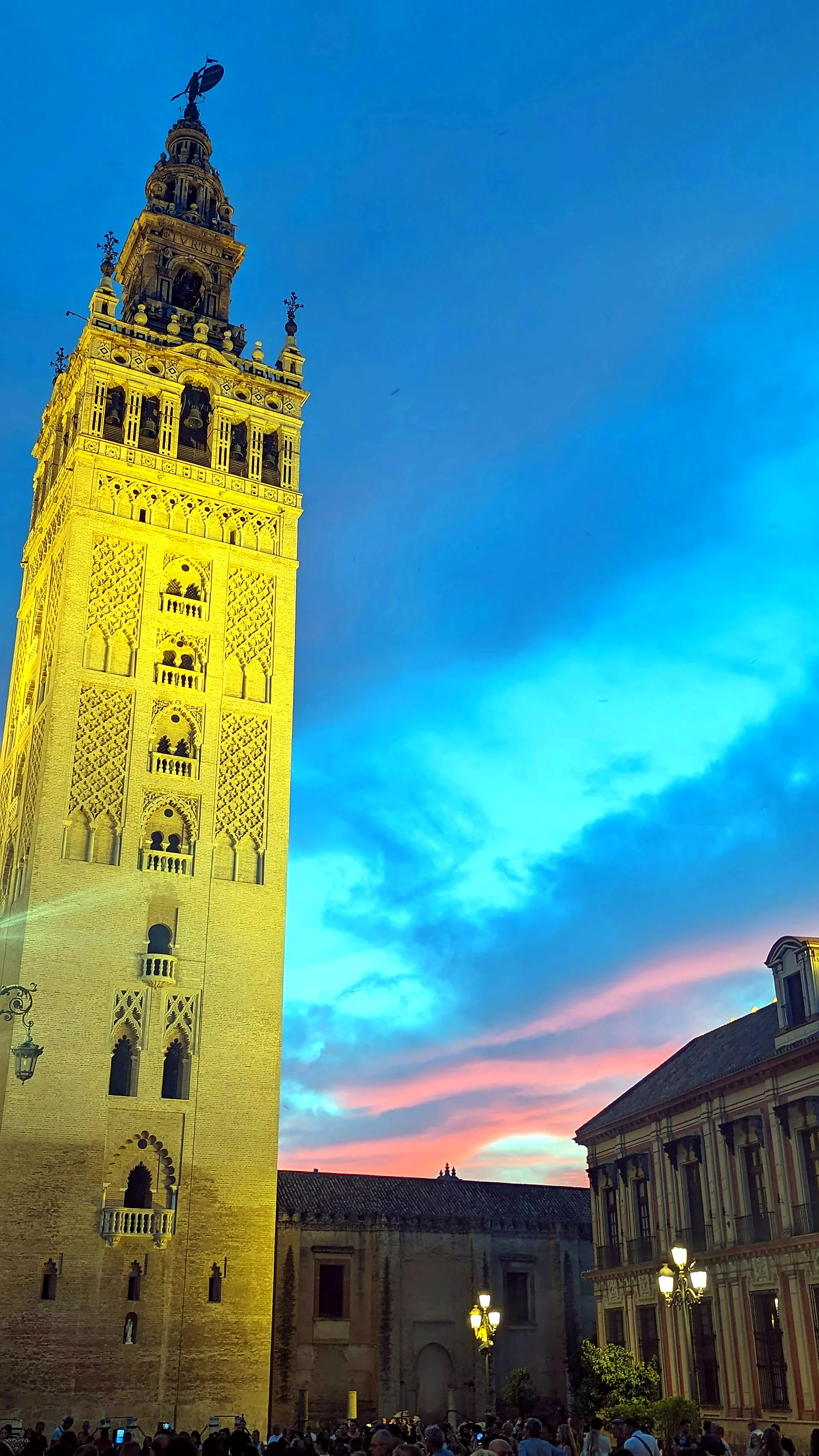
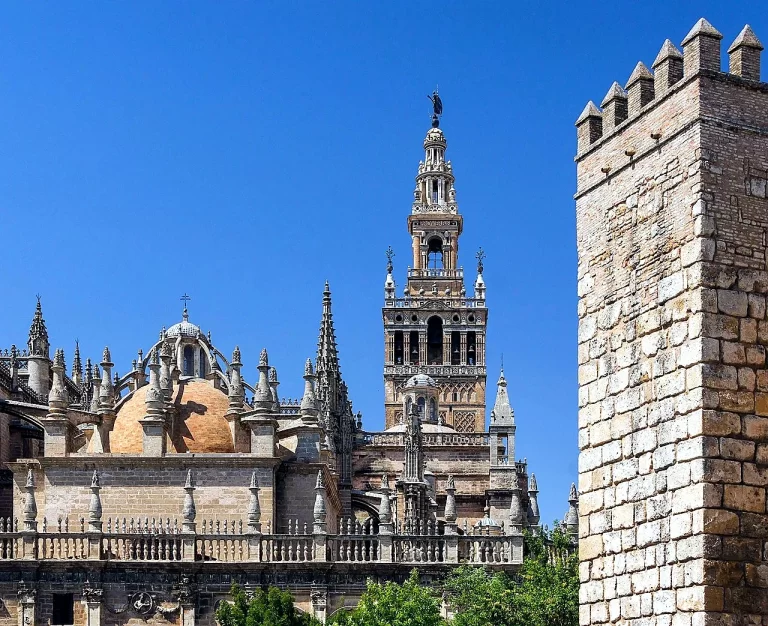
The Giralda is oriented with its decorated faces to the north and south — the ornamental blind arcading of the original Almohad design is most visible on the north face, which receives diffuse northern light throughout the day and direct afternoon sun in summer. The most commonly reproduced Giralda images are taken from the Calle Mateos Gago to the northeast, where the tower is framed between the buildings of the Santa Cruz neighbourhood at a distance that allows the full height to be captured without extreme wide angle.
The evening light condition — when the setting sun illuminates the Giralda’s western face and the bronze La Giralda weathervane catches direct light — occurs in the 45 minutes before sunset, which in Seville in summer can be as late as 21:30. This is the light condition that makes the tower read as warm gold against a blue sky. The vantage point for this is from the Patio de los Naranjos — the orange tree courtyard on the Cathedral’s north side, accessible during Cathedral opening hours through a separate entrance on Calle Alemanes. From the patio, the Giralda rises directly above the orange trees and the evening light hits the tower shaft from the west at an angle that the street view to the northeast does not replicate.
The Interior: Managing Dark Conditions
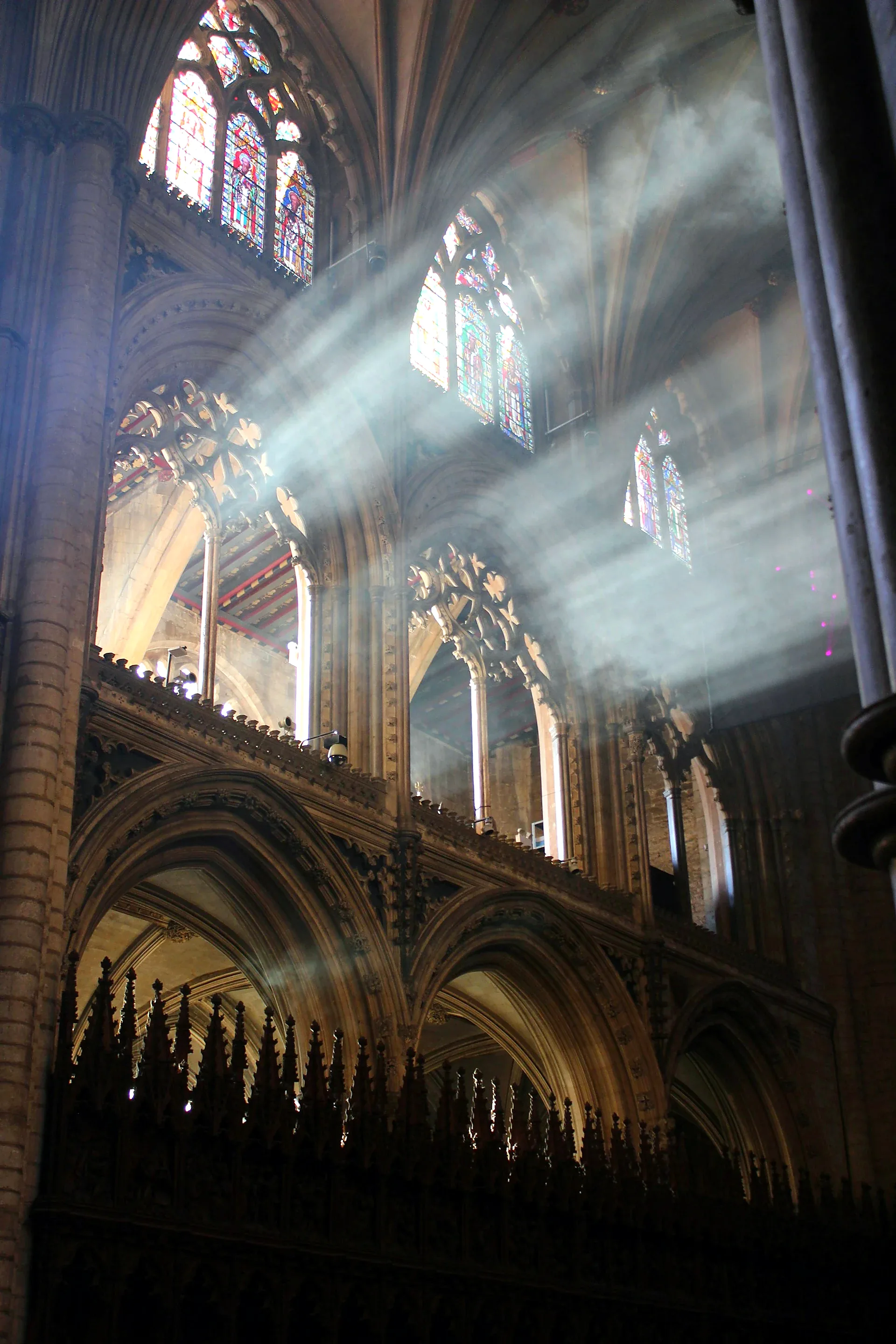
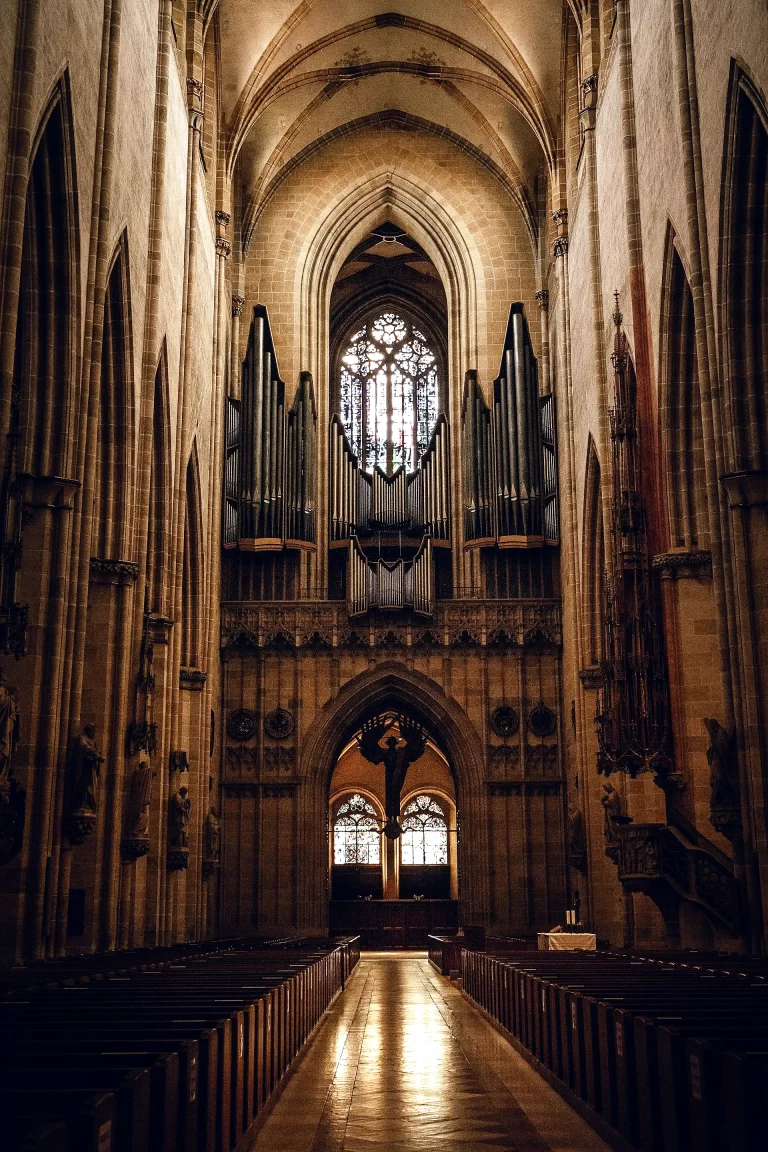
The Cathedral interior is significantly darker than most visitors expect when arriving from Spanish daylight. The nave receives natural light from the clerestory windows but the lower chapels and the Sacristía Mayor are lit primarily by artificial spotlighting supplemented by whatever light penetrates through stained glass. Camera settings that work at ISO 800 on the Giralda viewing platform will need ISO 3200 or higher in the Sacristía Mayor without a tripod.
Tripods are generally not permitted inside the Cathedral during normal visiting hours — check current policy at the entrance, as it changes for specific events. Monopods occupy a grey area and are sometimes allowed. The most practical approach for interior photography is a camera with good high-ISO performance (mirrorless systems with large sensors handle the transition from exterior to interior better than smaller sensor cameras) and patience with the automatic exposure system’s tendency to underexpose the nave interior against the bright clerestory windows in the background.
✦ LUCÍA’S INSIGHT
The single best interior light condition at the Cathedral occurs on clear mornings when the rising sun passes through the stained glass windows on the south transept wall. These windows project coloured light onto the nave floor and the adjacent piers at approximately 11:30–12:30am in late spring and early summer — the timing shifts with the solar angle through the year. This effect is not predictable from outside and depends on a clear sky; it lasts approximately 20 minutes at full intensity. Being inside at Cathedral opening (11:00am) on a clear spring morning, positioned in the south transept, gives the best chance of catching it.
Specific Shots Worth Knowing
The Columbus tomb in the south transept uses four bronze royal pallbearers that support the coffin, each representing a medieval kingdom of Spain. The figures are approximately 1.8 metres tall and lit from the side by spotlighting that creates strong directional shadows on the carved heraldic detail. A 50mm equivalent lens at f/2.8 or wider resolves the pallbearers against a slightly blurred background without needing to stand further back into the competing visual noise of the transept.
The Capilla Mayor retablo — the 15th century gilded altarpiece 20 metres high — is visible through the iron grille from the nave and is best photographed from the centre of the nave at a point approximately 20 metres west of the grille entrance, where the full height fits into a 24mm equivalent frame without the grille columns becoming the dominant element. At this distance and with the retablo lit by spotlighting, the exposure typically favours the bright gold at the expense of the lower sections; exposure compensation of -0.7 to -1.0 stops gives a more even result.
“Photography tours of Seville that specifically cover the Cathedral light conditions — the morning south facade and the Giralda evening light — exist for visitors who want a guide who thinks in aperture and angle rather than history and dates.”
FAQ
What is the best time to photograph Seville Cathedral?
For the south facade exterior: 09:00–10:30am in spring and autumn, when morning light is low enough to illuminate the carved portals and cast shadow into the Gothic mouldings. For the Giralda tower: the 45 minutes before sunset, when the western face catches direct evening light and the bronze weathervane is backlit. For the interior: Cathedral opening time (11:00am) for the quietest conditions and, on clear days, the chance of stained glass light effects in the south transept by 11:30am.
Where is the best place to photograph the Giralda tower?
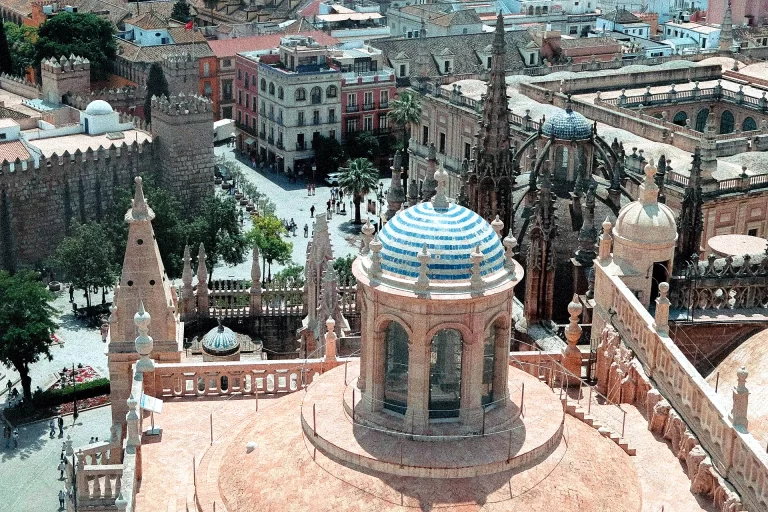
From Calle Mateos Gago to the northeast for the full tower height framed between buildings. From the Patio de los Naranjos (accessible during Cathedral hours) for the evening light condition with the tower rising above the orange trees. From the Giralda viewing platform itself, looking down at the Cathedral’s Gothic exterior and roofscape — this is the perspective most street-level views make impossible.
Are tripods allowed inside Seville Cathedral?
Tripods are generally not permitted during normal Cathedral visiting hours; policy varies by day and event. Monopods occupy a grey area — check at the entrance on arrival. For interior photography without a tripod, a camera with strong high-ISO performance (ISO 3200+) is the practical requirement in the darker chapel and sacristía spaces. The nave receives more natural light from the clerestory and is manageable at ISO 1600 in most conditions.
What lens is best for photographing the Cathedral interior?
A wide zoom (16–35mm equivalent) for the nave and the Capilla Mayor retablo, where the scale requires a wide field of view. A standard lens (50mm equivalent) at a wide aperture (f/1.8–f/2.8) for the Columbus tomb pallbearers and individual chapel altarpieces, where controlled depth of field separates the subject from the background. A long lens is rarely useful inside — the Cathedral’s interior spaces are wide rather than deep.
When does the light pass through the Cathedral’s stained glass windows?
The south transept stained glass windows project coloured light onto the nave floor and adjacent piers at approximately 11:30–12:30am on clear mornings in late spring and early summer. The timing shifts with the solar angle throughout the year and the effect only occurs on clear days. Being inside at the 11:00am opening and positioned in the south transept gives the best chance of catching this condition as it develops.
Related Posts
- Seville Cathedral and Giralda Tower: Tickets, Tours and What to See Inside
- Climbing the Giralda Tower: How Hard It Is and What You See From the Top
- Seville Cathedral Rooftop Tour: The View Over the City Most Visitors Never See
- Early Entry at Seville Cathedral: What the Nave Looks Like Before the Groups Arrive
- Seville Golden Hour Photography: Where to Wait and What You Are Waiting For