Climbing the Giralda Tower: How Hard It Is and What You See From the Top
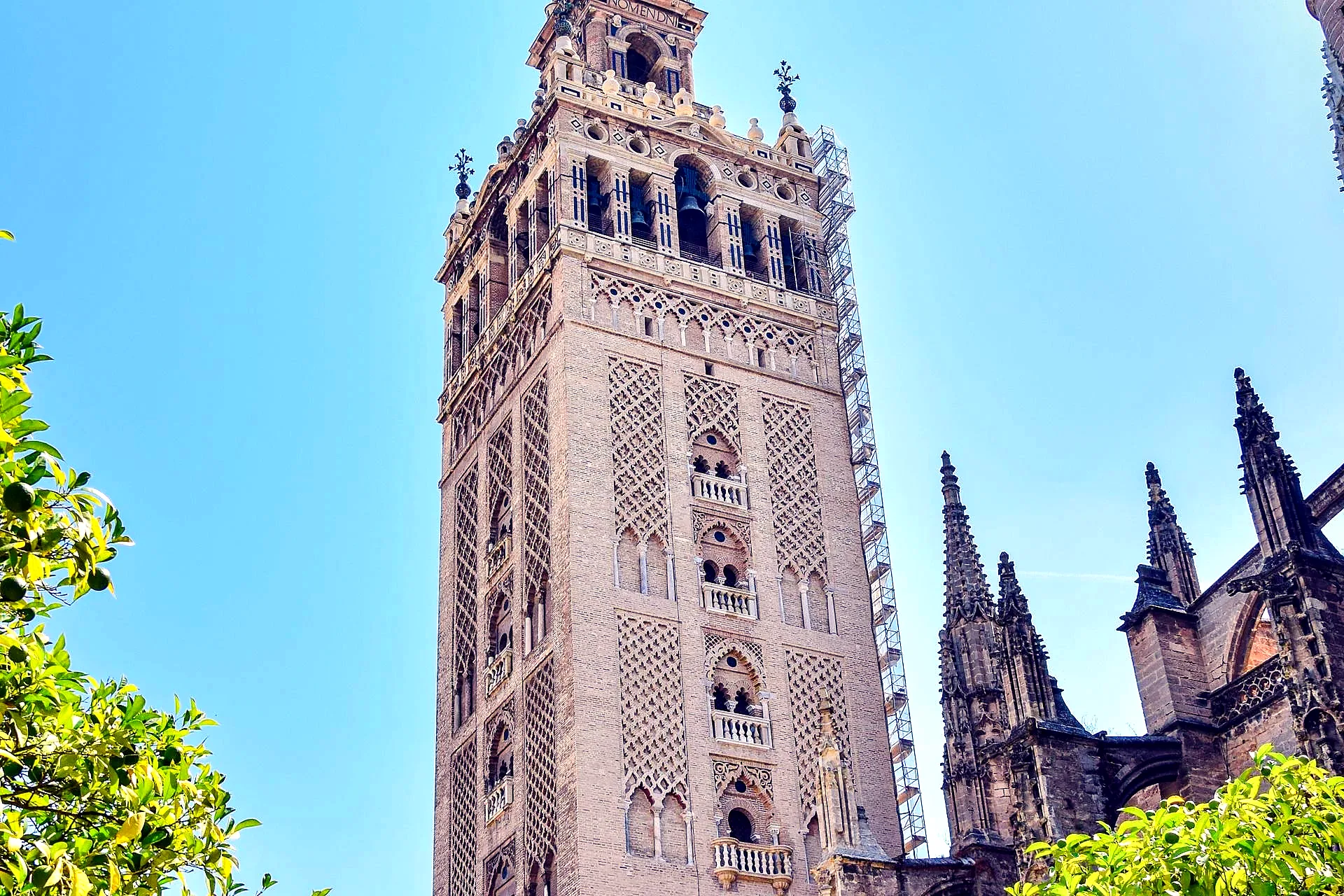
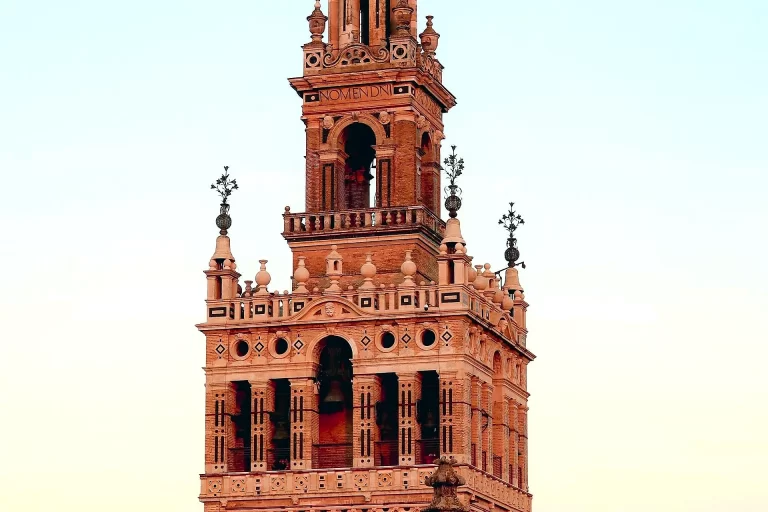
The Giralda tower rises 104 metres above the Cathedral’s south facade and is reached not by stairs but by a ramp — a continuous helix of 35 interlocking ramps that the original Almohad architects designed so that the muezzin could ride a horse to the top to call the city to prayer. The conversion of the minaret to a Christian bell tower in the 16th century added the Renaissance belfry above the original Islamic shaft and the bronze weathervane figure that gives the tower its name: La Giralda, from girar, to turn. Climbing the Giralda tower is included in the standard Cathedral ticket and consistently rated the most physically distinctive moment of a Seville visit — the ramps, not the height, are what visitors most often mention when they come down.
What the Giralda Climb Is Actually Like
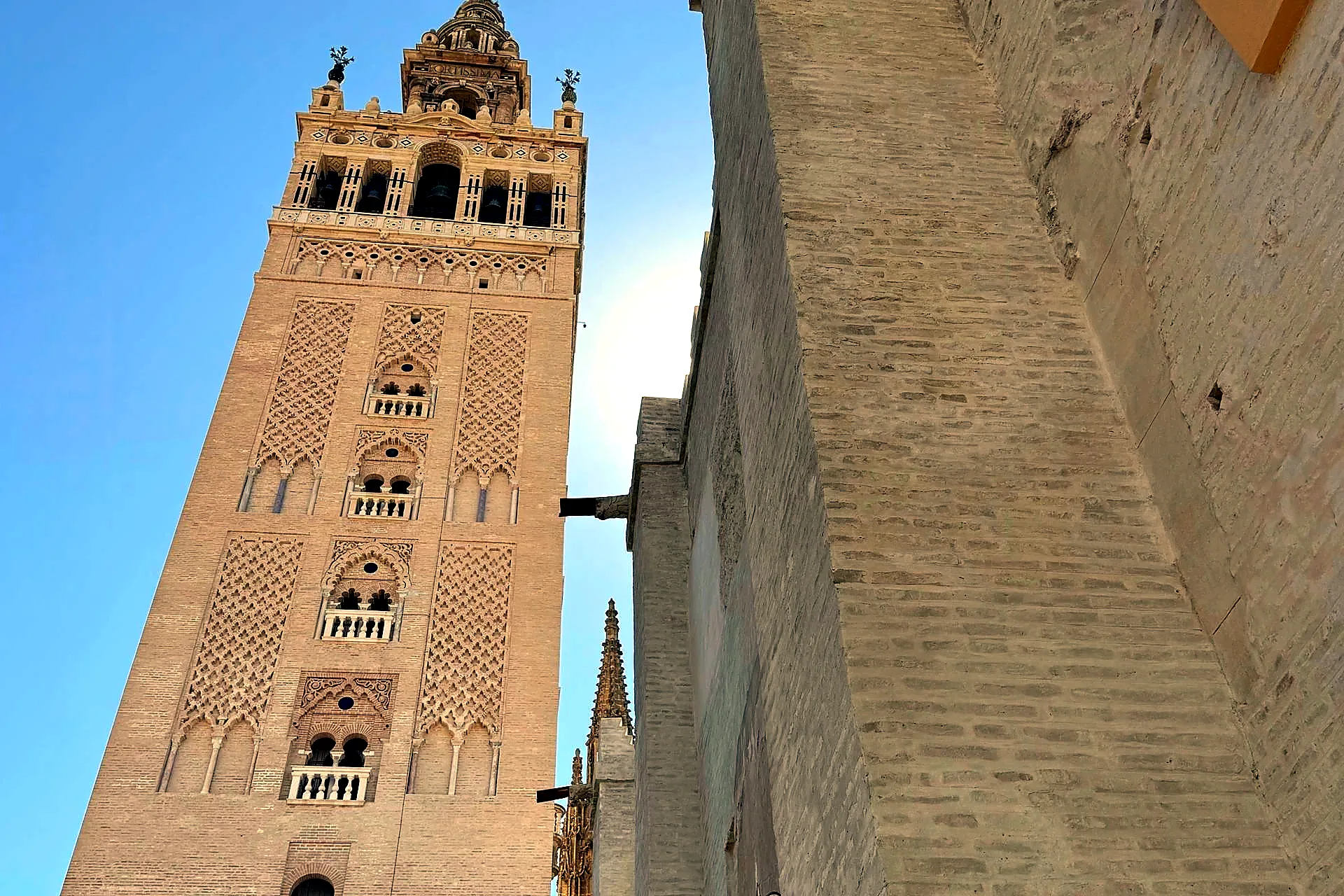
The 35 ramps rise in a continuous spiral inside the original 12th century Islamic shaft, each ramp approximately 2 metres wide and gentle enough in gradient that the climb feels like a sustained uphill walk rather than stair-climbing. The total ascent to the bell chamber is approximately 70 metres of vertical height; the journey up takes 12 to 18 minutes at a moderate pace depending on how many visitors are on the ramps simultaneously. There is no elevator. There are no stairs. The entire ascent and descent are on the ramp system.
The walls of the ramps are the original Islamic stonework — decorative brick patterns visible in the lower sections, the occasional arrow slit window giving views out over Cathedral roofscape before the bell chamber level is reached. The ramps are wide enough for ascending and descending visitors to pass each other comfortably, though at peak congestion times the flow is managed by Cathedral staff who regulate entry from the base.
✦ LUCÍA’S LOCAL TIP
The internal Giralda queue forms at the base of the ramp inside the Cathedral, not at the Cathedral entrance. Arriving at Cathedral opening time (11:00am) and going directly to the Giralda ramp entrance — before stopping at any chapel or the nave — gives the shortest possible queue wait and the most uncrowded ascent. By 12:30 the queue at the ramp base can add 15 to 20 minutes. The descent is faster than the ascent and can be done at whatever pace the ramp flow allows.
How Hard Is the Climb?

The Giralda climb is not technically demanding. The ramp gradient is consistent and moderate — steeper than a gentle incline, less steep than a standard flight of stairs. Most visitors of average fitness complete the ascent without stopping. The physical demands are sustained low-intensity effort over approximately 12–18 minutes rather than high-intensity exertion over a short period.
Practical considerations: the ramps are enclosed with limited ventilation from the interior. In July and August, the temperature inside the ramps is significantly warmer than outside in the early morning and hotter than outside in the afternoon. Carrying water for the climb is worth doing in any season; in summer it is essential. The ramps are paved with smooth stone — comfortable shoes with grip are appropriate. The descent, using the same ramp system, typically takes 8–12 minutes.
✦ LUCÍA’S LOCAL TIP
The bell chamber at the top of the original Islamic shaft — before the final steps to the outdoor viewing platform — contains the Cathedral’s 24 working bells, each named for a saint. The bells are visible from the ramp level as they are mounted in the openings of the 16th century Renaissance belfry above. The outdoor platform at approximately 70 metres gives the most complete view of the Cathedral’s Gothic exterior available from any public viewpoint — the flying buttresses, the pinnacles, the crossing tower — elements that are invisible from street level. Most visitors spend 5–10 minutes on the platform before descending.
What You See From the Top
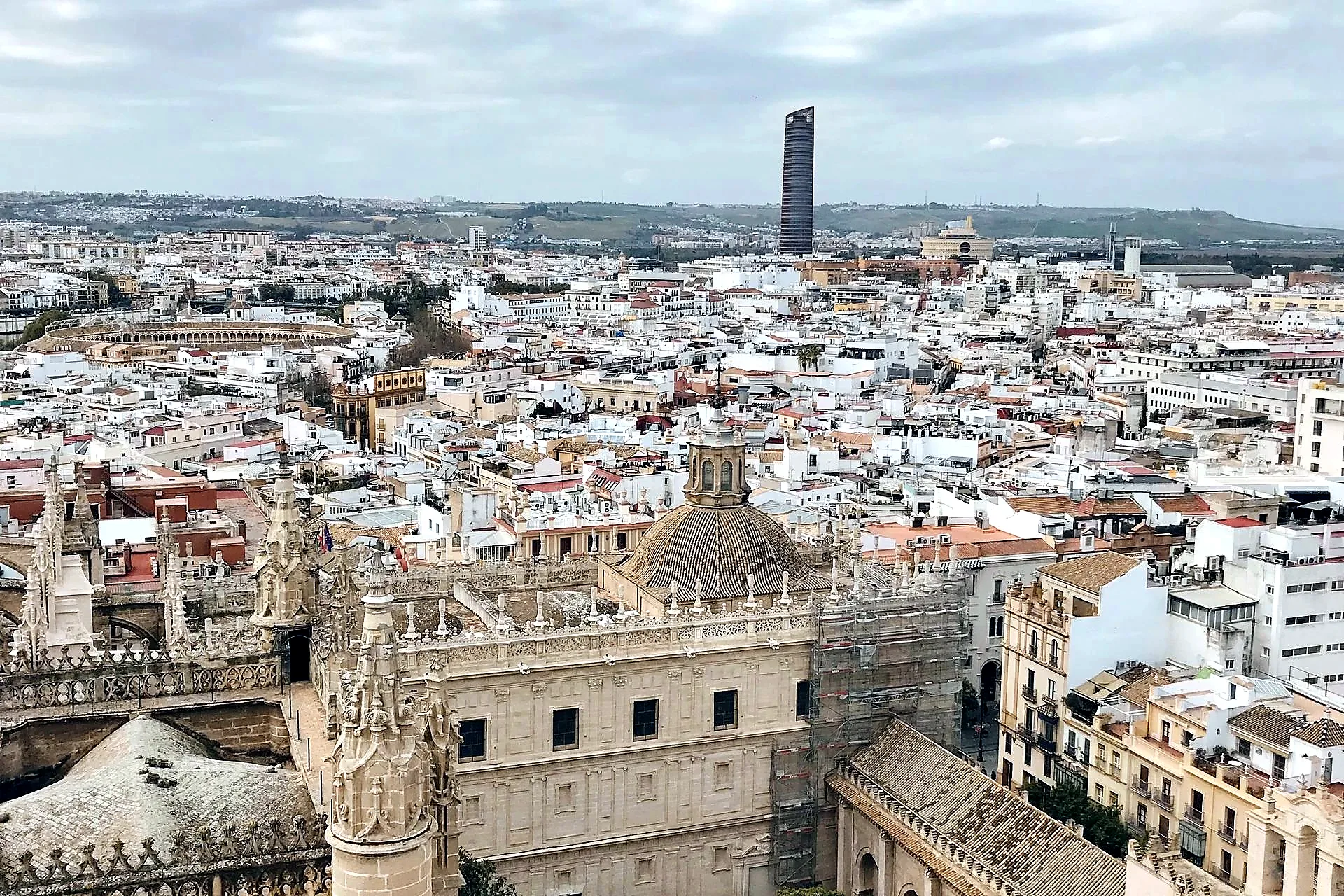
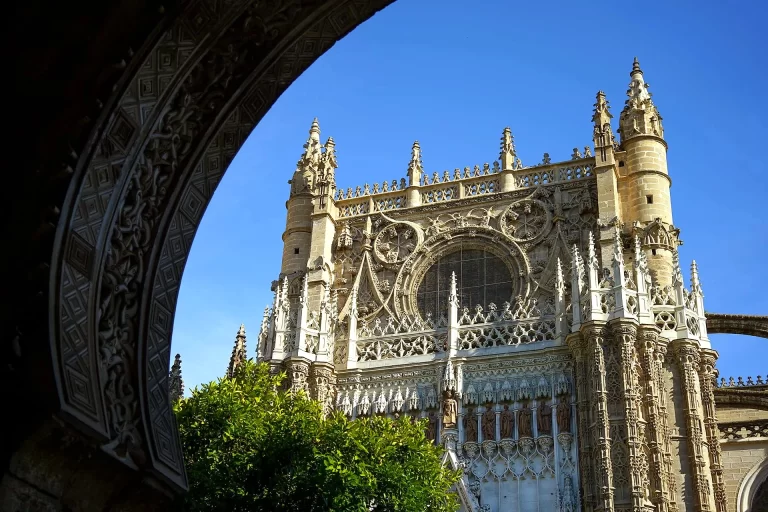
The outdoor viewing platform at the top of the original Islamic shaft sits at approximately 70 metres. The view covers the Cathedral’s Gothic exterior to the south and east — the nave roof, the crossing, the chapter house and Sacristía Mayor domes visible from directly above. To the north, the Metropol Parasol (Las Setas) and the lower city extend toward the Macarena. To the west, the Guadalquivir river and the Triana neighbourhood beyond it. To the south, the Alcázar gardens directly below and the María Luisa Park and Plaza de España visible further out.
The orientation of the tower means that the morning light (before noon) illuminates the Cathedral’s south and east facades from the viewing platform; afternoon light works from the west, catching the Guadalquivir and Triana. Neither is definitively better — they are different views at different quality levels. For photography, the golden hour before sunset is notable, but the Giralda closes with the Cathedral (last entry 5:00pm on most days) and the sun sets later than that in spring and summer.
Practical Information
- Included in: Standard Cathedral ticket (€12.00 online, €13.00 counter). No separate Giralda ticket required.
- Hours: Same as Cathedral — 11:00am to 6:00pm Monday–Saturday (last entry 5:00pm), 2:30pm to 7:00pm Sunday (last entry 6:00pm). Verify current hours before visiting.
- Climb time: 12–18 minutes ascending at moderate pace; 8–12 minutes descending.
- Height: Viewing platform at approximately 70 metres (the bronze weathervane figure sits at 104 metres, above the bell chamber, and is not accessible to the public).
- Accessibility: The ramp system is theoretically wheelchair accessible in terms of gradient, but the width and the one-way flow during busy periods make wheelchair use difficult in practice. Contact the Cathedral directly to confirm current accessibility arrangements.
- Best time to climb: Within the first 30 minutes of Cathedral opening (11:00–11:30am) for the shortest queue and most uncrowded ascent.
“The Giralda ramps are the part of the Cathedral visit that stays with visitors longest — not the height, which is manageable, but the experience of ascending a 12th century Islamic structure on the same ramps built for a muezzin on horseback. Go early, take the ramp at a pace that allows the stonework to register, and spend ten minutes on the platform looking back down at the Gothic exterior of the building the minaret became part of.”
FAQ
How hard is it to climb the Giralda tower in Seville?
The Giralda climb is not technically demanding — the ascent uses 35 interlocking ramps rather than stairs, with a moderate consistent gradient that most visitors of average fitness complete without stopping. The main physical requirement is sustained low-intensity effort over 12–18 minutes. The most significant comfort factor is heat in summer, when the enclosed ramps retain warmth — carrying water and taking the earliest morning slot reduces this considerably.
Is the Giralda climb included in the Cathedral ticket?
Yes — the Giralda tower climb is included in the standard Seville Cathedral ticket (€12.00 online, €13.00 counter). No separate ticket is required. Access to the Giralda ramp is through the Cathedral interior, with an internal queue managed by staff at the ramp entrance. The viewing platform is at approximately 70 metres; the bronze weathervane figure at 104 metres is not publicly accessible.
How long does it take to climb the Giralda tower?
The ascent takes 12–18 minutes at a moderate pace on the 35 ramps; the descent takes 8–12 minutes. Allow 30–40 minutes total for the Giralda visit including time on the outdoor viewing platform. The internal queue at the ramp base adds variable time depending on when the Cathedral is visited — minimal at opening (11:00am), potentially 15–20 minutes by mid-morning in high season.
Are there stairs in the Giralda tower?
No — the Giralda ascent and descent use only ramps, not stairs. The 35 interlocking ramps were designed by the original 12th century Almohad architects to allow the muezzin to ascend on horseback. There are a small number of steps at the very top transitioning to the outdoor viewing platform, but the main ascent is entirely on ramps.
What is the view like from the top of the Giralda?
The viewing platform at 70 metres gives a 360° view over Seville’s old town: the Cathedral’s Gothic exterior directly below (the flying buttresses and nave roof visible from above), the Alcázar gardens to the south, the Guadalquivir river and Triana to the west, the Metropol Parasol and lower city to the north. The view of the Cathedral’s own exterior is one of the most distinctive elements — the Gothic pinnacles and crossing tower are largely invisible from street level and only become legible from the Giralda platform.
Related Posts
- Seville Cathedral and Giralda Tower: Tickets, Tours and What to See Inside
- Seville Cathedral Tickets 2026: The Booking Mistake Most Visitors Make
- Early Entry at Seville Cathedral: What the Nave Looks Like Before the Groups Arrive
- Seville Cathedral Rooftop Tour: The View Over the City Most Visitors Never See
- Seville Cathedral Audio Guide vs Guided Tour: What the Difference Actually Feels Like