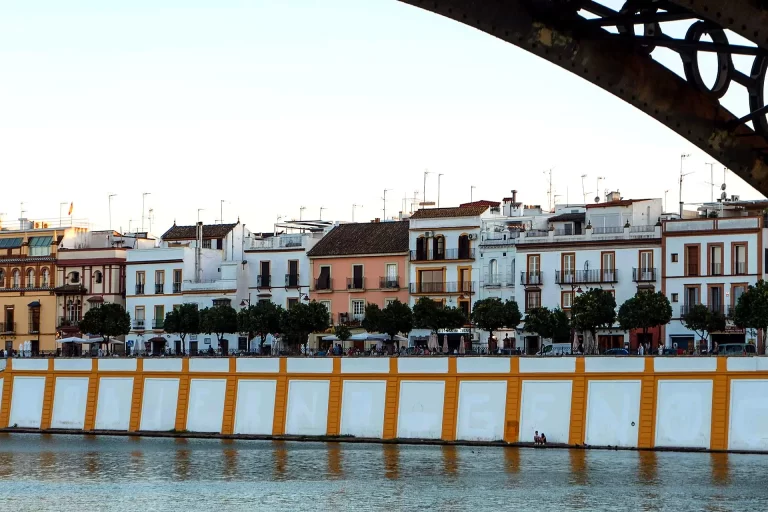
The Giralda Tower: From Islamic Minaret to Cathedral Bell Tower
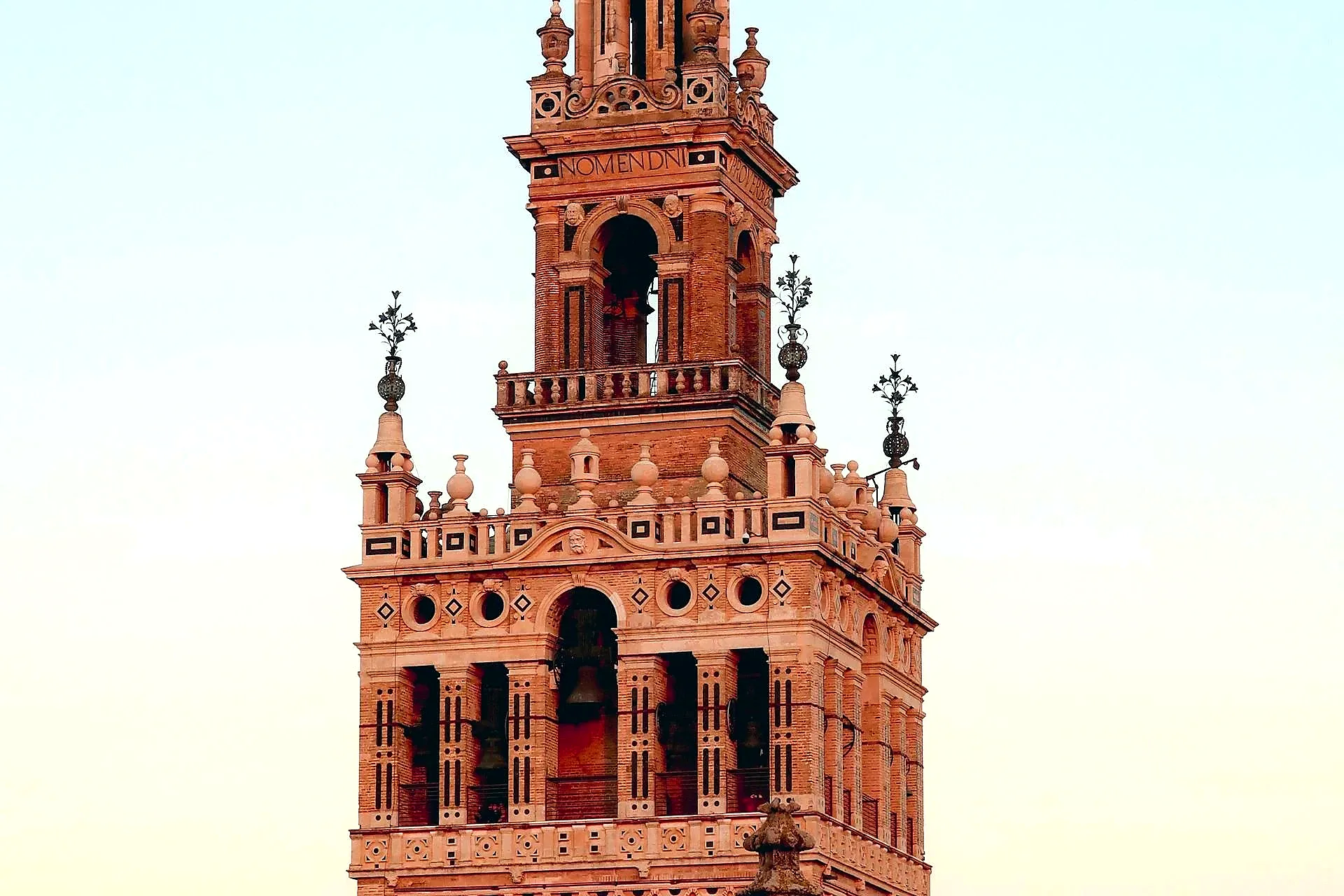
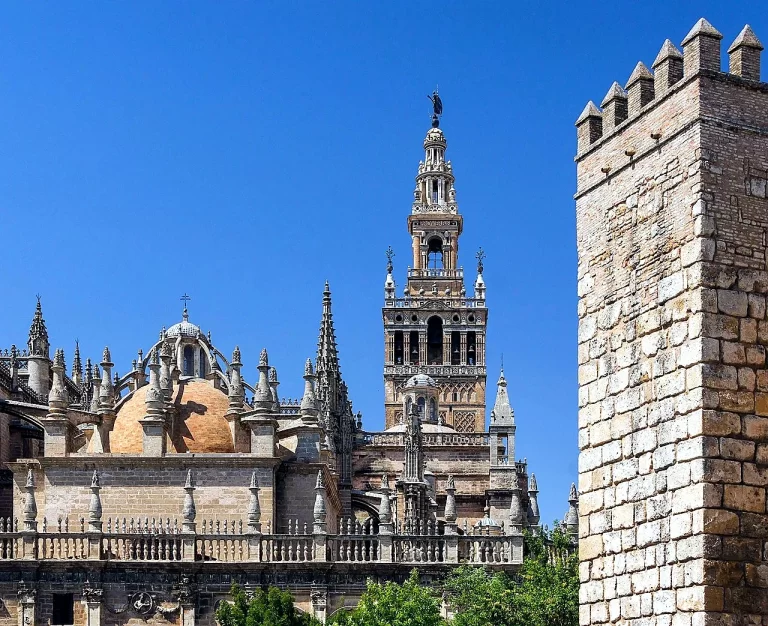
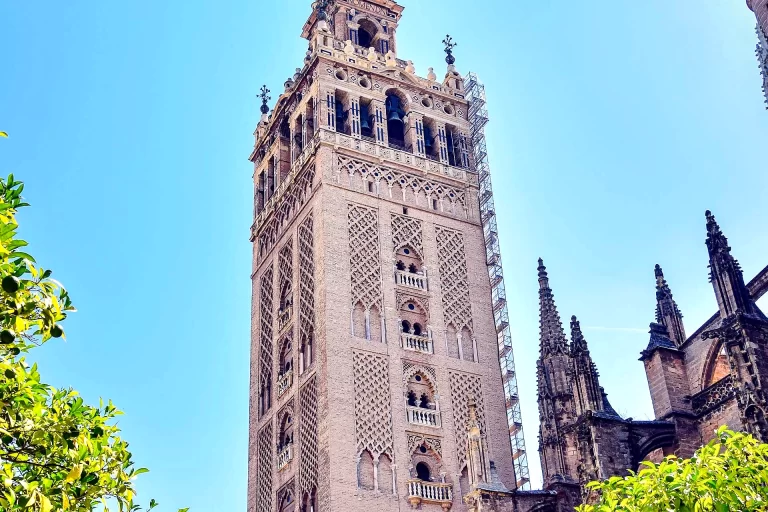
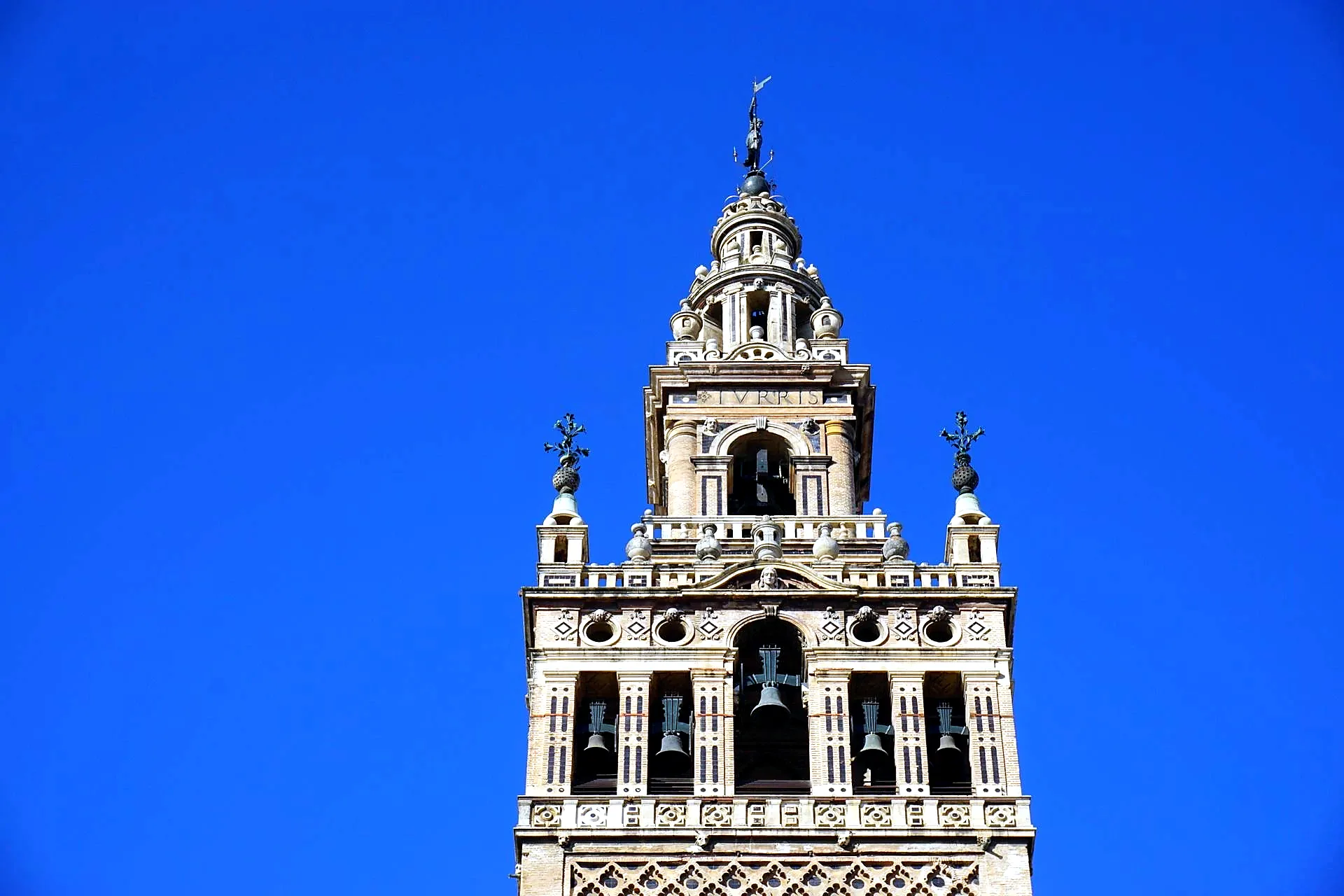
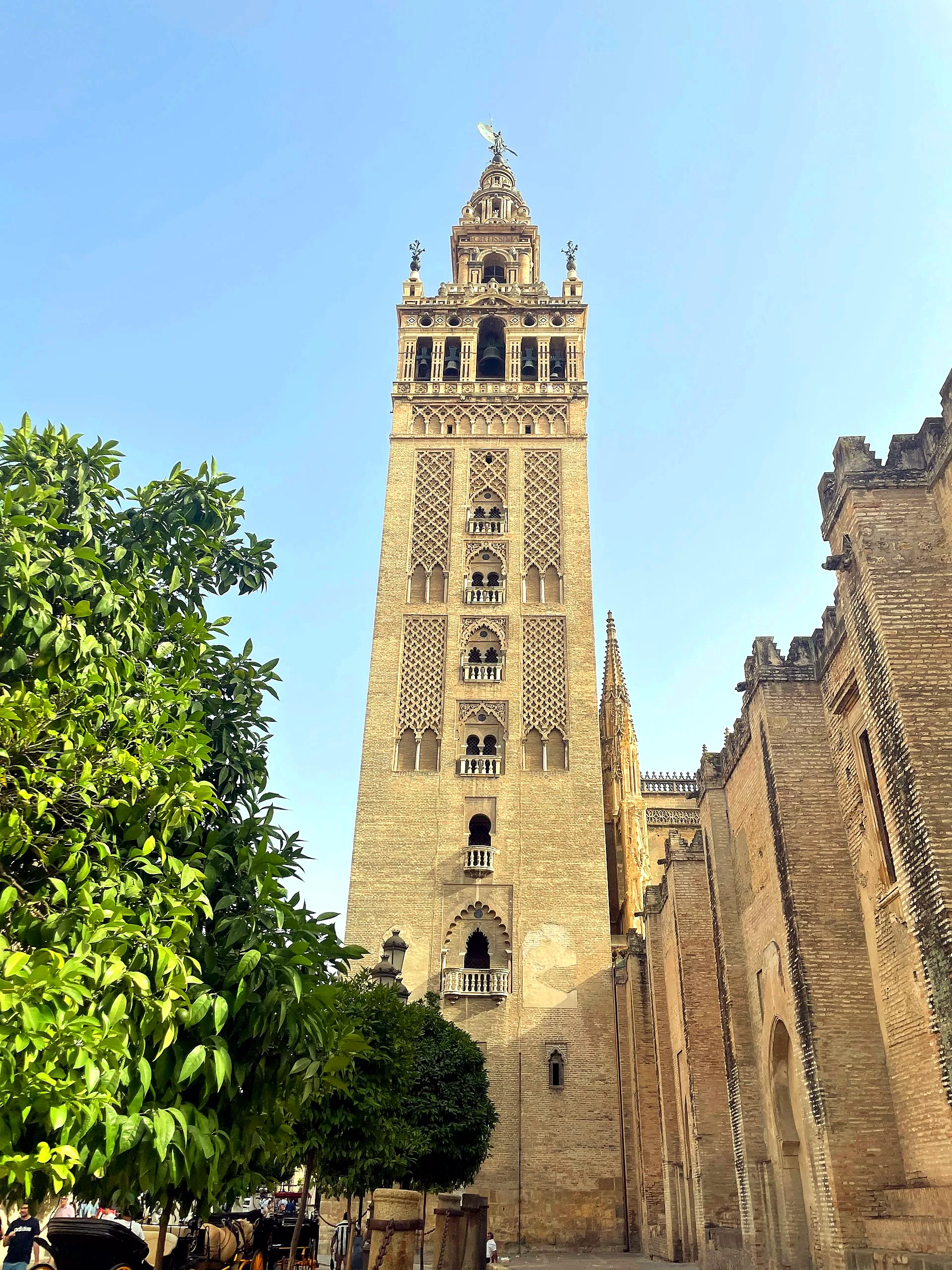
The Giralda tower stands 104 metres tall above Seville and is visible from most elevated points in the city. At 70 metres its character changes: below that height the tower is 12th century Islamic construction — brick decorated with geometric interlace panels, the sebka lattice pattern specific to Almohad architecture in North Africa and Iberia. Above that height it is 16th century European Renaissance — stone, classical pilasters, round arches, a lantern topped by a bronze weathervane figure. The Giralda tower is the most visible evidence in Seville of the city’s history as a place where two civilisations built on the same ground, and the transition point between the Almohad shaft and the Renaissance belfry is readable in the stonework to anyone who knows what they are looking at.
The Almohad Minaret: What the Original Tower Was
The minaret was designed by the Almohad architect Ahmad ibn Baso and completed in 1198, during the reign of the Almohad caliph Ya’qub al-Mansur. It served the Great Mosque of Seville — then one of the largest mosques in the western Islamic world — as the structure from which the muezzin called the city to prayer five times daily. The minaret’s function required height (audibility across the city), stability (the weight of a man ascending and descending multiple times daily), and visibility (confirmation across the city that the call was being issued).
The construction method reflects these requirements: the tower’s outer shaft encloses an inner shaft, and between them the 35 interlocking ramps ascend in a helix from ground level to the belfry platform at the top of the original structure. The ramps were designed for ascent on horseback — the muezzin could ride to the top rather than climbing on foot, a provision that speaks to the frequency of the ascent and the priority given to the caller’s physical endurance. The ramp system is intact and is what visitors climb today; the horses are no longer part of the arrangement.
✦ LUCÍA’S INSIGHT
The decorative panels on the Giralda’s decorated faces use the sebka system — a geometric interlace of lobed arches that generates a diamond-lattice pattern across the surface. The same system appears in the contemporary minaret of the Koutoubia Mosque in Marrakech and the Hassan Tower in Rabat, both products of the same Almohad architectural workshop. Standing on the Avenida de la Constitución and looking at the lower shaft of the Giralda while knowing that the same workshop built the Koutoubia — and that the Koutoubia stands to this day in Morocco while the Seville original was absorbed into a Gothic cathedral — is one of the more interesting architectural facts available on a Seville street corner.
The Conversion: From Minaret to Bell Tower
When Ferdinand III took Seville from the Almohads in 1248, the minaret was converted immediately to Christian use — the mosque bells (which the Almohads had hung from the minaret as a deliberate provocation after taking Córdoba from the Christians) were removed and the structure was rededicated. The converted minaret served as the Cathedral’s bell tower for the next three centuries while the mosque was used as a converted cathedral and then demolished in favour of the Gothic structure.
The Renaissance belfry was commissioned in 1558 and completed by Hernán Ruiz the Younger in 1568. Ruiz designed four tiers of Renaissance belfry above the original Almohad shaft, each tier slightly smaller than the one below, topped by a lantern and the bronze female figure representing Faith that became the tower’s weathervane and gave the tower its popular name: La Giralda, from girar, to turn. Ruiz explicitly designed the belfry to be visible as an addition to the minaret rather than a replacement of it — the material change from brick to stone at the transition point was deliberate, and the decision not to alter the lower shaft preserved the Almohad structure intact.
✦ LUCÍA’S INSIGHT
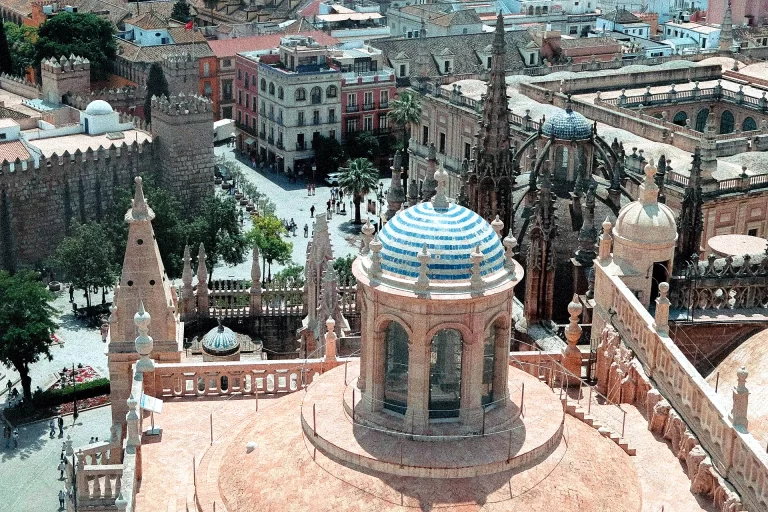
The bronze La Giralda figure at the top of the tower — the weathervane that gives the tower its name — is 4 metres tall and weighs approximately 1,300 kilograms. It was installed in 1568 and rotates on a bearing system designed so that the figure always faces into the wind, its draped garments filling as a wind indicator. From street level the figure is small enough to look purely decorative; from the Giralda viewing platform at 70 metres, looking straight up at the belfry above, the scale of the lantern and the pedestal below the figure becomes apparent. The transition from the minaret’s brick sebka surface to the belfry’s stone classicism is most visible from this angle.
What the Tower Preserves
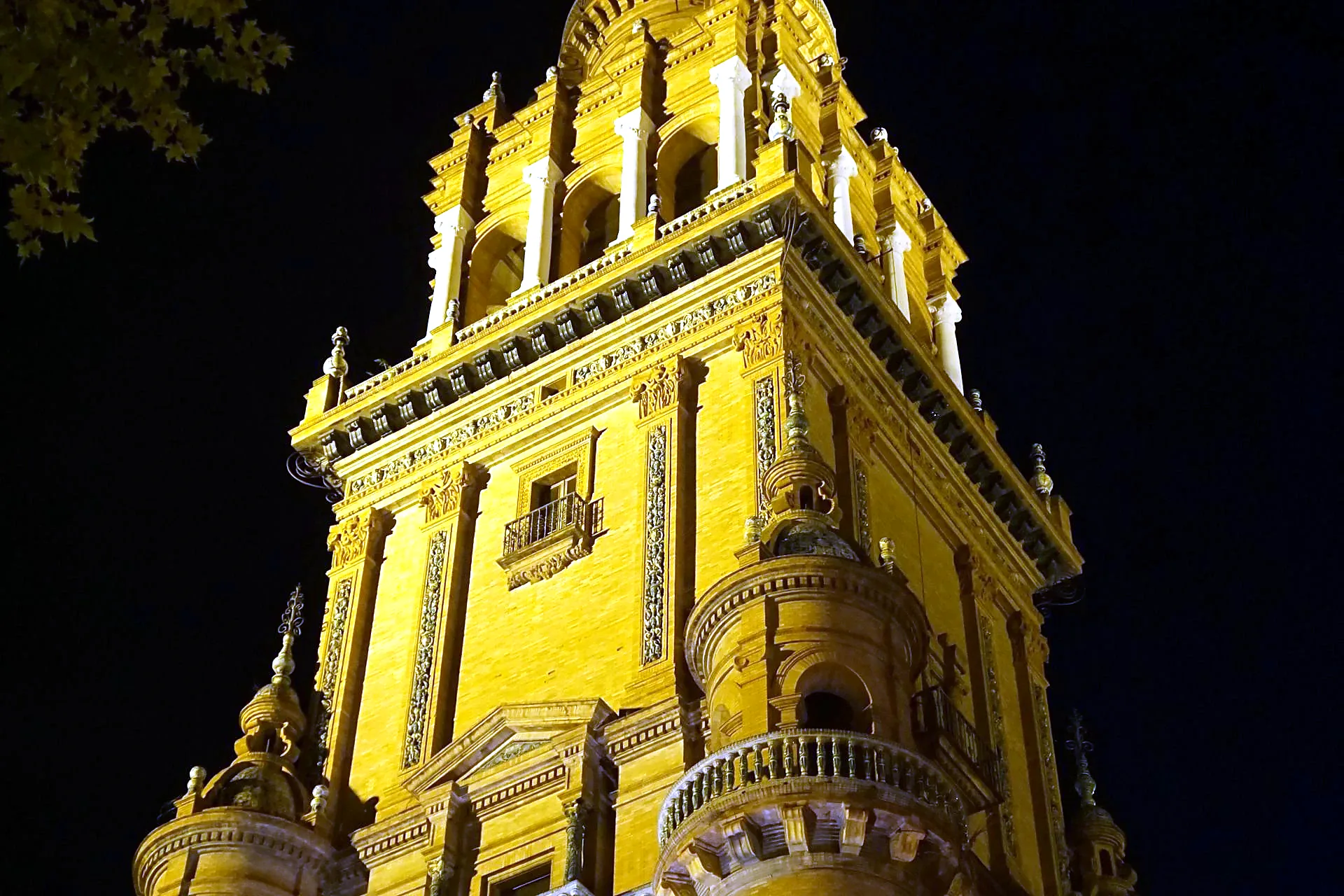
The Giralda is the finest surviving example of Almohad minaret architecture at full scale anywhere in the world. The Koutoubia in Marrakech and the Hassan Tower in Rabat are comparable in design vocabulary and approximate date, but the Giralda has been continuously maintained in an urban context rather than left as a ruin or a partial structure. Its survival as the bell tower of a major cathedral — an institutional function that required ongoing maintenance across eight centuries — is the reason it is better preserved than its Moroccan contemporaries.
The ramp system inside the tower is the other preservation achievement. The 35 interlocking ramps, designed in the 12th century for equestrian ascent, are used today by approximately 2 million visitors per year. The structural logic of the double shaft — outer decorated surface, inner load-bearing core, ramps between — has sustained this use across 800 years of continuous occupation without fundamental alteration. The ramps are original Almohad construction; the treads and surface have been repaired and resurfaced over time, but the spatial organisation is what Ahmad ibn Baso designed.
FAQ
Was the Giralda originally a mosque minaret?
Yes — the Giralda was built as the minaret of the Almohad Great Mosque of Seville, completed in 1198 by the architect Ahmad ibn Baso. After Ferdinand III took Seville in 1248, the minaret was converted to Christian use as a bell tower. The 16th century Renaissance belfry was added above the original Almohad shaft by Hernán Ruiz the Younger between 1558 and 1568. The lower 70 metres of the tower is original 12th century Almohad construction.
What is the sebka pattern on the Giralda?
The sebka is a geometric interlace system of lobed arches that generates a diamond-lattice pattern across a surface — the defining decorative element of Almohad architecture. On the Giralda, the sebka panels cover the decorated faces of the minaret shaft below the Renaissance belfry. The same system appears in the Koutoubia Mosque minaret in Marrakech and the Hassan Tower in Rabat, all products of the same 12th century Almohad architectural tradition.
Who designed the Giralda’s Renaissance belfry?
The Renaissance belfry above the Almohad minaret shaft was designed by Hernán Ruiz the Younger and completed in 1568. Ruiz added four tiers of decreasing-scale belfry in a classical style — stone, round arches, pilasters — deliberately different in material from the original brick minaret shaft. The bronze La Giralda weathervane figure at the top was installed in 1568 and gives the tower its popular name.
Why can you ride a horse up the Giralda?
The Giralda’s internal ascent uses 35 interlocking ramps rather than stairs — designed by the original 12th century Almohad architects so that the muezzin could ascend on horseback to call the city to prayer without tiring. The ramps remain the primary internal access to this day, making the Giralda one of the very few towers of this height accessible without stairs. The ramp gradient is moderate and the ramps are approximately 2 metres wide.
How is the Giralda different from the Koutoubia in Marrakech?
The Giralda and the Koutoubia Mosque minaret in Marrakech were designed within the same Almohad architectural tradition in the late 12th century, using the sebka geometric lattice system on their decorated faces. The primary differences are: the Giralda has survived with a 16th century Renaissance belfry added above the original shaft; the Koutoubia remains as a purely Islamic structure without later additions. The Giralda is slightly taller (70 metres to the base of the belfry versus approximately 69 metres for the Koutoubia to its parapet) and has been maintained in an urban context that preserved the original shaft more completely than the Koutoubia’s partial abandonment at various points in its history.
Related Posts
- Seville Cathedral and Giralda Tower: Tickets, Tours and What to See Inside
- Climbing the Giralda Tower: How Hard It Is and What You See From the Top
- Why Seville Cathedral Was Built Where It Was: The Mosque That Came Before It
- Seville Cathedral Architecture: What to Look For When You Are Inside
- Mudéjar Architecture in the Alcázar: The Tile Detail Most Visitors Walk Past